
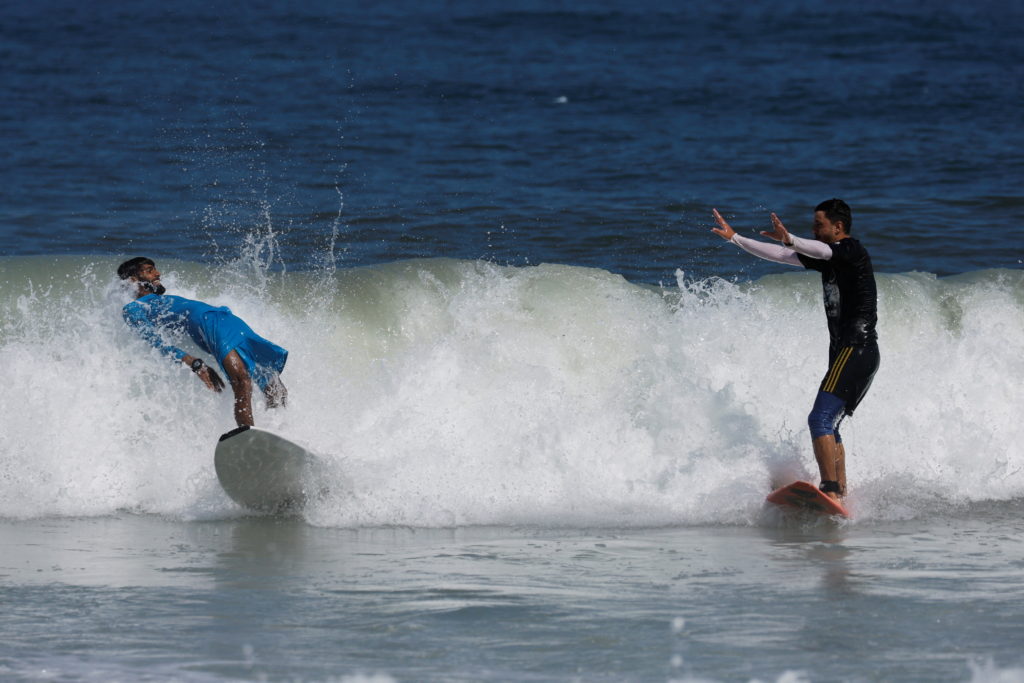
The rhythmic crash of the Mediterranean waves offers a stark contrast to the heavy silence of a fragile ceasefire. In the Gaza Strip, where the landscape is defined by the wreckage of a two-year war and a deepening humanitarian crisis, a tiny group of men is finding an unlikely sanctuary in the surf. For these few, the act of riding a wave is more than a sport; it is a rare moment of psychological relief and a defiant reclamation of joy.
Currently, only three or four men continue to surf in the territory. The scarcity is not due to a lack of will, but a critical shortage of equipment and the materials required to maintain it. In a region where the basic necessities of life are in short supply, the presence of a surfboard has become a precious rarity, often treated as a lifelong possession that must be protected at all costs.
Among those clinging to the sport is Tahseen Abu Assi, a surfer based in Gaza City. For Abu Assi, the surfboard is not merely athletic gear, but a lifeline to a sense of normalcy. Throughout the displacements he endured during the conflict, Abu Assi carried his board with him everywhere he went. The motivation was simple: survival of the equipment. Because no new boards have entered the Palestinian territory since 2007, any damage to a board could mean the end of a surfer’s ability to take to the water.
The Cost of a Surfboard: A Decade of Restrictions
The absence of surfing equipment in Gaza is the result of long-standing restrictions. Since 2007, when Hamas took control of the Strip, surfboards have been effectively banned from entering the territory. Israeli authorities categorize surfboards among a variety of sports equipment and other products deemed “dual-use” items—materials that, while having civilian applications, could potentially be repurposed for military use or to carry out attacks.
This ban has created a stagnant ecosystem for the sport. Without the ability to import new boards or the specialized resins and foams needed for repairs, the existing community of surfers is dwindling. Abu Assi’s insistence on carrying his board through every stage of displacement underscores the desperation of the situation; in his words, “If something happened to it I won’t be able to get another one.”
Finding Peace Amidst Conflict
Despite these hurdles, the pull of the ocean remains strong. On a recent Tuesday, Abu Assi was joined by fellow surfers Khalil Abu Jayyab and Abed Rahim Alostaz off the coast of the Gaza City port. The scene was a brief departure from the surrounding devastation, as Abu Jayyab was seen riding high waves with his arms raised in a gesture of pure joy.
For these men, the ocean provides a physical and mental escape from the constraints of life on land. The act of surfing allows for a temporary suspension of the stresses associated with the ongoing humanitarian crisis, providing a space where the only immediate concern is the timing of the next swell.
A Restricted Coastline
The joy found in the waves exists within a highly volatile environment. Since the onset of the war, the Israeli military has imposed heavy restrictions on all sea activity within the Gaza Strip. These restrictions have not only impacted surfers but have severely crippled the local fishing industry, which is a primary food source for the population.
The United Nations Office for the Coordination of Humanitarian Affairs (OCHA) has documented the dire conditions facing those who attempt to utilize the coast, reporting that some fishermen have been attacked both at sea and onshore. These incidents have included attacks on individuals using simple paddle boats, highlighting the extreme risks associated with entering the Mediterranean waters.
Key Takeaways: Surfing Under Siege
- Extreme Scarcity: Only three to four active surfers remain in Gaza due to a total lack of replacement equipment.
- Long-term Ban: No surfboards have been permitted into the territory since 2007 due to “dual-use” restrictions.
- Psychological Refuge: Surfing serves as a critical tool for relief and joy amidst a severe humanitarian crisis.
- High-Risk Environment: Sea activity remains heavily restricted, with reports of attacks on coastal workers and fishermen.
As a fragile ceasefire continues to hold, the surfers of Gaza City remain a small but poignant symbol of resilience. They navigate a coastline that is as dangerous as it is liberating, clinging to a sport that requires almost nothing but a board and the courage to face the tide.

The international community continues to monitor the stability of the ceasefire and the delivery of humanitarian aid to the region. The next critical checkpoint for the territory’s stability will be the upcoming reviews of aid corridors and the potential for expanded maritime access for civilian use.
We invite our readers to share their thoughts on the role of sport in conflict zones in the comments section below.