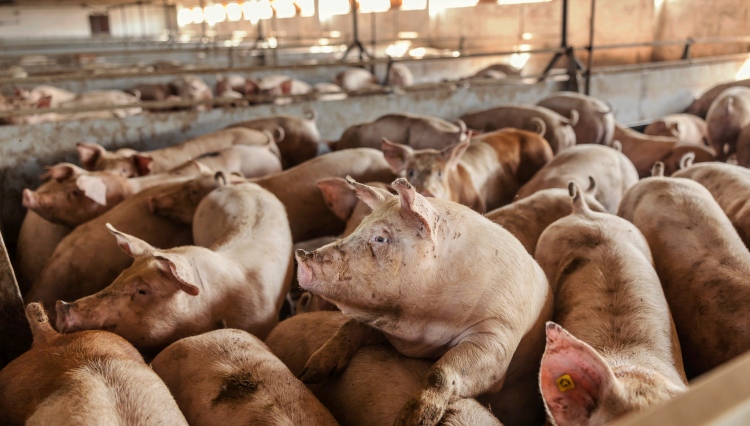
The European pork industry is navigating a complex period of fluctuating production levels and market pressures. While some major producing nations are experiencing growth, others are grappling with oversupply, leading to tricky decisions like early culling of livestock. Switzerland, in particular, is confronting a surplus situation, prompting a proactive response to stabilize its domestic market. This situation reflects a broader trend of consolidation and adaptation within the European pork sector, as countries strive to balance production with demand and maintain economic viability.
The challenges facing the European pork industry are multifaceted, stemming from factors such as changing consumer preferences, evolving trade dynamics, and the impact of animal diseases. Maintaining a stable supply chain and ensuring fair prices for producers are key priorities for policymakers and industry stakeholders. The current situation underscores the need for coordinated efforts to address oversupply issues and promote sustainable practices within the sector. The delicate balance between production capacity and market demand is proving increasingly difficult to maintain, requiring innovative solutions and strategic adjustments across the continent.
European Production Trends: A Mixed Picture
Recent data reveals a varied landscape across Europe’s major pork-producing countries. Spain remains the dominant force in the European Union, accounting for 26.2% of the total pig population in 2024, with a total of 34.57 million animals as of December 2024. However, a slight correction was observed in November 2025, with the population decreasing to 33.65 million. Despite this minor decline, Spain’s significant export orientation, evidenced by a 199% self-sufficiency rate, continues to define its position in the market. This high self-sufficiency rate indicates a substantial reliance on external demand to absorb its production.
In contrast, Poland has experienced a period of stagnation following a previous downturn. The pig population stood at 9.08 million in December 2024, representing a 7.1% year-on-year decrease. However, by June 2025, the population had slightly increased to 9.1235 million, suggesting a leveling off rather than a substantial recovery. This indicates that the Polish pork industry has yet to establish a strong growth trajectory. The country’s ability to regain momentum will depend on factors such as market conditions, production costs, and access to export markets.
Expansion and Stabilization in Northern and Central Europe
Denmark, has seen its pig population expand. As of January 2025, the country housed 11.6 million pigs, rising to nearly 12 million by June 2025 – a 5.6% year-on-year increase. Notably, the number of slaughters did not increase proportionally, with 3.3 million pigs slaughtered in the second quarter, while live pig exports reached 4.1 million. This highlights Denmark’s continued focus on export-oriented production, particularly in the areas of weaner and live animal exports. The country’s efficient production system and strong export capabilities position it as a key player in the European pork market.
Germany has experienced a shift towards stabilization after a prolonged period of decline. In May 2025, the pig population was 20.9 million, increasing to 21.5 million by November. However, the number of farms continued to decrease, falling by 2.7% year-on-year and 40.8% over the past decade. This trend indicates a consolidation of production into fewer, larger farms, reflecting a move towards greater efficiency and economies of scale. The German pork industry is adapting to changing market conditions by streamlining operations and focusing on larger-scale production units.
The Swiss Model: Addressing Oversupply
Across the European Union as a whole, the pig population in 2024 stood at 132 million, a slight decrease of 0.5% year-on-year. However, Switzerland is currently facing a more acute crisis of oversupply. Since September 2025, approximately 48,000 pigs have been culled each week, exceeding the market’s capacity of 44,000. The country’s cold storage facilities are also nearing full capacity, prompting urgent calls for intervention from the agricultural sector. As a first step, the premature culling of 30,000 piglets or fattening pigs is being planned. This drastic measure underscores the severity of the oversupply situation in Switzerland and the need for swift action to restore market balance.
The Swiss situation highlights the challenges faced by countries with limited domestic demand and a high level of production. The decision to cull healthy animals is a difficult one, but it is seen as a necessary step to prevent further market disruption and protect the livelihoods of farmers. The Swiss government is working with industry stakeholders to develop long-term solutions to address the underlying causes of the oversupply, including potential adjustments to production levels and export strategies.
Hungarian Situation and Broader Trends
In Hungary, a slight increase in the pig population has been observed. As of December 1, 2025, the country held 2.87 million pigs, representing a 2.4% year-on-year increase. According to trade data, live pig exports and imports increased in January 2026, while exports and imports of pork declined. Western European countries with strong, efficient export sectors remain in a more favorable position, while other nations are adapting to market pressures or experiencing consolidation. The European pork market is characterized by a complex interplay of factors, including production costs, trade policies, and consumer demand.
The concept of “self-sufficiency rate” is crucial in understanding these dynamics. This metric indicates the extent to which a country’s pork production meets domestic consumption. A rate exceeding 100% signifies an export surplus, while a high rate suggests strong export dependence and a potential risk of overproduction. Monitoring these rates is essential for policymakers and industry stakeholders to assess market conditions and make informed decisions.
Key Takeaways
- Oversupply Concerns: Several European countries, notably Switzerland, are grappling with pork oversupply, leading to difficult measures like early culling.
- Varied Production Trends: Production levels vary significantly across Europe, with Spain remaining the largest producer and Poland experiencing stagnation.
- Consolidation in Germany: The German pork industry is undergoing consolidation, with fewer but larger farms dominating production.
- Export Orientation: Denmark continues to prioritize export-oriented production, particularly of weaners and live animals.
- Market Imbalance: Maintaining a balance between production capacity and market demand remains a key challenge for the European pork industry.
Looking ahead, the European pork industry will need to adapt to evolving market conditions and address the challenges of oversupply, sustainability, and changing consumer preferences. Continued monitoring of production levels, trade flows, and market trends will be crucial for ensuring the long-term viability of the sector. The next key data release from Eurostat, expected in late 2026, will provide a comprehensive overview of the European pork market and inform future policy decisions. Stay informed and share your thoughts on the future of European pork production in the comments below.