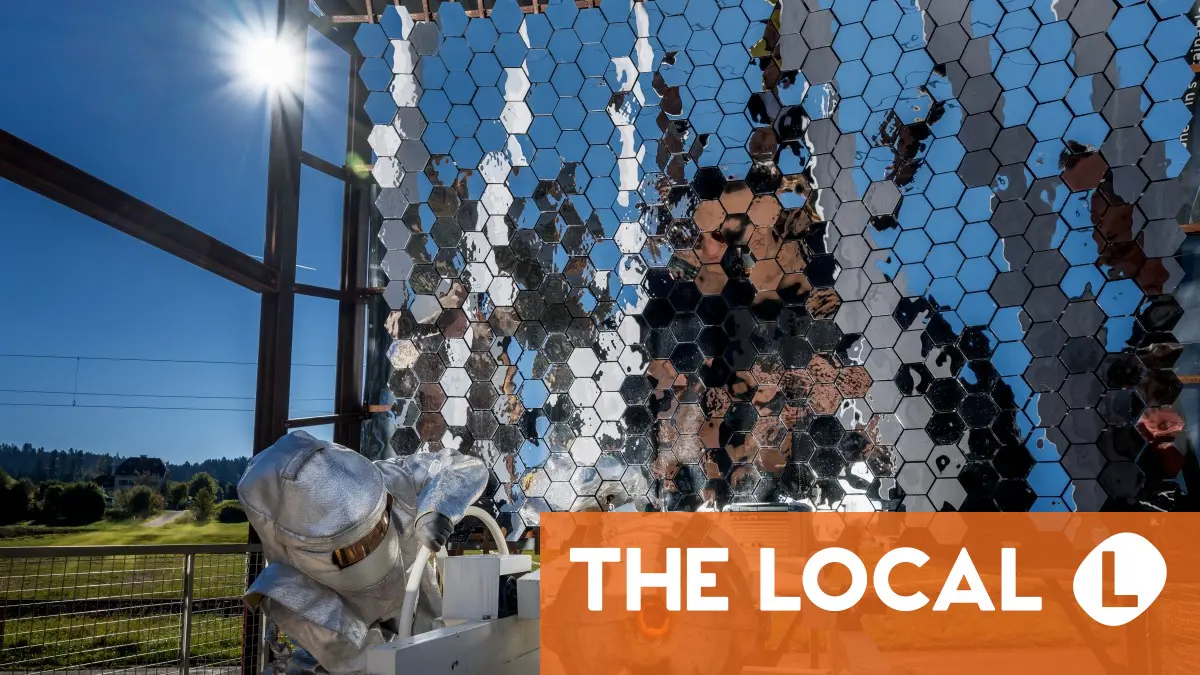
Solar furnaces Revolutionize Steel Recycling in Switzerland’s Watchmaking Heartland
The future of sustainable steel production is taking shape in La Chaux-de-Fonds, switzerland – the historic cradle of Swiss watchmaking. A pioneering Swiss company, panatere, recently unveiled two groundbreaking solar furnaces designed to melt down and recycle steel offcuts from the precision engineering and watchmaking industries, utilizing the power of concentrated solar energy. This innovative approach promises a greener, more resilient supply chain for critical metals.
The Challenge of Steel Waste in High-Precision Manufacturing
The Jura mountains, bordering France, are a hub for companies demanding high-quality steel - from intricate watch components to sophisticated medical instruments. This concentration of precision manufacturing inevitably generates notable steel waste.Traditionally, this scrap metal is often processed through energy-intensive methods, contributing to carbon emissions. Panatere‘s solution directly addresses this challenge, offering a closed-loop system powered by the sun.
how Solar Furnaces are Transforming steel Recycling
Panatere’s technology centers around harnessing solar energy to achieve the extreme temperatures required for steel melting – approaching 2,000 degrees Celsius. Here’s a breakdown of the process:
* Heliostat Field: A 140-square-meter field of movable mirrors (heliostats) tracks the sun throughout the day.
* Concentrated Solar Power: These mirrors precisely reflect and concentrate sunlight onto a 10-meter diameter dish.
* Melting Crucible: The focused solar energy heats a crucible, efficiently melting down steel scrap.
* Ingot Production: The molten steel is then cast into ingots, ready for recirculation back into the manufacturing process.
This localized, solar-powered recycling loop drastically reduces the environmental impact compared to conventional methods.
A Decade of Innovation: Overcoming Engineering Hurdles
The journey to this point wasn’t without its challenges. Raphael Broye, CEO of Panatere, shared that the project has been a ten-year dream. The progress team - comprised of 148 scientists and professionals – faced numerous engineering obstacles:
* Wind Mitigation: Maintaining mirror alignment in windy conditions.
* Environmental factors: Accounting for Saharan dust and extreme temperature fluctuations (from -20°C to over 30°C).
* Precision Control: Achieving and maintaining the incredibly high temperatures needed for efficient steel melting.
These hurdles were overcome through rigorous testing and innovative design, proving the viability of solar-powered steel recycling in a real-world industrial setting.
Economic Viability in a Landscape of Rising Metal Prices
The timing of this innovation couldn’t be better. Global metal prices are soaring, and supply chains are increasingly vulnerable. panatere’s technology offers a compelling economic advantage:
* Reduced Material costs: Utilizing recycled steel considerably lowers reliance on expensive virgin materials.
* Shortened Supply Chains: A localized recycling loop minimizes transportation costs and lead times.
* Profitability with Swiss Wages: Even with Switzerland’s high labor costs, the economic model is proving viable due to the value of recovered materials.
As Broye explains, manufacturers are realizing the “treasure trove” of valuable materials residing in their production waste.
Future Expansion and Scalability
The inauguration of these two prototype furnaces is just the first step.Panatere plans to open a full-scale factory by 2028, potentially located either on-site in La Chaux-de-Fonds or in the Wallis mountains. The ambitious goal? To produce 1,000 tonnes of recycled steel annually using solar energy - an unprecedented scale for this technology. This expansion will demonstrate the potential for widespread industrial adoption.
Evergreen Section: The Future of circular Economy in Metal Production
The Panatere project exemplifies the growing shift towards a circular economy, where waste is minimized and resources are continuously reused. This approach isn’t limited to steel; similar technologies are being explored for recycling aluminum, copper, and other valuable metals.
The key benefits of embracing circularity in metal production are ample:
* Reduced Environmental Impact: Lower carbon emissions, decreased mining activity, and minimized landfill waste.
* Resource Security: Less reliance on volatile global commodity markets.
* Economic resilience: Creation of local jobs and a more stable supply chain.
* Innovation Driver: Stimulating the development of new technologies and sustainable practices.
As
Keep reading