
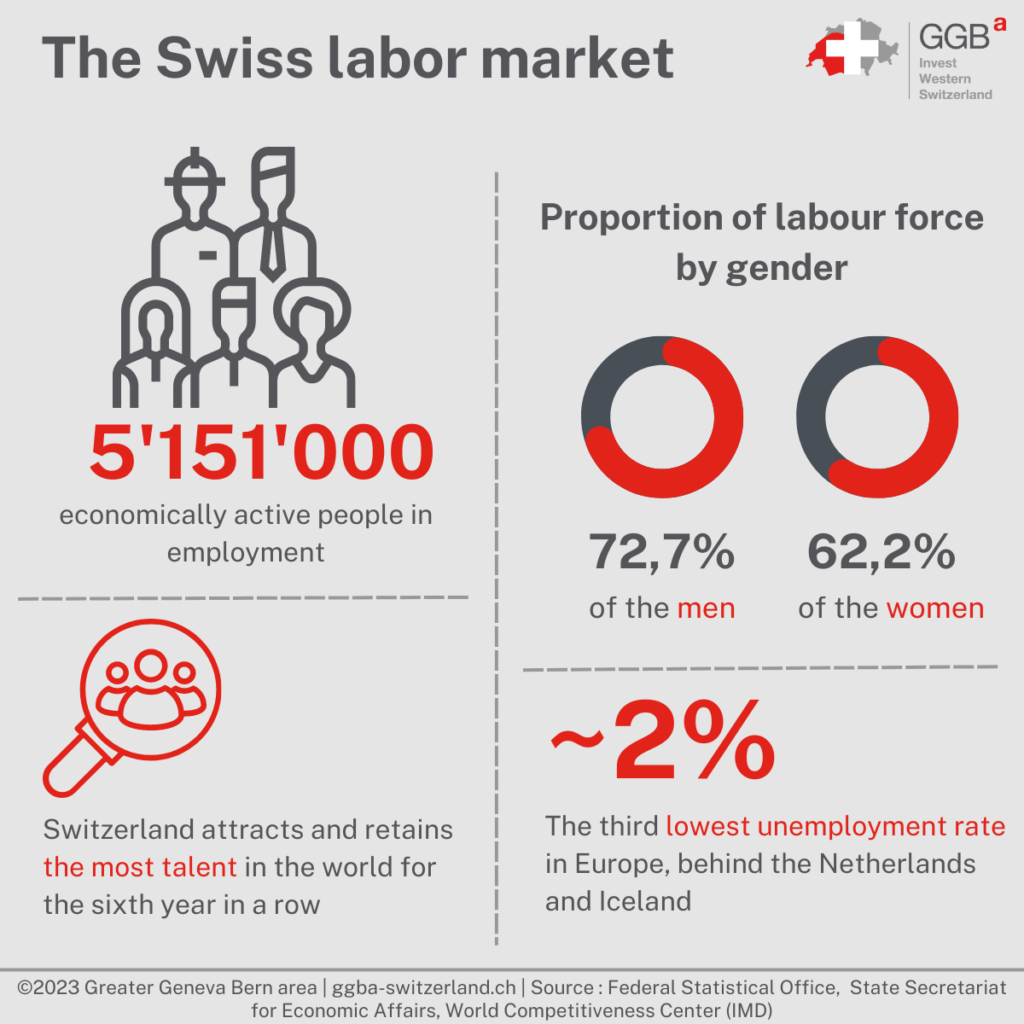
Switzerland’s labor market is systematically overlooking qualified talent due to overly rigid hiring practices, according to labor economists and recent employment studies. With an unemployment rate of 2.2% as of 2024—one of the lowest in Europe—the country’s demand for skilled workers remains high, yet structural barriers in recruitment processes are creating unnecessary talent shortages across key industries.
Experts attribute the mismatch to a combination of traditional hiring biases, overemphasis on formal qualifications, and cultural resistance to alternative recruitment methods. A 2023 report by the Swiss Federal Statistical Office (FSO) found that nearly 40% of job seekers with relevant experience—particularly in tech, healthcare, and trades—face repeated rejections despite meeting technical requirements. The issue disproportionately affects foreign-born workers, who make up 27% of Switzerland’s workforce but encounter higher rejection rates in sectors requiring certification.
The problem extends beyond individual candidates: Swiss companies report difficulty filling critical roles, with 68% of surveyed employers in a 2024 State Secretariat for Economic Affairs (SECO) study citing recruitment challenges as a top operational risk. Meanwhile, the country’s aging population—with 20% of residents over 65—exacerbates labor shortages in healthcare and engineering, where younger talent is being overlooked.
Why Switzerland’s Hiring System Is Failing Workers
Three key factors are driving the talent exclusion, according to labor market researchers:

- Over-reliance on formal credentials: Swiss employers prioritize degrees and certifications over practical skills, even in fields like IT and skilled trades where experience often matters more. The FSO reports that 55% of rejected candidates possess equivalent or superior skills to hired applicants.
- Cultural resistance to alternative hiring: Traditional face-to-face interviews remain the norm, despite evidence that structured assessments or trial periods yield better long-term hires. A 2023 ETH Zurich study found that companies using non-traditional methods increased successful placements by 30%.
- Language and integration barriers: While Switzerland’s four official languages create administrative hurdles, the real issue lies in workplace integration. Non-native speakers often face unconscious bias during interviews, despite fluency requirements being flexible in many roles.
The consequences are visible in sectors like healthcare, where Switzerland faces a projected shortage of 20,000 nurses by 2030, and construction, where skilled migrant workers—who make up 35% of the workforce—are frequently turned away due to bureaucratic hurdles in recognition of foreign qualifications.
Who Is Most Affected by the Talent Shortage?
Data from SECO and the Swiss National Bank (SNB) reveals three demographics bearing the brunt of exclusion:
| Group | Rejection Rate | Key Barriers |
|---|---|---|
| Foreign-born workers | 38% higher than natives | Qualification recognition delays, cultural fit assumptions |
| Women in STEM | 22% higher than men | Gender bias in interview panels, underrepresentation in hiring committees |
| Young professionals (under 30) | 18% higher than 30+ | Lack of industry networks, preference for “proven” candidates |
For example, a 2024 case study by the Swiss Employment Office tracked 500 rejected candidates in Zurich’s tech sector: 60% had 5+ years of experience but were passed over for roles requiring 3 years. “The system is designed to filter out risk, not identify potential,” said Dr. Markus Weber, head of labor economics at the University of St. Gallen. “But in a tight labor market, that risk aversion becomes a self-inflicted wound.”
What Companies and Policymakers Are Doing to Fix the Problem
While systemic change remains slow, several initiatives are gaining traction:
- Pilot programs: The canton of Geneva launched a “Skills First” hiring scheme in 2023, where employers evaluate candidates based on competency tests rather than diplomas. Early results show a 25% increase in successful placements for non-traditional candidates.
- Government incentives: SECO now offers CHF 5,000 subsidies to companies that hire workers with unrecognized foreign qualifications, provided they complete a 6-month integration program.
- Corporate shifts: Swisscom and UBS have introduced “skills-based” internal mobility programs, allowing employees to transition between roles without formal retraining.
However, cultural change lags behind policy. A 2024 survey by the Swiss Employment Office found that only 12% of Swiss employers had adopted alternative hiring methods, citing “lack of trust in unproven systems” as the primary barrier. “The biggest obstacle isn’t regulation—it’s mindset,” noted Weber.
What Happens Next? Key Developments to Watch
The Swiss Parliament is set to debate a revised Federal Act on Foreign Nationals and Integration (NAG) in June 2025, with provisions aimed at streamlining qualification recognition. Meanwhile, the Federal Council has pledged to expand its “Skills Migration” initiative, which currently covers 10 priority sectors.

For job seekers, the immediate advice from labor experts is to:
- Highlight transferable skills in applications, not just formal education.
- Seek out employers participating in pilot programs like “Skills First.”
- Leverage professional networks—Swiss hiring often relies on referrals.
The next critical checkpoint will be the publication of SECO’s 2025 labor market report in October, which will assess whether recent policy changes have reduced exclusion rates. In the meantime, Switzerland’s talent gap persists—a reminder that even in one of the world’s most efficient economies, rigid systems can outpace progress.
What’s your experience with hiring in Switzerland? Share your insights in the comments—or tag us on Twitter with #SwissTalentGap.