Syria‘s New Parliament: A Step towards Stability or a Continuation of Control?
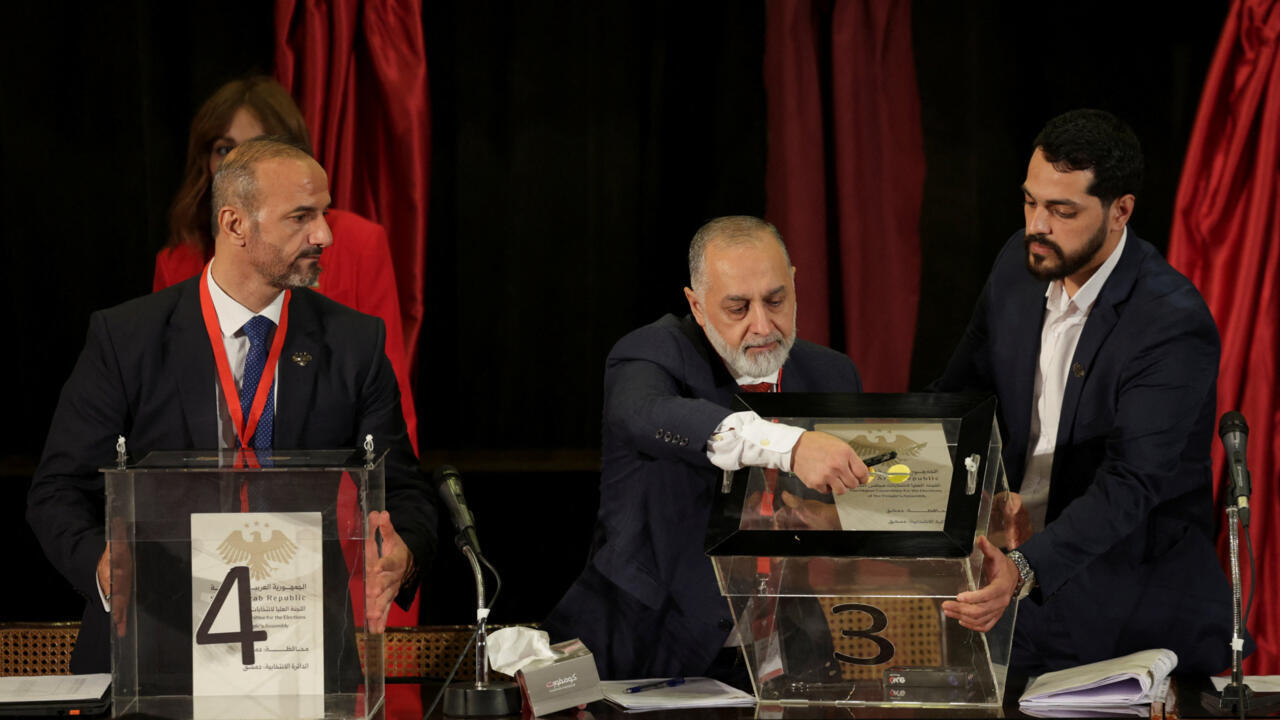
Syria is embarking on a unique path too rebuild its legislative body following the dramatic shifts in power after years of civil war. Though, the process, currently underway, is sparking debate about its legitimacy and inclusivity. this isn’t a conventional election, but a carefully managed selection process designed to establish a parliament under a transitional framework. Let’s break down what’s happening, why it matters, and what the implications are for Syria’s future.
A Parliament forged in Transition
The current process involves selecting 250 parliamentary members. It’s a departure from the rubber-stamp legislature that existed under the Assad regime.This new body will operate under a temporary constitution established in March,exercising legislative functions until a permanent constitution is adopted and fully democratic elections can be held.
However, significant portions of the country are excluded from this initial phase. Regions held by Kurdish forces in the northeast are currently unrepresented, with thier 32 allocated seats remaining vacant due to being outside Damascus’ control. This immediately raises questions about the representativeness of the new parliament.
The Selection Process: Rules and Concerns
Around 6,000 individuals are participating in the selection, with preliminary results expected shortly.The criteria for candidates are stringent. They must demonstrably not be supporters of the former regime and refrain from advocating for secession or partition.
Interestingly, the process has also seen the emergence of diverse candidates, including Syrian-American Henry Hamra, the first Jewish candidate in decades. Yet, despite this apparent openness, the process is facing substantial criticism.
Here’s a breakdown of the key concerns:
* Concentration of Power: Rights groups argue the selection process grants undue influence to figures like Sharaa,allowing them to shape a parliamentary majority composed of loyalists.
* Lack of Pluralism: Critics fear this undermines the basic principle of pluralism essential for a genuine democratic process.
* Exclusion & Depiction: The exclusion of regions like the Kurdish northeast and concerns about representation for other ethnic and religious minorities are significant.
* Documentation Challenges: Organizing direct elections is currently deemed unachievable due to the widespread lack of documentation among Syrians displaced by the war – millions have fled or are internally displaced.
As Bassam Alahmad, executive director of Syrians for Truth and Justice, succinctly put it: “You can call the process what you like, but not elections.”
Voices From the Ground: A Spectrum of opinions
The reaction within Syria is understandably mixed.
* Cautious Support: Some, like 77-year-old Louay al-Arfi, a retired civil servant in Damascus, express support for the authorities but acknowledge the limitations of the current process. He views it as a necessary step in a transitional phase, while still advocating for direct elections in the future.
* Disappointment & Marginalization: In the Kurdish-controlled northeast, Nishan Ismail, a teacher, laments the missed possibility for a fresh political start. The marginalization of regions highlights a disregard for inclusive political participation.
* Skepticism & Resignation: Activists in areas like Sweida, held by the Druze community, express deep skepticism. Burhan Azzam believes the authorities have effectively ended political life in Syria, and the selection process fails to meet even basic democratic standards.
* Hopeful Pragmatism: Candidate Mayssa Halwani acknowledges the criticism as normal, suggesting that a new government and newfound freedoms require adjustment.
The Road Ahead: Decentralization and Integration
Negotiations regarding the integration of Kurdish civil and military institutions into the central government remain stalled.Damascus has consistently rejected calls for decentralization, further complicating the path toward a unified and representative Syria.
This resistance to power-sharing and inclusive governance is a critical obstacle. Without addressing the concerns of marginalized regions and ensuring equitable representation, the new parliament risks becoming another instrument of control rather than a genuine vehicle for democratic change.
What Dose This Mean For You?
The situation in Syria is complex and evolving. Understanding the nuances of this parliamentary selection process is crucial for anyone following the country’s trajectory. While it represents a departure from the past, it’s far from a guaranteed path to a stable and democratic future.
The coming months will be critical in determining whether this new parliament can truly serve the interests of all Syrians, or if it
Worth a look