
Wall Street has developed a peculiar new vocabulary to describe the volatility of the current administration. Traders are increasingly relying on the TACO trade, a market strategy built on the perceived predictability of President Donald Trump’s brinkmanship. While the phrase began as a light-hearted joke among financial columnists, it has evolved into a serious methodology for positioning portfolios during geopolitical crises.
The acronym TACO stands for “Trump Always Chickens Out.” This trading thesis suggests that the President’s tendency to offer maximalist threats—ranging from aggressive tariffs to military strikes—often serves as a prelude to a compromise or a strategic reversal. For a growing cohort of investors, these escalations are no longer viewed as risks to be feared, but as “buy signals” to be exploited.
This phenomenon has become particularly evident in the S&P 500’s resilience. According to reports, nine of the 10 best days for the index since the start of Trump’s second term were spurred by de-escalation efforts involving either Iran or trade tariffs Morningstar. By treating extreme threats as indicators of an impending “off-ramp,” traders are stepping into the market on weakness, anticipating a rebound once the President pivots.
The strategy is rooted in the belief that President Trump views the stock market as a primary barometer of his success. Investors argue that he is more sensitive to financial market swings than his predecessors, particularly as those swings could impact the political landscape and the Republican Party’s chances of maintaining control of Congress during upcoming midterm elections.
The Origins and Evolution of the TACO Trade
The “TACO” terminology was not born in a trading pit, but in the pages of the Financial Times. The acronym was popularized by columnist Robert Armstrong in 2025, following a series of abrupt reversals regarding the administration’s “Liberation Day” tariffs Wikipedia. A pivotal moment occurred on April 9, 2025, when Trump staged a sudden about-face on planned tariffs, calling for a 90-day delay to allow for further negotiations with U.S. Trading partners.

What started as a humorous observation about political style has since transitioned into a disciplined financial play. Market participants have observed a pattern: the more extreme the initial position taken by the President, the more likely a compromise becomes. This cycle has muted the impact of geopolitical-driven selling, which has become progressively less severe since April 2025 CNBC.
The psychology of the trade relies on “looking through” the rhetoric. For instance, when the U.S. And Israel began an assault on Iran in March, crude oil prices soared. While this raised fears of a recession or inflation that could pressure the Federal Reserve to hike interest rates, the S&P 500 remained resilient. Investors credited the hope for a swift “TACO” move—a sudden de-escalation—with keeping a floor under the stock market, preventing the index from entering correction territory (a drop of 10% or more from a recent high) Morningstar.
Case Study: Brinkmanship and the Iranian Deadline
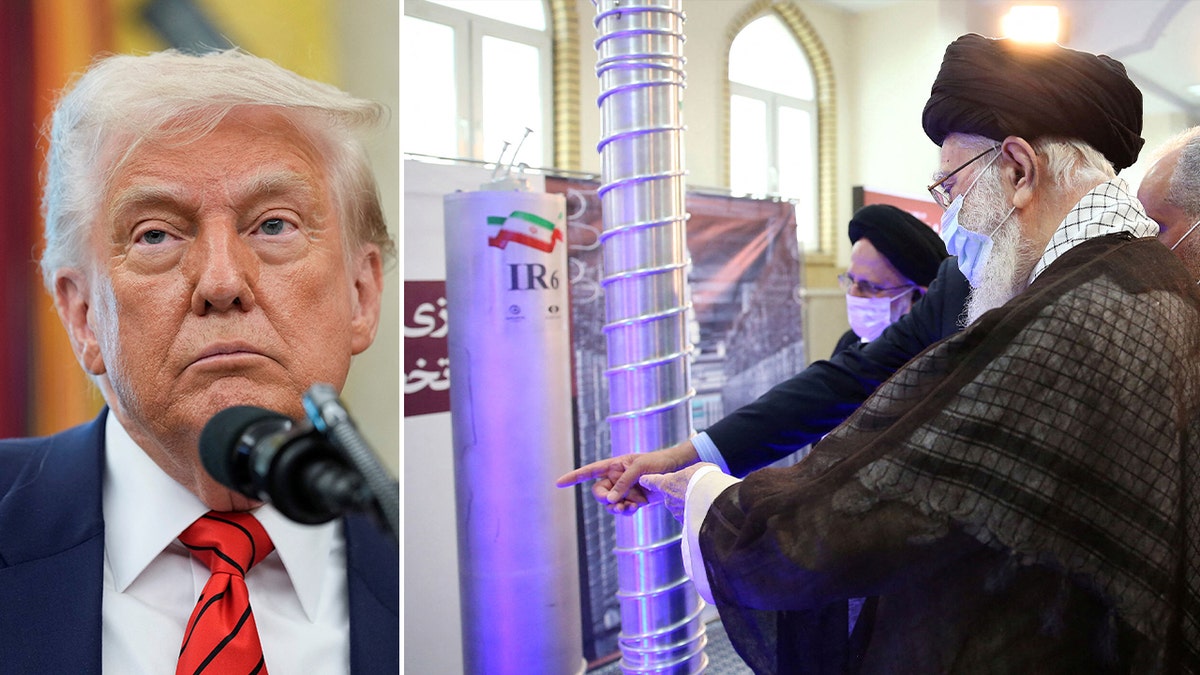
The effectiveness of the TACO trade was recently put to the test during a high-tension standoff with Iran. On a Tuesday in April 2026, President Trump issued a stark warning, stating that “a whole civilization will die tonight, never to be brought back again.” Despite the severity of the threat, the S&P 500 managed a modest gain for the day, suggesting that investors had already priced in a potential reversal CNBC.
The climax occurred just minutes before an 8 p.m. ET deadline, when Trump paused planned strikes on Iran. This move ended a five-week conflict that had disrupted a critical global energy artery. The immediate result was a surge in stocks and a tumble in oil prices. However, the market’s reaction was not a surprise to those following the TACO thesis.
Data from Barclays indicated that S&P 500 options reflected only a modest risk premium leading into the deadline. The S&P 500 had already posted a 3.4% gain in the week prior, its first weekly gain in six, signaling that volatility markets showed little stress even as the rhetoric escalated CNBC.
Key Components of the TACO Strategy
- The Buy Signal: Traders treat extreme escalation or “maximalist positions” as a signal to buy the dip.
- The Off-Ramp: The expectation that a compromise or delay will be announced to stabilize markets.
- The Market Barometer: The belief that the President’s sensitivity to the S&P 500 acts as a natural constraint on his policy extremes.
- The Political Link: The connection between stock market performance and the electoral prospects of the governing party.
The Risks of a Market That Stops Fearing
While the TACO trade has been a “serious moneymaker” for some, it introduces a new set of systemic questions. Ed Mills, a managing director and Washington policy analyst at Raymond James, notes that the market is learning that the more extreme the position, the more likely a compromise occurs CNBC.
However, this creates a potential paradox. If investors stop reacting with fear to presidential threats, the stock market may cease to function as a constraint on the administration’s behavior. If the “market barometer” no longer registers stress during a crisis, the President may feel less pressure to provide the “off-ramp” that traders are betting on. This could lead to a scenario where a threat is not a bluff, but a precursor to an actual escalation that the market is unprepared for.
As of the close on Wednesday, April 8, 2026, FactSet data showed the S&P 500 was off by approximately 0.9% since the start of the year, reflecting a relatively stable environment despite the recurring cycles of brinkmanship Morningstar.
Comparison of Market Reactions to Trump’s Policy Shifts
| Event Trigger | Initial Market Reaction | “TACO” Outcome | Resulting Asset Movement |
|---|---|---|---|
| Tariff Threats (April 2025) | Volatility/Selling | 90-day delay for talks | Market rebound |
| Iran Assault (March 2026) | Oil price surge | Expected de-escalation | S&P 500 avoided correction |
| Iran Deadline (April 2026) | Modest gain/Low risk premium | Strikes paused at 8 p.m. ET | Stocks surged; Oil tumbled |
For those attempting to navigate these waters, the current environment requires a balance between technical analysis and a deep understanding of the administration’s rhetorical patterns. The “TACO” trade is less about the fundamentals of the companies within the S&P 500 and more about the psychology of the executive branch.
As the administration continues to navigate trade wars and geopolitical tensions, the financial world will be watching to see if the pattern holds or if the market’s confidence eventually creates a blind spot. With the midterm elections approaching, the stakes for maintaining a bullish market remain high for the administration.
The next major checkpoint for traders will be the continued monitoring of trade negotiations and any further directives regarding the “Liberation Day” tariff framework. We encourage our readers to share their perspectives on this trading phenomenon in the comments below.
- Trump May Be to Blame for Less Accurate Weather Forecasts
- El cantante estadounidense Chris Brown se declaró culpable de un cargo de affray por … – Instagram
- Trump Threatens Iran as Houthi Tanker Attacks Push Oil Prices Above $100 (time.news)
- Trump Discusses the Speech He Almost Gave Before Assassination Attempt (newsdirectory3.com)