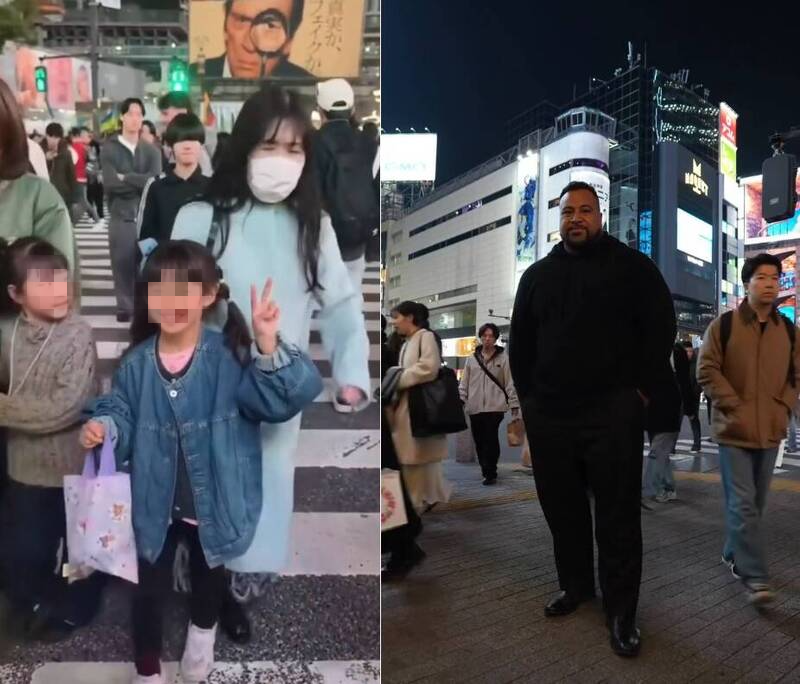
The bustling Shibuya crossing in Tokyo, a globally recognized landmark, has grow the backdrop for a disturbing incident and a subsequent demonstration highlighting concerns about pedestrian safety and targeted harassment. A video circulating online shows a young Taiwanese girl being deliberately knocked over by a woman, sparking outrage across Taiwan and Japan. In response, Australian strongman Eddie Williams, known for his participation in World’s Strongest Man competitions, conducted a personal experiment, attempting to replicate the conditions of the incident to demonstrate the vulnerability of pedestrians and the potential for intentional harm. The incident and Williams’s response have ignited a broader conversation about safety in crowded urban spaces and the potential for malicious acts.
The initial incident, captured on video, depicts a woman intentionally colliding with a young girl who was taking photographs at the Shibuya crossing. The act drew immediate condemnation, with many online users expressing anger and calling for the perpetrator to be identified and held accountable. Japanese netizens began attempting to identify the woman through screenshots and social media sleuthing. The incident resonated deeply in Taiwan, prompting further discussion about the safety of Taiwanese tourists abroad. Adding another layer to the situation, China’s embassy in Japan issued a statement regarding incidents of harassment targeting Chinese citizens in Tokyo, advising them to be cautious. This advisory, while separate from the incident involving the Taiwanese girl, underscores a broader concern about safety for foreign nationals in the area.
The Experiment: A Test of Physical Vulnerability
Eddie Williams, a powerlifter and strongman competitor often referred to as the “Gentle Giant,” responded to the video with a demonstration of his own. He traveled to a busy street in Japan and stood in a similar location to the girl in the video, hoping to be intentionally bumped. Williams documented his attempt on Threads, sharing a video showing himself standing amidst the pedestrian flow. However, despite being visibly large and present, he was not intentionally collided with. He noted his disappointment, stating that it appeared only smaller individuals were being targeted. This experiment, while anecdotal, served to highlight the perceived vulnerability of those who are physically smaller or weaker in crowded environments. Williams’s video quickly gained traction, amassing 2.8 million views within a day, according to reports, and sparking a wave of comments from Taiwanese users.
The response from Taiwanese netizens was particularly pointed, with many drawing a connection between the incident and the need for a robust national defense budget. Comments circulating online, as reported by Yahoo Taiwan, included sentiments such as “This shows why we need to fund national defense.” This reaction underscores a growing concern among some Taiwanese citizens about their safety and security, both domestically and abroad, and a perceived need for greater self-reliance.
“撞人族” and Concerns About Targeted Harassment
The incident involving the Taiwanese girl has brought attention to a phenomenon referred to as “tsumotsuki” (撞人族), or “people-pushing tribe,” in Japan. This refers to individuals who intentionally bump into pedestrians in crowded areas, often targeting women and children. While the motivations behind these acts are not always clear, they are widely considered to be malicious and disruptive. Liberty Times Net reports that the incident has sparked a wider discussion about this issue and the need for greater vigilance and security measures in public spaces. The Chinese embassy in Japan likewise issued a warning to its citizens about potential harassment, advising them to exercise caution while in Tokyo. This advisory came after reports of Chinese nationals being targeted by right-wing groups, adding to the overall sense of unease.
The Shibuya Crossing: A Popular, Yet Vulnerable, Location
The Shibuya crossing is one of the world’s busiest intersections, attracting millions of visitors each year. Its iconic status and vibrant atmosphere make it a popular destination for tourists and locals alike. However, the sheer volume of pedestrians also creates an environment where it is easy to get lost in the crowd and potentially become a target for harassment. The incident involving the Taiwanese girl highlights the challenges of maintaining safety and security in such a densely populated area. Authorities are now facing increased pressure to address these concerns and implement measures to protect pedestrians.
Reactions and Calls for Action
The incident has prompted widespread calls for action, both in Taiwan and Japan. Many are demanding that the perpetrator be identified and prosecuted to the fullest extent of the law. There are also calls for increased security measures at the Shibuya crossing and other crowded public spaces. The Taiwanese government has reportedly offered assistance to the family of the girl who was injured, and is monitoring the situation closely. The incident has also sparked a broader debate about the need for greater cultural sensitivity and respect for tourists.
Online, many users shared their own experiences of being bumped or harassed in Japan, with some suggesting that the incidents are more common than reported. One user on LINE TODAY commented, “I’m 180cm tall and weigh 75kg, and I get bumped occasionally in Japan. They just disappear after bumping into you.” Another user stated, “Yes, high school girls are often targeted.” These anecdotal accounts, while not statistically representative, contribute to the growing perception that targeted harassment is a problem in Japan.
Looking Ahead: Investigation and Prevention
As of March 11, 2026, the investigation into the incident involving the Taiwanese girl is ongoing. Japanese authorities are reviewing security footage and interviewing witnesses in an attempt to identify the woman responsible. The incident has also prompted a review of security protocols at the Shibuya crossing, with officials considering measures such as increased police presence and the installation of additional surveillance cameras. The long-term impact of this incident remains to be seen, but it has undoubtedly raised awareness about the issue of pedestrian safety and targeted harassment in Japan. The focus now shifts to ensuring that those responsible are held accountable and that measures are place in place to prevent similar incidents from occurring in the future.
The incident serves as a stark reminder of the vulnerabilities that exist in crowded public spaces and the importance of vigilance and respect for others. It also highlights the interconnectedness of global events and the impact that a single act of malice can have on individuals and communities around the world. As the investigation continues, it is hoped that justice will be served and that steps will be taken to create a safer environment for all pedestrians.
Next Steps: Japanese police are expected to release further details regarding the investigation into the incident within the next week. Updates will be provided as they become available. We encourage readers to share their thoughts and experiences in the comments section below.
Related reading
- Noi, campioni del barbecue”. Griglia e costine in cima all’Europa – Il Resto del Carlino
- Manhunt in Germany after deadly car ramming near Berlin Pride
- Berlin Pride Attack: One Dead and 16 Injured as Police Hunt Islamist Suspect (archyde.com)
- Berlin Pride Parade: One Dead and At Least 15 Injured After Van Plows Into Crowd (time.news)