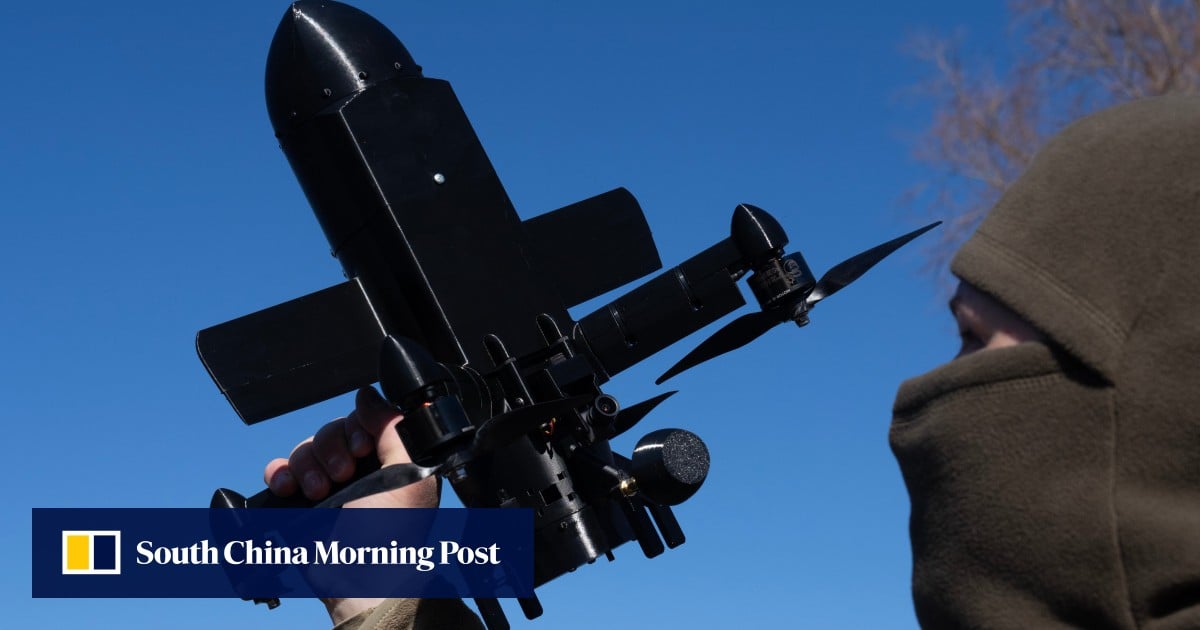
Taipei is recalibrating its air defense strategy, acknowledging that traditional, expensive missile systems alone may prove insufficient against the increasingly sophisticated and voluminous aerial threats posed by mainland China. This shift in thinking comes as Taiwan closely observes recent conflicts – notably in Ukraine and the Middle East – where the saturation of airspace with relatively inexpensive drones and rockets has overwhelmed conventional defense mechanisms. The island’s defense ministry recently submitted a report to lawmakers outlining the need for a multi-layered approach, prioritizing low-cost interceptors alongside existing high-value assets.
The evolving threat landscape and lessons learned from contemporary warfare are driving this reassessment. For decades, Taiwan’s defense planning has centered on deterring a potential invasion by China, largely focusing on conventional military capabilities and a robust missile defense system. Though, the proliferation of unmanned aerial vehicles (UAVs), often referred to as drones, and the demonstrated effectiveness of swarming tactics have exposed vulnerabilities in this traditional model. The conflict in Ukraine, in particular, has highlighted how a determined adversary can leverage large quantities of low-cost drones to exhaust defensive resources and disrupt critical infrastructure. This realization is prompting Taiwan to explore more adaptable and cost-effective solutions.
The “Taiwan Shield” Initiative and the Need for Adaptability
The proposed changes are being integrated into Taiwan’s broader “Taiwan Shield,” or T-Dome, initiative – a layered air-defense architecture designed to protect the island’s critical infrastructure and sustain defensive operations during a potential conflict. As reported by the South China Morning Post, the T-Dome plan aims to create a comprehensive defense network capable of intercepting a wide range of threats, from ballistic missiles to cruise missiles and drones. However, recent analysis suggests that the initial design of T-Dome may have critical flaws, particularly in its ability to counter mass drone attacks.
The core of the new strategy involves supplementing existing missile defense systems with a network of low-cost interceptors. These systems are intended to engage and neutralize large numbers of incoming drones and rockets before they can reach their targets, thereby conserving more expensive missiles for higher-value threats. This approach mirrors strategies adopted by other nations facing similar challenges, including Israel and the United States. For example, the U.S. Army has been actively developing directed-energy weapons, such as lasers and high-powered microwaves, to counter drone swarms, and Israel has deployed systems like the Iron Dome to intercept rockets and artillery shells fired from Gaza. The effectiveness of these systems in real-world scenarios has informed Taiwan’s thinking.
Lessons from Ukraine and the Middle East
The war in Ukraine has provided a stark demonstration of the challenges posed by drone warfare. Both Russia and Ukraine have extensively used drones for reconnaissance, attack, and electronic warfare. As PBS NewsHour reported in April 2025, Ukrainian President Zelenskyy even noted the capture of Chinese nationals fighting for Russia, highlighting the global implications of the conflict. This underscores the potential for external actors to turn into involved in a conflict over Taiwan, further complicating the security landscape.
The conflict has demonstrated that relatively inexpensive commercial drones, modified for military purposes, can be highly effective in disrupting enemy operations. They can be used to target critical infrastructure, such as power plants and transportation networks, and to harass and demoralize troops. The sheer volume of drones employed in the conflict has overwhelmed Ukrainian air defenses at times, forcing them to rely on a combination of traditional anti-aircraft systems, electronic warfare, and improvised countermeasures. Taiwan is studying these tactics to develop its own defenses against similar attacks.
Beyond Ukraine, the ongoing conflicts in the Middle East, particularly the exchanges between Israel and Iran-backed groups like Hezbollah and Hamas, have also provided valuable insights. These conflicts have showcased the effectiveness of low-cost rockets and drones in saturating enemy airspace and overwhelming air defense systems. The employ of drones for precision strikes against military targets and infrastructure has also highlighted the need for robust counter-drone capabilities. The lessons learned from these conflicts are directly informing Taiwan’s efforts to enhance its air defense posture.
China’s Growing Arsenal and Taiwan’s Strategic Response
The impetus for Taiwan’s defensive adjustments is directly linked to the rapid expansion and modernization of China’s military capabilities. China’s People’s Liberation Army (PLA) has been investing heavily in the development of long-range rockets, cruise missiles, and a growing fleet of military drones. This buildup poses a significant threat to Taiwan, which lies just over 100 miles off the coast of mainland China. The PLA’s ability to launch a large-scale attack on Taiwan has increased dramatically in recent years, prompting Taipei to take steps to bolster its defenses.
The PLA’s development of anti-access/area denial (A2/AD) capabilities is a particular concern for Taiwan. A2/AD systems are designed to prevent enemy forces from operating within a specific area, in this case, the Taiwan Strait. These systems include long-range anti-ship missiles, advanced air defense systems, and cyber warfare capabilities. By deploying A2/AD systems, China aims to create a defensive perimeter around Taiwan, making it more tough for the United States and its allies to intervene in the event of a conflict. Taiwan’s response to this threat involves strengthening its own A2/AD capabilities and seeking closer security cooperation with the United States and other regional partners.
The Strategic Importance of Taiwan
Taiwan’s strategic importance extends beyond its own security. As a major hub for the global semiconductor industry, Taiwan plays a critical role in the production of advanced microchips, which are essential for a wide range of technologies, from smartphones and computers to automobiles and military equipment. Disruptions to Taiwan’s semiconductor industry would have severe consequences for the global economy. According to a report by the U.S. Army’s Foreign Military Studies Office, Taiwan is considered more critical to the international supply chain than Ukraine.
Taiwan is strategically located within the “first island chain” in East Asia, providing an important line of defense against potential aggression from China. The island’s control is seen as vital by the United States and its allies in the region, who view it as a key component of the Indo-Pacific security architecture. The potential for a conflict over Taiwan has significant geopolitical implications, and the international community is closely monitoring the situation.
Looking Ahead: Challenges and Opportunities
Even as Taiwan’s efforts to enhance its air defense capabilities are commendable, significant challenges remain. The cost of acquiring and deploying new interceptor systems is substantial, and Taiwan faces budgetary constraints. The development of effective counter-drone technologies is an ongoing process, and there is no guarantee that Taiwan will be able to fully neutralize the threat posed by Chinese drones. The island also needs to address vulnerabilities in its command and control systems and improve its ability to coordinate its defenses with those of the United States and other allies.
Despite these challenges, Taiwan has several opportunities to strengthen its air defense posture. Increased security cooperation with the United States, including joint military exercises and the transfer of advanced defense technologies, can aid to enhance Taiwan’s capabilities. Investing in indigenous defense industries can also reduce Taiwan’s reliance on foreign suppliers and promote innovation. Finally, strengthening its cyber defenses and improving its ability to counter disinformation campaigns are crucial for protecting Taiwan from hybrid warfare tactics.
The Taiwanese defense ministry is expected to provide further details on its air defense modernization plans in the coming months. Lawmakers will continue to scrutinize the proposals and debate the allocation of resources. The ongoing geopolitical tensions in the region and the lessons learned from recent conflicts will undoubtedly shape the future of Taiwan’s defense strategy. The next key update is anticipated during the legislative session in June 2026, where the finalized budget for the T-Dome initiative will be presented for approval. Readers are encouraged to follow developments on the Ministry of National Defense’s official website for the latest information and analysis.
What are your thoughts on Taiwan’s evolving defense strategy? Share your comments below and join the conversation.
Related reading