
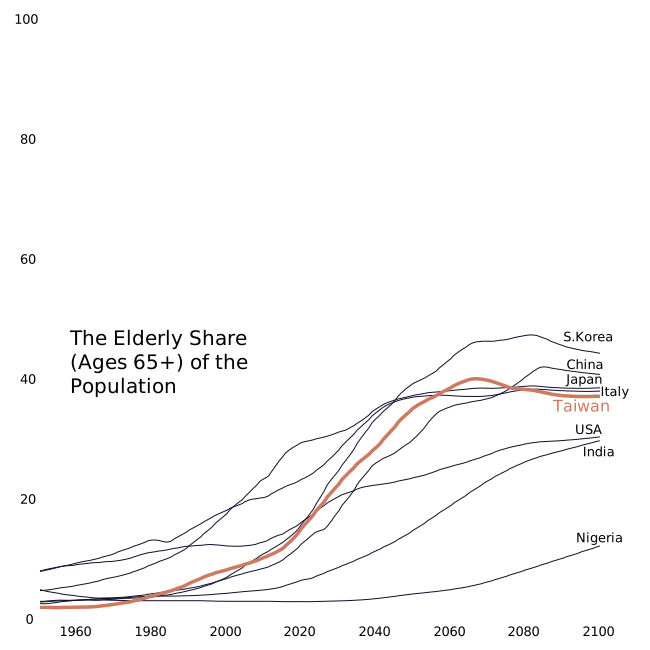
Taiwan is currently navigating a demographic shift of historic proportions. As the nation rapidly transitions into a “super-aged society”—defined as a population where 20% or more of citizens are aged 65 and older—the focus of public health has shifted from merely extending life to preserving the quality of those added years. The central challenge is no longer just longevity, but the maintenance of independence.
Recent scientific evidence is shedding light on how elderly individuals in Taiwan are fighting the transition toward disability. While the conversation often centers on a single “miracle” exercise, the reality is more systemic. A comprehensive study utilizing data from the Taiwan Longitudinal Study on Aging (TLSA) suggests that the key to maintaining autonomy lies in the aggressive mitigation of combined lifestyle risks, with consistent physical activity serving as a primary pillar of defense.
For millions of seniors, the goal is the preservation of “Activities of Daily Living” (ADL). These are the fundamental skills required to manage one’s basic physical needs, such as eating, bathing, and dressing. When these abilities decline, the transition from independent living to assisted care begins—a shift that places immense pressure on both families and the national healthcare infrastructure.
The Science of Independence: ADL and IADL
To understand why specific movements and lifestyle habits are becoming a priority in Taiwan, it is necessary to distinguish between two types of functional independence: Activities of Daily Living (ADL) and Instrumental Activities of Daily Living (IADL). While ADLs cover basic survival and self-care, IADLs are more complex tasks that allow a person to live independently in a community, such as managing finances, shopping, preparing meals, and using a telephone.
A study published in the journal Nutrients in May 2024, titled “Changes in Combined Lifestyle Risks and the Transition of Activities of Daily Living in the Elderly Population of Taiwan,” analyzed data from the TLSA to determine what accelerates the loss of these functions. The researchers found a direct correlation between “combined lifestyle risks” and the probability of transitioning from a state of independence to disability.
The research emphasizes that the loss of IADLs typically precedes the loss of basic ADLs. So that the ability to handle complex daily tasks is the “canary in the coal mine” for overall geriatric health. By identifying these risks early, healthcare providers in Taiwan are encouraging seniors to adopt specific physical and behavioral interventions to stall this decline.
The ‘Combined Risk’ Factor: Why Exercise Alone Isn’t Enough
The trending focus on “exercise” among Taiwan’s elderly is actually part of a broader strategy to reduce combined lifestyle risks. The TLSA-based research highlights that physical inactivity does not act in isolation. Instead, it compounds with other risk factors—such as poor dietary habits, smoking, and alcohol consumption—to create a synergistic effect that accelerates functional decline.
For the elderly in Taiwan, the “exercise” being prioritized is not necessarily a high-intensity regimen, but rather the consistent avoidance of physical inactivity. The study suggests that those who maintain a baseline of physical movement, combined with a healthy diet and the avoidance of harmful substances, have a significantly lower risk of losing their ability to perform daily tasks. This holistic approach transforms “exercise” from a leisure activity into a critical medical intervention for aging.
Key lifestyle factors identified as critical for maintaining independence include:
- Regular Physical Activity: Combating sedentary behavior to maintain muscle mass and cognitive function.
- Nutritional Optimization: Ensuring adequate nutrient intake to support cellular repair and energy levels.
- Avoidance of Toxins: Reducing or eliminating smoking and excessive alcohol use, which exacerbate systemic inflammation.
Impact on Taiwan’s Healthcare Infrastructure
The urgency of these lifestyle interventions is driven by the sheer scale of Taiwan’s aging population. When a significant portion of the population loses the ability to perform IADLs, the demand for long-term care insurance and professional caregiving spikes. By promoting “combined risk reduction,” Taiwan aims to extend the “healthspan”—the period of life spent in quality health—rather than just the lifespan.
This shift is moving geriatric care away from reactive treatment (treating a fall or a stroke) toward proactive prevention. Community centers and health clinics across Taiwan are increasingly integrating these findings, encouraging seniors to engage in social-physical activities that address both the physical and psychological aspects of aging. This prevents the social isolation that often accompanies the loss of IADLs, which can further accelerate cognitive decline.
Global Implications for Aging Societies
Taiwan’s experience serves as a blueprint for other nations facing similar demographic crises, including Japan, South Korea, and many European countries. The transition to a super-aged society is inevitable in many regions, but the transition to a “disabled” society is not. The evidence from the TLSA suggests that the most effective way to protect the elderly is to treat lifestyle risks as a collective bundle rather than isolated problems.

For the global medical community, the takeaway is clear: physical activity is the most accessible tool for preserving independence, but its efficacy is magnified when paired with nutritional support and the elimination of harmful habits. The “exercise” the elderly in Taiwan are embracing is, a commitment to a comprehensive lifestyle overhaul designed to keep them in their own homes for as long as possible.
Key Takeaways for Healthy Aging:
- Monitor IADLs: Pay attention to early struggles with complex tasks (like shopping or phone use), as these often signal a decline in overall functional health.
- Address Combined Risks: Do not rely on exercise alone; pair it with a nutrient-dense diet and the avoidance of smoking and alcohol.
- Prioritize Consistency: The goal is the avoidance of physical inactivity, meaning daily movement is more valuable than occasional intense workouts.
- Focus on Healthspan: Shift the goal from living longer to living independently for a greater percentage of one’s life.
As Taiwan continues to refine its approach to geriatric health, the next major checkpoint will be the integration of these lifestyle risk assessments into standard primary care for all citizens over 65. Public health officials are expected to further update guidelines on “combined risk” screening to ensure early intervention for those at high risk of disability.
Do you or your loved ones have a strategy for maintaining independence in later years? Share your thoughts and experiences in the comments below.