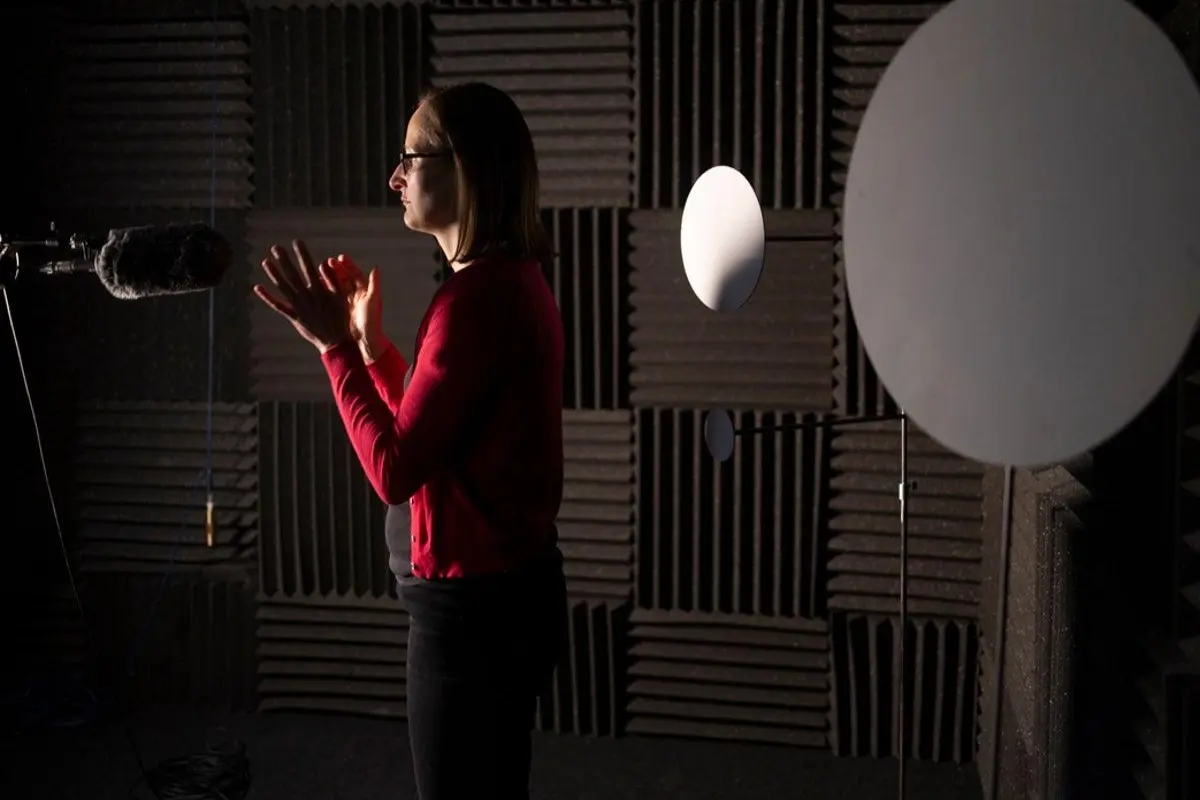
Human echolocation allows individuals who are blind or visually impaired to navigate their surroundings by interpreting reflected sound waves, much like bats and marine mammals do in nature. Recent scientific research highlights how the human brain processes acoustic cues to map space, revealing an extraordinary sensory adaptability that extends far beyond standard auditory perception.
According to studies published in cognitive neuroscience journals, human echolocation typically involves producing sharp sounds—such as clicking the tongue—and listening to the returning echoes. This auditory feedback provides detailed information regarding the size, shape, distance, and material composition of objects in the immediate environment. Researchers at institutions such as Durham University have documented how proficient echolocators activate the visual cortex of the brain when processing these echoes, demonstrating that spatial awareness is not exclusively dependent on eyesight.
For decades, sensory substitution research has explored how alternative senses can compensate for vision loss. While bats rely on biological sonar for high-speed aerial hunting, humans utilize echolocation primarily for safe urban mobility, obstacle avoidance, and independent travel. Spatial navigation training programs around the world now incorporate structured echolocation techniques, teaching participants how to interpret acoustic reflections to move confidently through unfamiliar public spaces.
The Neurological Mechanics of Human Echolocation
When a person emits a sharp acoustic signal, sound waves propagate outward until they strike a physical surface. The brain measures the tiny fraction of time it takes for the echo to return, translating acoustic delays into precise spatial coordinates. Functional neuroimaging studies confirm that sighted and blind individuals alike can learn this skill, though individuals with vision impairments often develop heightened auditory acuity through neuroplasticity.
Brain imaging scans conducted during echolocation tasks show activity not only in the auditory cortex—which processes sound frequencies and loudness—but also in the calcarine cortex, an area typically reserved for visual processing. This crossover indicates that the human brain constructs a mental map of physical space using sound data, effectively visualizing objects through acoustic shadows and reflections.
Applications in Mobility Training and Rehabilitation
Rehabilitation specialists integrate active acoustic training into orientation and mobility programs for the visually impaired. By mastering tongue clicks and environmental listening, individuals can detect parked cars, lampposts, building walls, and open doorways without physical contact from a white cane.
Public health organizations and specialized sensory clinics continue to study the long-term benefits of integrating echolocation into daily life. Structured workshops provide patients with standardized methods to sharpen their auditory perception, fostering greater autonomy and reducing reliance on external assistance during transit.
As ongoing research uncovers more about the limits of human sensory adaptation, experts emphasize that acoustic navigation represents a powerful tool for independence. Further clinical studies and controlled trials remain underway to refine training protocols and expand access to specialized sensory rehabilitation services worldwide.
Related reading