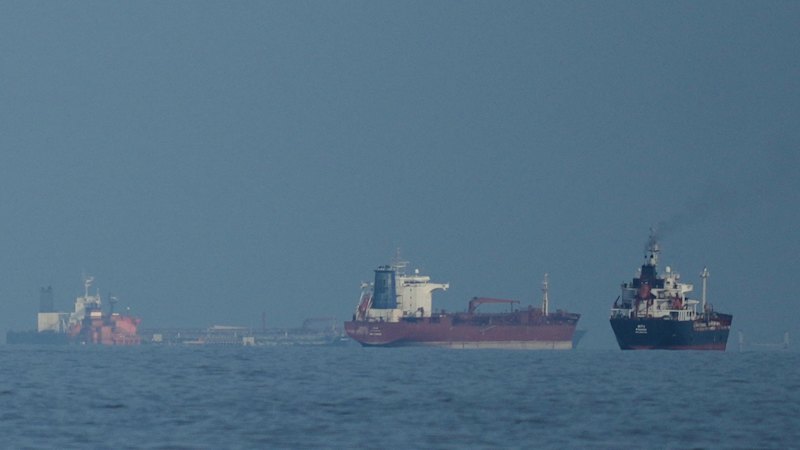
Hours after Iran announced it would reimpose restrictions and close the critical waterway, a tanker attempting transit reported that it was coming under fire in the Strait of Hormuz on Saturday, April 18, 2026. The incident marks a sharp escalation in tensions between Tehran and Washington, following days of conflicting statements over access to one of the world’s most vital maritime chokepoints. According to the United Kingdom Maritime Trade Operations (UKMTO) agency, two gunboats linked to Iran’s Islamic Revolutionary Guard Corps (IRGC) opened fire on the vessel approximately 20 nautical miles northeast of Oman without issuing a radio challenge. The captain confirmed the tanker and its crew were reported safe, though the attack has raised immediate concerns about the safety of commercial shipping in the region.
The Strait of Hormuz, through which roughly 20% of the world’s oil supply passes, became the focal point of renewed hostilities after Iran’s joint military command announced it would continue to block transit through the waterway as long as the United States maintains its naval blockade of Iranian ports. This blockade, established by U.S. Central Command (CentCom) on April 13, 2026, has reportedly forced 23 ships to turn around near the strait since its inception. Tehran had briefly reopened the route following a ceasefire agreement between Israel and Lebanon on Thursday, April 17, but reversed course hours later, citing the ongoing U.S. Restrictions as justification for reimposing transit limitations.
In a defiant message on his Telegram channel, Iran’s supreme leader, Ayatollah Ali Khamenei, stated that the country’s navy was ready to inflict “new bitter defeats” on its enemies, framing the military response as a necessary countermeasure to what Tehran describes as an economic strangulation effort by the United States. The rhetoric comes amid broader diplomatic efforts, including reports that Egypt is working with Pakistan to develop a framework for a lasting peace between the U.S. And Iran, though no formal agreement has been announced as of Saturday afternoon.
U.S. Officials, including former President Donald Trump, have continued to assert that talks with Iran will proceed over the weekend, with Trump claiming that key issues have been resolved and suggesting the administration may move to unfreeze up to $20 billion in Iranian assets in exchange for limits on uranium enrichment. However, these claims have not been independently verified by official sources, and the State Department has not released any statement confirming such a deal. The U.S. Military maintains its position that the blockade of Iranian ports is a lawful response to Tehran’s alleged support for regional militias and its nuclear activities, which Washington says violate international agreements.
The attack on the tanker has prompted immediate concern among global energy markets and shipping insurers, with several major carriers issuing advisories to vessels planning to transit the strait. Maritime security experts note that while direct firing on commercial vessels remains rare, the risk of miscalculation increases significantly when naval forces operate in close proximity without clear communication protocols. The UKMTO has urged all ships in the area to exercise extreme caution, maintain open bridge watches, and report any suspicious activity immediately to coalition naval forces.
As of late Saturday, no casualties or significant damage to the tanker have been reported, and the vessel continued its journey under escort from allied naval forces present in the region. The U.S. Fifth Fleet, based in Bahrain, has not issued a public statement regarding the incident but confirmed through CentCom that American forces remain actively engaged in monitoring and enforcing the port blockade. Analysts warn that any further disruption to traffic through the Strait of Hormuz could have cascading effects on global energy prices, particularly given current tight supplies and seasonal demand increases.
International organizations, including the International Maritime Organization (IMO), have called for de-escalation and renewed dialogue to ensure freedom of navigation in accordance with the United Nations Convention on the Law of the Sea (UNCLOS). The IMO emphasized that commercial shipping must not be caught in the crossfire of geopolitical disputes and urged all parties to respect the right of innocent passage through territorial waters.
Looking ahead, the next key development to watch is any official update from U.S. Central Command regarding the status of the port blockade or potential diplomatic engagement with Iranian representatives. No formal meetings or hearings have been publicly scheduled as of April 18, but backchannel communications are believed to be ongoing through intermediaries in Oman and Qatar. For real-time updates on maritime security advisories, readers are encouraged to consult the UKMTO website and official communications from allied naval commands operating in the Gulf.
This story is developing. World Today Journal will continue to monitor the situation and provide verified updates as new information becomes available. We encourage readers to share thoughtful comments and help spread awareness of this critical international issue by sharing this article across social platforms.