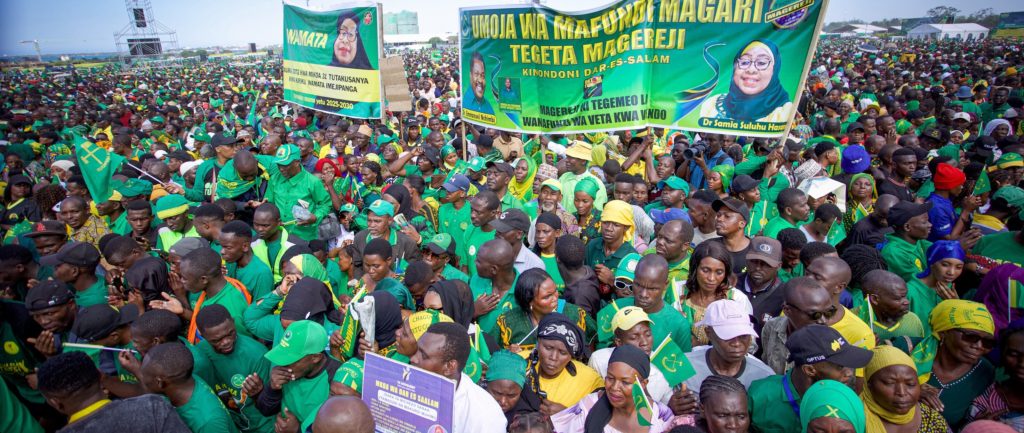
Tanzania‘s Democratic Backslide: A Deepening Repression ahead of the 2025 Elections
Tanzania, once lauded for its relative stability in a volatile region, is experiencing a worrying erosion of democratic principles and a systematic crackdown on dissent as it approaches general elections on October 29th, 2025. While the initial period following President Samia Suluhu Hassan’s ascension in 2021 offered a glimmer of hope for reform, a concerning trend of escalating repression has emerged, mirroring and even surpassing the practices of her predecessor, John Pombe Magufuli. This report details the escalating abuses, flawed legislation, and chilling effect on basic freedoms, raising serious concerns about the legitimacy of the upcoming elections.
Weaponization of the Justice system & Political Persecution
A defining characteristic of the current political climate is the blatant weaponization of the criminal justice system against political opponents. This isn’t merely a matter of legal disagreement; it’s a calculated strategy to silence opposition and stifle political participation. The case of opposition leader Tundu Lissu exemplifies this alarming trend. Currently detained on charges of treason and publishing false statements – stemming from comments made on social media and YouTube on April 3rd, 2025 – Lissu’s prosecution is widely viewed as politically motivated.
The repercussions extend beyond Lissu himself.On April 24th, 2025, police violently arrested dozens of his supporters gathered outside the Kisutu Resident Magistrate Court. Reports emerging from those detained paint a harrowing picture of harassment,beatings,and potential torture. Survivors recount brutal experiences, including one individual describing a purposeful attack with a pointed object causing a severe leg wound, while captors filmed the ordeal with chilling indifference. These individuals were then abandoned in remote locations,such as Ununio and Pande Forest,approximately 43 km from Dar es Salaam,a clear demonstration of state-sponsored intimidation.
Erosion of Civic Space Through Flawed Legislation
The escalating repression isn’t solely reliant on direct attacks. The Tanzanian authorities have proactively dismantled the foundations of a free and open society through the passage of deeply flawed legislation. amendments to the Political Parties Affairs Laws Act 2024 and the Self-reliant National Electoral Commission Act 2024 have substantially curtailed civic space and created a legal framework ripe for human rights violations.
As Tigere Chagutah, a leading observer of Tanzanian politics, notes, “Authorities have spent the last five years ripping apart the constitution… They have ramped up their clampdown on the civic space and the right to participate freely in elections through the passing of deeply flawed legislation that not only create room for violation of human rights but also attest to their zero tolerance of any opposing views both offline and online.” These laws effectively grant the government broad discretionary powers to suppress dissent and restrict the activities of opposition parties.
Systematic Restrictions on Fundamental freedoms
The impact of these policies is felt across the spectrum of fundamental freedoms. Tanzanian authorities have systematically banned, disrupted, and violently dispersed peaceful gatherings organized by opposition parties. Opposition leaders and activists face severe restrictions on their freedom of movement, hindering their ability to engage in normal political activities.
A recent example is the arrest of Amani Golugwa, Chadema’s deputy secretary general, at Julius Nyerere International airport on May 13th, 2025. He was detained while preparing to attend the International Democracy Union Forum in Brussels, with police questioning him about allegedly sharing facts with European Parliament members that could lead to sanctions against Tanzania. This incident underscores the government’s sensitivity to international scrutiny and its willingness to suppress engagement with external democratic institutions.
A Regression Following Initial Promise
The current situation represents a stark contrast to the initial optimism surrounding president Hassan’s leadership. Upon assuming office in March 2021, she signaled a potential shift away from the repressive policies of her predecessor, lifting bans on media outlets and allowing opposition rallies.She even publicly committed to constitutional reforms and a more inclusive political environment.
However, these initial steps proved to be short-lived. As the 2025 elections draw closer, the government has demonstrably intensified its crackdown on dissent, effectively reversing the limited progress made in the early stages of her presidency. This regression is deeply concerning and casts a long shadow over the future of democracy in Tanzania.
The risk of Illegitimate Elections
The escalating repression and erosion of fundamental freedoms pose a notable threat to the credibility of the upcoming elections. Without sustained pressure from Tanzania’s regional and international partners to reverse this dangerous course, the 2025 elections risk becoming a mere procedural exercise, devoid of legitimacy and conducted in an environment of fear, violence, and exclusion.
As Chagutah warns, “Without sustained pressure
Keep reading