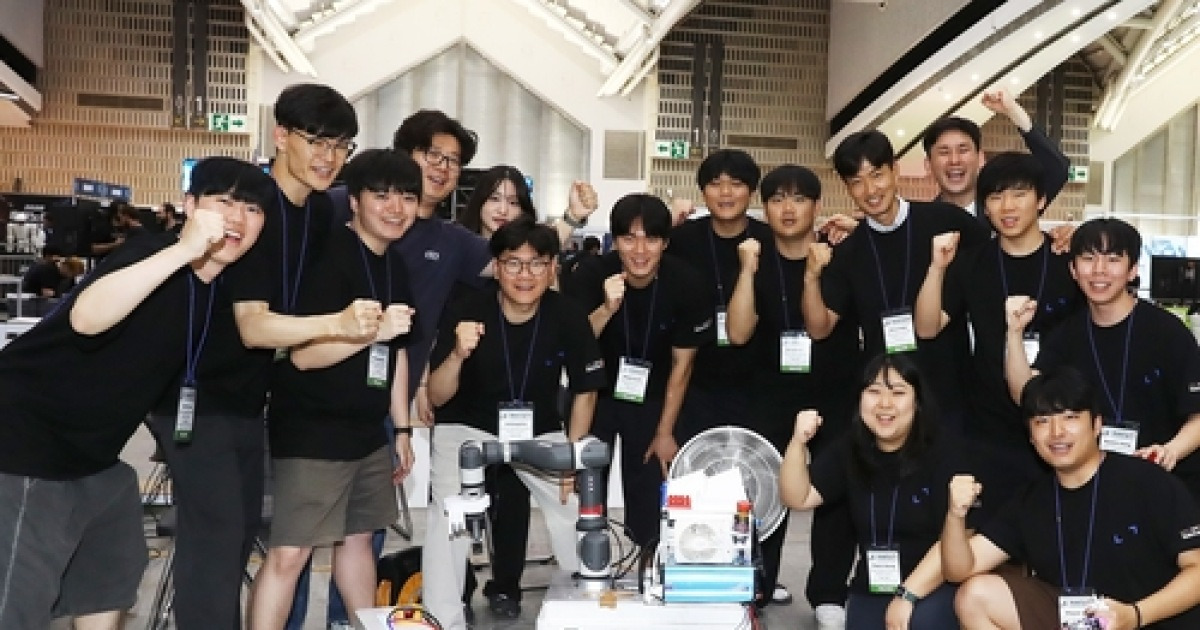
Team INU, a multidisciplinary student group, consists of 16 students from the departments of Bio-Robot System Engineering, Electrical Engineering, and Embedded System Engineering.
The achievement marks a significant milestone for the university’s robotics program, which integrates hardware and software expertise to compete in the global RoboCup arena. The team operates as a convergence unit, blending specialized knowledge from three distinct engineering disciplines to develop autonomous robotic systems capable of competing in simulated soccer matches.
This institutional backing provided the resources necessary for the team to refine their robotic platforms.
How Team INU Won the RoboCup SML Category
The Small Size League (SML) in RoboCup requires robots to play soccer autonomously, utilizing a vision system—usually overhead cameras—to track the ball and players in real-time. Team INU’s success relied on the integration of high-speed communication and precise motor control, developed by the 16 students across their three engineering majors.

The team’s technical approach focused on “convergence,” meaning the Bio-Robot System Engineering students handled the physical kinematics, Electrical Engineering students managed power and circuitry, and Embedded System Engineering students wrote the autonomous control logic. This structure allowed the team to optimize the robots’ response times and strategic positioning on the field.
The competition serves as a benchmark for autonomous robotics, testing the ability of machines to make split-second decisions without human intervention. By securing the top spot in the SML division, Team INU has demonstrated a level of algorithmic efficiency and hardware reliability that meets international standards for the RoboCup Federation.
Who Supported the Development of Team INU?
The development of the winning robots was not an isolated academic exercise but part of a broader regional initiative. The Incheon Metropolitan City Semiconductor-Bio Department provided critical funding and oversight, aligning the project with the city’s goals to foster a high-tech workforce in semiconductors and biotechnology.
The RISE framework is designed to link university research with regional industrial needs, ensuring that students apply theoretical knowledge to practical, competitive engineering challenges. This partnership allowed Team INU to access advanced laboratory equipment and professional mentorship.
In the field of robotics, RoboCup is widely regarded as one of the most rigorous tests of autonomous agent coordination and real-time processing.

This victory suggests that the university’s interdisciplinary approach—forcing students from different engineering backgrounds to collaborate on a single project—is an effective model for technical education. The collaboration between the Bio-Robot, Electrical, and Embedded systems departments mirrors the real-world development cycles found in the global robotics industry, where hardware and software must be developed in lockstep.
The success also reinforces Incheon’s position as a hub for semiconductor and robotic innovation. By integrating city government support with academic ambition, the project creates a pipeline for students to move directly from competitive robotics into high-tech industrial roles within the region.
The team is now expected to prepare for the subsequent stages of the RoboCup 2026 cycle, where they will face increased competition from global universities and research institutions. Further updates on their training schedule and technical iterations are expected to be released through the university’s official engineering portal.
Share this story on social media to support student innovation in robotics, or leave a comment below regarding the future of autonomous sports.