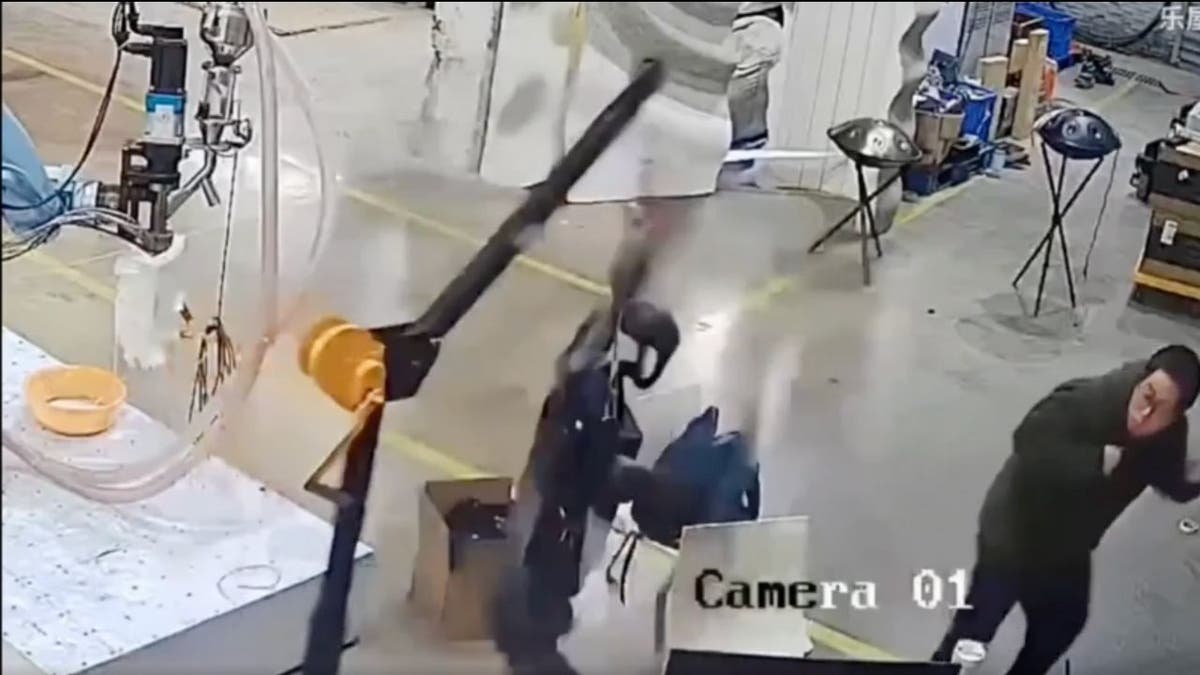
A viral video showing a humanoid robot kicking a human has been identified as a choreographed stunt rather than a spontaneous malfunction. The footage, posted to TikTok by a robotics company in Indonesia, features a robot based on the Unitree G1 model performing martial arts movements before striking a person standing nearby.
The incident sparked widespread discussion on social media regarding robot safety and the potential for autonomous systems to cause harm. However, the company responsible for the video clarified that the sequence was pre-planned and staged for demonstration purposes. The Unitree G1 is a compact humanoid robot developed by the Chinese firm Unitree Robotics, designed for research and development in agility and humanoid movement.
Unitree Robotics officially markets the Unitree G1 as a high-performance humanoid capable of complex tasks, featuring advanced joint torque control and a foldable design for transport. While the viral clip suggests a sudden “attack,” the choreography aligns with the robot’s programmed capabilities to execute precise, high-speed limb movements.
How the Unitree G1 Robot Operates
The Unitree G1 utilizes a series of high-torque motors and sensors to maintain balance and execute dynamic movements. According to technical specifications from Unitree Robotics, the G1 is engineered for “extreme agility,” allowing it to perform movements that mimic human athletics and martial arts. This capability makes it a popular platform for developers testing reinforcement learning and motion control.
In the video in question, the robot adopts a martial arts stance before delivering a kick. Because these robots operate via specific command scripts or remote teleoperation, the movement requires a programmed trigger. The Indonesian firm that uploaded the clip used these features to create a visually striking scene, which viewers initially misinterpreted as an autonomous decision by the machine.
Why Staged Robotics Videos Cause Public Concern
The reaction to the G1 footage reflects a growing global anxiety over the integration of humanoid robots in public and domestic spaces. When a robot appears to act aggressively without an obvious human controller, it triggers fears of “rogue AI,” despite the fact that the G1 lacks the cognitive autonomy to decide to attack a human on its own.
Industry experts note that the line between a “demonstration of capability” and a “staged prank” is often blurred in social media marketing. By presenting a robot in a scenario that looks like a malfunction or an attack, companies can generate millions of views, though this often comes at the cost of public trust in the safety of the technology.
Comparing Humanoid Robot Safety Standards
The Unitree G1 operates in a different safety category than industrial robots found in factories. While industrial robots often use “light curtains” or physical cages to prevent human contact, humanoid robots like the G1 are designed to interact in more open environments, necessitating software-based safety limits.
Most humanoid developers, including Unitree and competitors like Boston Dynamics, implement emergency stop (e-stop) mechanisms. These are physical or software overrides that cut power to the motors instantly. In the viral TikTok video, the proximity of the human to the robot suggests a high level of trust in the pre-programmed path of the kick, further indicating the scene was controlled.
What This Means for the Future of Human-Robot Interaction
As humanoid robots move from laboratories to commercial applications, the industry faces a challenge in communicating capabilities without creating alarm. The G1’s ability to perform a kick demonstrates the precision of its actuators, but the context of the delivery determines how the public perceives the risk.

The incident highlights the need for clearer labeling of “simulated” or “staged” content in tech demonstrations. As these machines become more lifelike in their movements, the potential for visual misinformation increases, particularly on platforms like TikTok where context is often stripped from short-form clips.
Unitree continues to ship the G1 to researchers globally, focusing on the robot’s ability to handle objects and navigate uneven terrain. The company has not issued a formal apology for the video, as the content was produced by a third-party entity in Indonesia using their hardware.
Further updates on Unitree’s safety protocols and new firmware releases for the G1 are typically posted to the company’s official news portal. Readers are encouraged to share their views on the ethics of staged robotics videos in the comments below.