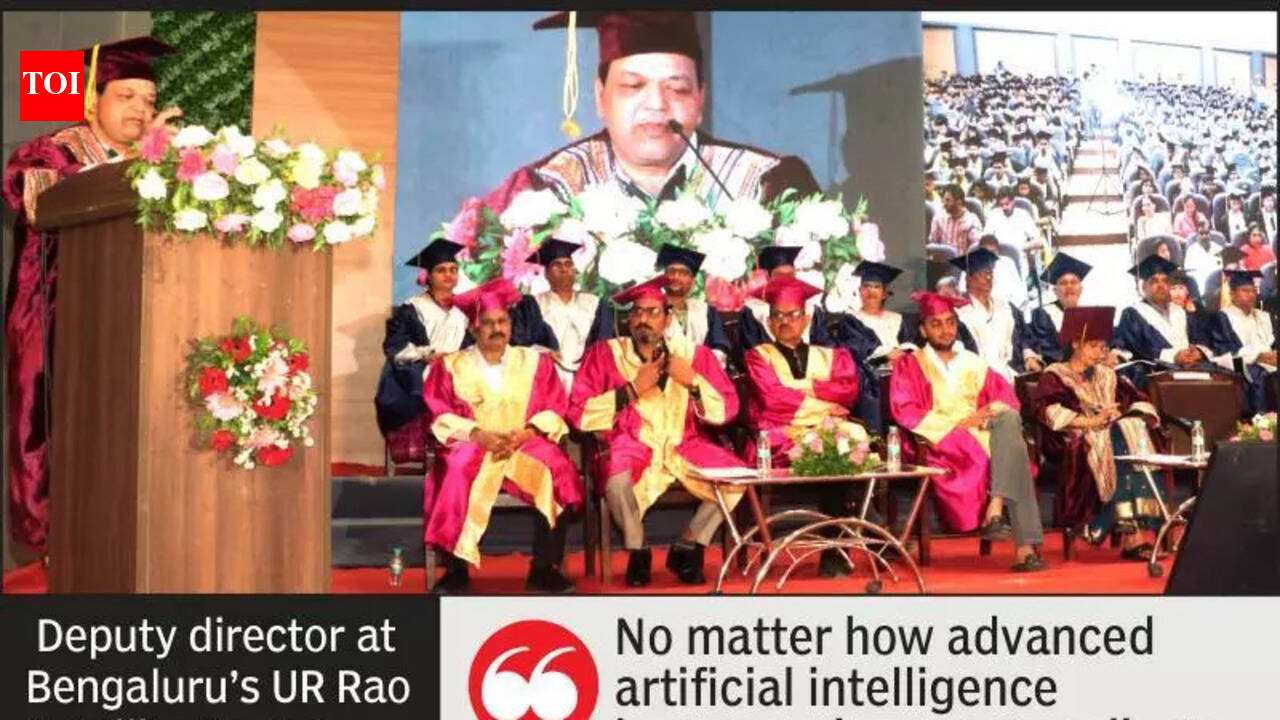
Bengaluru-based aerospace engineer Pramod Belgaonkar urged graduating students at Yeshwantrao Chavan College of Engineering (YCCE) in Nagpur to harness technology not just for career advancement, but for the betterment of society and the realization of a developed India. The call to action came during the college’s 12th graduation ceremony held on Saturday, where a total of 1,419 degrees were conferred upon students, marking a significant milestone for the institution and its graduates.
Belgaonkar, currently serving as Deputy Director at the U R Rao Satellite Centre (URSC), emphasized the rapid progress India is making in science and technology, positioning the nation to meet growing global needs. He stressed the crucial role young engineers will play in shaping the country’s future, advocating for a focus on innovation, research and entrepreneurship. His message resonated with the graduating class, encouraging them to apply their skills to address pressing social challenges. The core message centered around responsible technological development and its potential to uplift communities.
The URSC and India’s Space Ambitions
The U R Rao Satellite Centre, where Belgaonkar works, is a pivotal organization in India’s space program. Formerly known as the ISRO Satellite Centre (ISAC), the URSC is responsible for the design, development, and construction of Indian satellites. According to the Indian Space Research Organisation (ISRO), the center builds spacecraft used for a wide range of applications, including communication, navigation, meteorology, remote sensing, space science, and interplanetary exploration. Established in 1972, the URSC has successfully launched over 100 satellites, demonstrating India’s growing capabilities in space technology. The center’s facilities include state-of-the-art integration and testing infrastructure, such as a 6.5-meter thermo-vacuum chamber and a 29-ton vibration facility, ensuring the reliability and performance of its satellites.
India’s commitment to space exploration extends beyond scientific advancement. Satellite technology plays a vital role in addressing societal needs, from improving weather forecasting and disaster management to enhancing communication networks and providing remote sensing data for agricultural monitoring. Belgaonkar’s remarks underscore the importance of aligning technological progress with national development goals, ensuring that the benefits of innovation are widely accessible.
Beyond Technical Skill: The Importance of Social Responsibility
Belgaonkar’s address wasn’t solely focused on technical prowess. He urged the graduates to pursue their individual passions and forge their own paths, rather than simply following established norms. He powerfully stated that contributing to society is an integral part of a fulfilling career, emphasizing that “service to society brings a deep sense of pride and fulfilment to self.” This sentiment highlights a growing recognition within the tech industry of the need for ethical considerations and social impact alongside technological innovation. The call for social responsibility is particularly relevant in a world grappling with issues like climate change, inequality, and digital divides.
The graduation ceremony as well featured remarks from Nagpur University Vice-Chancellor Manali Kshirsagar, who offered a contrasting perspective on the role of technology, and humanity. Kshirsagar noted that despite the rapid advancements in artificial intelligence, it cannot replicate human emotions. She encouraged the students to strive for a more humane and rational world, suggesting that technology should be used to augment, not replace, human connection and empathy. This perspective acknowledges the potential risks associated with unchecked technological development and the importance of preserving human values.
Recognizing Academic Excellence
The YCCE graduation ceremony celebrated the achievements of 1,419 students, with 1,311 receiving undergraduate degrees and 108 earning postgraduate qualifications. In addition to the degrees awarded, 47 students were recognized with special awards for their academic excellence. Specifically honored were Satvika Satyanarayana Athena (BTech IIoT), Abhijeet Uttam Konar (BTech IT), Gagan Dhiraj Loya (BTech Electronics & Telecommunication Engineering), Sadaf Firdaus Md Afzal Ansari (MTech Data Science), and Saniya Keshav Ganvir (MBA). These awards acknowledge the dedication and hard operate of these students, setting them apart as future leaders in their respective fields.
The ceremony was presided over by Datta Meghe, chairman of Nagar Yuwak Shikshan Sanstha, and Principal UP Waghe welcomed the attendees, highlighting the institution’s progress and celebrating the students’ accomplishments. The event served as a testament to the commitment of YCCE to providing quality engineering education and fostering a culture of innovation and social responsibility.
The Broader Context: India’s Growing Tech Sector
The graduation of these engineering students comes at a pivotal time for India’s technology sector. The country is rapidly emerging as a global hub for software development, IT services, and increasingly, advanced manufacturing and space technology. As reported by the Times of India, India’s progress in science and technology is attracting significant investment and creating modern opportunities for skilled engineers. However, this growth also presents challenges, including the need to address the digital divide, ensure cybersecurity, and promote ethical AI development.
The emphasis on social responsibility in Belgaonkar’s address reflects a broader trend within the Indian tech industry. Companies and organizations are increasingly recognizing the importance of using technology to address social and environmental challenges, such as poverty, healthcare access, and climate change. This shift towards purpose-driven innovation is driven by a growing awareness of the potential for technology to create positive impact and a desire to build a more sustainable and equitable future.
The graduates of YCCE are now poised to contribute to this dynamic landscape, armed with the technical skills and the ethical awareness to navigate the complexities of the 21st century. Their success will depend not only on their ability to innovate but also on their commitment to using technology for the benefit of society.
Key Takeaways
- Technology must be harnessed for societal uplift and national development.
- Graduates should pursue their passions although prioritizing social responsibility.
- India is rapidly progressing in science and technology, creating new opportunities for engineers.
- Ethical considerations and human values are crucial in the age of artificial intelligence.
Looking ahead, the continued growth of India’s tech sector will depend on fostering a culture of innovation, investing in research and development, and ensuring that the benefits of technology are shared by all. The graduating class of YCCE represents a vital part of this future, and their contributions will be instrumental in shaping a more prosperous and equitable India.
The next major event for the U R Rao Satellite Centre will be the launch of the GSAT-31 satellite, scheduled for early 2024, which will provide enhanced communication capabilities to India. We encourage readers to share their thoughts on the role of technology in society and the importance of ethical innovation in the comments below.
Worth a look