
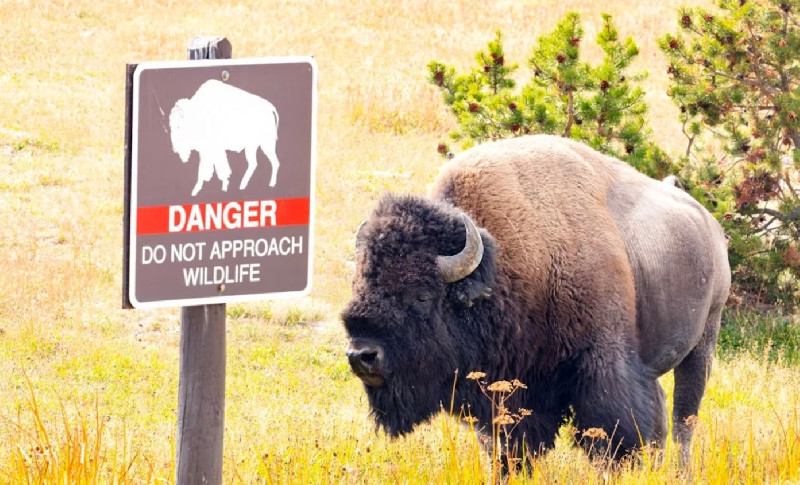
A 16-year-old visitor was injured by a bison in Yellowstone National Park, marking another incident involving human-wildlife interaction in the protected wilderness area. The teenager, a visitor from Arizona, sustained injuries after an encounter with the animal near the Old Faithful area, according to the National Park Service (NPS) official incident report.
The incident occurred as the park continues to remind visitors of the inherent dangers posed by large mammals within the park’s boundaries. According to the National Park Service guidelines, bison are unpredictable animals that can reach speeds of up to 35 mph, far outpacing the average human runner. Park regulations mandate that visitors maintain a distance of at least 25 yards from all large animals, including bison, elk, and deer, and at least 100 yards from bears and wolves.
Understanding Bison Behavior in Yellowstone
Bison are the largest land mammals in North America, and while they may appear docile, they are responsible for more injuries to visitors in Yellowstone than any other animal. The National Park Service safety protocols emphasize that bison are wild animals that react aggressively when they feel threatened or when their personal space is compromised. Unlike domestic cattle, bison are not accustomed to human presence and do not exhibit defensive behaviors that are easily readable by the untrained observer.
When a bison feels threatened, it may display subtle signs of agitation, such as pawing the ground, snorting, or swinging its head. However, these warnings are often ignored by tourists seeking close-up photographs or direct interaction. Park officials have consistently noted that most injuries occur when individuals fail to respect the established buffer zones, leading the animals to charge as a defensive measure to protect their territory or calves.
Official Safety Protocols and Park Enforcement
Yellowstone National Park maintains a robust system of signage and educational materials to inform visitors about wildlife safety. Despite these efforts, wildlife encounters remain a recurring challenge for park management. According to the Yellowstone National Park news release archive, incidents involving bison often peak during the summer months when tourist density is highest and animals are more active near popular trails and boardwalks.

The park’s approach to wildlife management relies heavily on visitor compliance. Park rangers are tasked with patrolling high-traffic areas, but the vast expanse of the park—covering over 2.2 million acres—makes constant supervision impossible. Consequently, the onus of safety rests on the visitor to adhere to the “stay back” policies. Failure to follow these rules can lead to citations or, in severe cases, the removal of visitors from the park.
What Happens Following a Wildlife Incident
When an injury occurs, the park’s emergency response teams are dispatched to provide medical stabilization. In cases involving wildlife, the initial assessment often involves determining the nature of the encounter—whether the animal was provoked or if the interaction was accidental. According to the NPS wildlife interaction policy, the park does not typically relocate or euthanize bison that interact with humans unless the animal shows signs of illness or becomes a persistent threat to public safety.
For visitors, the primary takeaway remains consistent: the park is a natural ecosystem, not a petting zoo. Visitors are encouraged to use binoculars or telephoto lenses to observe wildlife from a safe distance. The park service provides real-time updates on road closures and safety advisories through their official website and the NPS mobile app, which serves as the most reliable source for current park conditions.

The National Park Service continues to monitor wildlife activity across the region. Visitors planning a trip to Yellowstone are encouraged to review the official Yellowstone National Park visitor guide before arriving to ensure they are prepared for the realities of navigating a high-density wildlife environment.
As of the latest reports, the park has not announced any changes to its existing safety mandates following this incident. Future updates regarding park safety policies will be posted on the official National Park Service website. We invite readers to share their experiences with park safety protocols or comment on the importance of wildlife conservation in the comments section below.