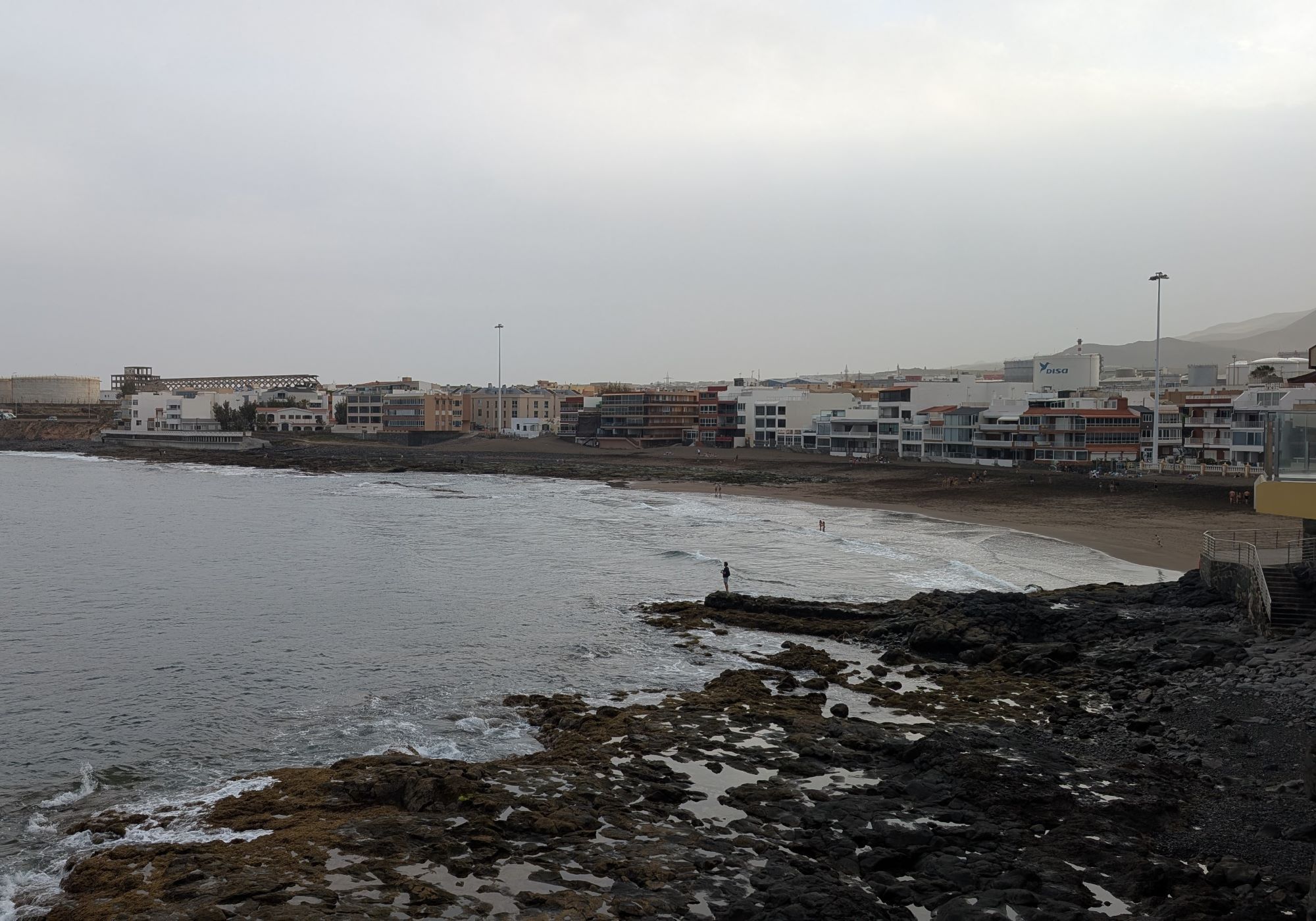
Telde, a municipality on the island of Gran Canaria in Spain’s Canary Islands, is facing another day of elevated temperatures and airborne dust, with forecasts indicating highs of up to 28°C and the persistence of calima — a meteorological phenomenon characterized by hot, dust-laden winds originating from the Sahara Desert. According to the State Meteorological Agency (AEMET), a yellow alert for suspended dust remains in effect for the eastern and southern parts of Gran Canaria, including Telde, due to reduced visibility and potential respiratory irritation from particulate matter.
The current weather pattern reflects a broader trend affecting the Canary archipelago, where calima episodes have become more frequent and intense in recent years, a shift climate scientists increasingly link to changing atmospheric circulation patterns and desertification in North Africa. Local authorities in Telde have advised vulnerable populations — including the elderly, children, and those with pre-existing respiratory conditions — to limit outdoor exertion, keep windows closed, and employ masks rated for fine particle filtration when venturing outside.
While temperatures are expected to peak near 28°C during midday, overnight lows are forecast to remain above 20°C, offering little relief from the heat. The combination of high temperatures and airborne dust creates a compounded discomfort, particularly for outdoor workers and athletes. AEMET’s forecast for Sunday indicates variable cloud cover in the early hours, gradually giving way to clearer skies by afternoon, though the dust haze is expected to linger throughout the day.
Understanding Calima: Causes and Health Impacts
Calima occurs when strong southerly winds lift sand and mineral dust from the Sahara Desert and transport it across the Atlantic Ocean, often reaching the Canary Islands within 24 to 48 hours. The phenomenon is most common between February and April but can occur at any time of year, particularly during periods of high-pressure systems over the Maghreb region. According to research published by the Spanish National Research Council (CSIC), the particulate matter carried during calima events includes silica, clay, and traces of pollutants, with PM10 and PM2.5 concentrations frequently exceeding World Health Organization (WHO) safety thresholds.
Exposure to elevated dust levels during calima has been associated with short-term increases in respiratory symptoms, including coughing, throat irritation, and exacerbation of asthma or chronic obstructive pulmonary disease (COPD). A 2022 study conducted by the University of Las Palmas de Gran Canaria found a measurable rise in emergency room visits for respiratory distress during peak calima days, particularly among individuals over 65. Health officials recommend monitoring local air quality indexes and following guidance from the Canary Islands Health Service when alerts are issued.
Despite the discomfort, calima is not inherently dangerous for the general population when appropriate precautions are taken. The yellow alert level, as issued by AEMET, signifies a need for awareness and precaution rather than imminent danger — indicating that while dust concentrations are elevated, they have not yet reached levels requiring emergency interventions.
Local Response and Public Guidance in Telde
The Telde municipal government has activated its seasonal air quality monitoring protocol in coordination with the Canary Islands’ General Directorate of Public Health. Informational notices have been posted in health centers, schools, and municipal buildings advising residents on protective measures. The city’s civil protection unit remains on standby to assist vulnerable individuals if conditions worsen, though no evacuations or shelter activations have been deemed necessary at this time.
Public transportation continues to operate normally, though some cyclists and pedestrians have reported reduced visibility along coastal routes, particularly in the southern zones near Melenara and Salinetas. The local police have urged drivers to exercise caution, use headlights during daylight hours if visibility drops, and avoid unnecessary travel in affected zones.
For those seeking real-time updates, AEMET provides hourly forecasts and alert status updates through its official website and mobile application. The Canary Islands’ emergency coordination center also maintains a public alert system accessible via GobiernodeCanarias.org, where residents can check active warnings and recommended actions by municipality.
Climate Context: Increasing Frequency of Dust Events
While calima is a natural meteorological occurrence, long-term data suggest a potential increase in both frequency and intensity over the past two decades. A 2023 analysis by the European Centre for Medium-Range Weather Forecasts (ECMWF) noted a upward trend in Saharan dust exports to the Atlantic, correlating with shifts in the North Atlantic Oscillation and increased land surface temperatures in the Sahel region. Climate models project that under continued warming scenarios, the Canary Islands may experience more frequent intrusions of African air masses, potentially altering seasonal weather patterns.
Environmental scientists emphasize that while individual events cannot be attributed solely to climate change, the broader context of desert expansion and changing wind patterns warrants continued observation. The Canary Islands, due to their geographic position, serve as a natural laboratory for studying aerosol transport and its impacts on regional climate, public health, and even solar energy production — as dust accumulation on photovoltaic panels can reduce efficiency.
In Telde, where agriculture and outdoor tourism contribute significantly to the local economy, stakeholders are beginning to consider adaptive measures. These include adjusting work schedules for farm laborers during peak dust periods, improving indoor air filtration in public buildings, and exploring early-warning systems that integrate meteorological data with health surveillance.
Looking Ahead: Forecast and Monitoring
As of the latest update from AEMET, the yellow dust alert for Telde and surrounding areas remains active through Sunday evening, with a potential extension into Monday depending on atmospheric conditions. Temperatures are expected to remain warm through the early part of the week, though a shift in wind direction may bring cleaner, cooler air from the northwest by midweek.
Residents are encouraged to stay informed through official channels and to seize personal precautions, particularly if they belong to sensitive groups. Simple actions — such as staying hydrated, avoiding strenuous outdoor activity during peak dust hours, and using air purifiers indoors — can significantly reduce discomfort and health risks during calima events.
While the current conditions are not unprecedented, they serve as a reminder of the complex interplay between regional weather systems, environmental change, and community resilience. For now, Telde endures another day under a hazy sky, with temperatures climbing and the faint, persistent scent of desert dust in the air — a familiar, if unwelcome, hallmark of life on the eastern edge of the Atlantic.
Stay updated on weather alerts and health recommendations by visiting the State Meteorological Agency (AEMET) website or following @AEMET for real-time updates. Share your experiences and tips for coping with calima in the comments below, and help others in the community stay informed and prepared.
Related reading