
Telkom Indonesia (TLKM) has reported a significant decline in its bottom line, with net profit falling by 20% year-on-year. This downturn is primarily attributed to a strategic accounting shift involving accelerated depreciation, a move that has weighed heavily on the company’s reported earnings despite a robust Total Shareholder Return (TSR) of 35.7% during the same period.
For global investors, the discrepancy between a crashing net profit and a soaring shareholder return presents a complex narrative of structural transition. While the accounting charges create a superficial image of decline, the company’s underlying value proposition remains tied to its dominance in the Indonesian archipelago and its aggressive pivot toward data-centric infrastructure.
As the telecommunications landscape shifts from traditional voice and SMS toward integrated digital ecosystems, Telkom Indonesia is navigating a period of intense capital reallocation. The current financial volatility reflects a broader effort to modernize legacy assets while aligning with the Indonesian government’s new governance mandates under the Danantara framework.
The Impact of Accelerated Depreciation on Net Profit
The 20% drop in net profit is not a result of a collapse in operational demand, but rather a calculated financial adjustment. Telkom Indonesia has implemented accelerated depreciation on its network assets, a process where the cost of an asset is written off more quickly over its useful life. This accounting maneuver increases expenses in the short term, thereby reducing taxable income and reported net profit, but it allows the company to reflect the rapid obsolescence of older telecommunications hardware in a fast-evolving 5G environment.

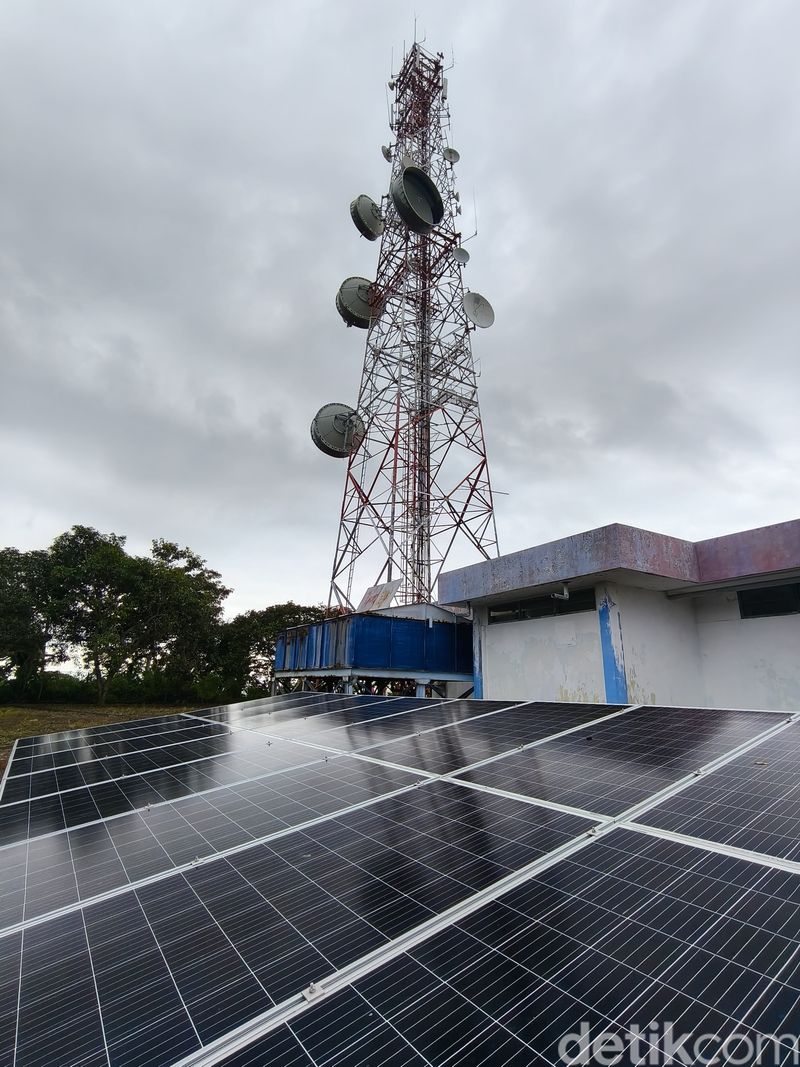
From an economic perspective, this “cleaning of the books” is often a precursor to a leaner operational phase. By front-loading depreciation expenses, Telkom is effectively lowering the book value of its aging infrastructure, which can improve future profit margins once these assets are fully depreciated. However, for the 2025 fiscal cycle, this has created a stark contrast between the company’s operational cash flow and its reported net income.
Despite the profit dip, the company’s ability to deliver a Total Shareholder Return of 35.7%—combining stock price appreciation and dividends—indicates that the market is looking past the accounting losses. Investors appear to be prioritizing the company’s dividend consistency and its strategic positioning over short-term GAAP (Generally Accepted Accounting Principles) profit fluctuations.
Governance Shifts and the Danantara Mandate
Parallel to its financial restructuring, Telkom Indonesia is facing increased scrutiny over its corporate governance. The company has confirmed This proves working under the direction of Danantara, Indonesia’s newly established sovereign wealth fund and investment agency designed to consolidate and optimize state-owned enterprises (SOEs).
The mandate from Danantara is clear: “berbenah,” or to tidy up. This involves streamlining management structures, improving transparency in procurement, and ensuring that the company’s strategic goals are aligned with national digital transformation targets. For a company of Telkom’s size, which operates as a cornerstone of Indonesia’s digital economy, governance failures can lead to significant inefficiencies and “leakages” in capital expenditure.
The integration with Danantara is expected to reduce the bureaucratic friction often associated with state-owned entities. By shifting toward a more professionalized investment management model, Telkom aims to enhance its agility in the competitive telco market, where nimble private players are constantly challenging its market share in the mobile and broadband segments.
Telkomsel’s 2026 Strategy: ARPU and Data Centers
Looking toward 2026, the company’s growth engine—Telkomsel—is shifting its focus from raw subscriber growth to value optimization. The primary metric for success is now Average Revenue Per User (ARPU). As the Indonesian market reaches saturation in terms of SIM card penetration, the goal is to extract more value from existing users through “upselling” higher-tier data plans and integrated digital services.

Telkom is doubling down on its data center expansion. With the global surge in AI demand and the Indonesian government’s push for data sovereignty, the need for localized, high-capacity data storage is skyrocketing. By expanding its data center footprint, Telkom is transitioning from a simple “bit pipe” (a company that merely moves data) to a critical infrastructure provider for the cloud computing era.
This pivot is essential for long-term sustainability. While traditional mobile revenues are stagnating globally, the “B2B” (business-to-business) sector—specifically cloud hosting, cybersecurity, and edge computing—offers a higher-margin revenue stream that can offset the costs of maintaining a massive physical network across thousands of islands.
Analysis: What Which means for Global Investors
For those analyzing TLKM from a global market perspective, the current situation is a classic study in the difference between accounting profit and economic value. The 20% decline in net profit is a non-cash accounting event; it does not represent a loss of cash from the business. In fact, the high Total Shareholder Return suggests that the market views these changes as a necessary “reset.”
The risks remain, however. The success of the Danantara governance overhaul is not guaranteed, and the transition to a data-center-heavy model requires massive, sustained capital expenditure. Investors should monitor the company’s debt-to-equity ratio and the actual growth rate of B2B revenues over the next four quarters to verify if the strategic pivot is yielding tangible results.
Telkom Indonesia is in the midst of a structural metamorphosis. It is shedding the skin of a legacy state utility and attempting to emerge as a modern, lean, and digitally-native infrastructure giant. The short-term pain in the profit and loss statement is the price of this transition.
Key Takeaways for Stakeholders
- Net Profit Decline: The 20% YoY drop is driven by accelerated depreciation of assets, not a failure in operational revenue.
- Shareholder Value: A Total Shareholder Return of 35.7% indicates strong investor confidence despite the accounting dip.
- Governance: The company is under the guidance of Danantara to improve transparency and operational efficiency.
- Future Growth: Telkomsel is prioritizing ARPU growth and the expansion of data center capacity to drive 2026 revenues.
The next critical checkpoint for investors will be the release of the full annual audited financial statements and the first progress report from Danantara regarding the governance reforms of state-owned enterprises. These documents will reveal whether the accelerated depreciation has successfully cleared the path for a more profitable 2026.
Do you believe the shift toward data centers will be enough to offset the decline in traditional telco margins? Share your thoughts in the comments below or share this analysis with your network.
Keep reading
- Recycled Plastic Lego-Like Bricks: How Innovation is Revolutionizing Sustainable Construction
- Why Germany’s Railway Is Failing: Outdated Structures and the New CEO’s Strategy
- Why Cooper Cannot Return After Signing Memphis Two-Way Contract (news-usa.today)
- Gears of War: E-Day: Release date, platforms & everything else we know about Marcus Fenix’s return (archyde.com)