A Melbourne Home Draws Inspiration from Sacred Spaces
The interplay between residential design and religious architecture is a fascinating one, often resulting in spaces that evoke a sense of tranquility and contemplation. Architectural elements traditionally found in temples and places of worship – axial organization, hierarchical circulation, the apply of courtyards, and the symbolic application of light – are increasingly being adapted for modern living. This trend isn’t merely about aesthetics; it’s about creating homes that offer a sense of ceremony and peace, transforming daily life into a more mindful experience. In Melbourne, Australia, a recently completed residence, known as Temple House, exemplifies this approach, seamlessly blending domestic functionality with the spiritual resonance of sacred architecture. The project, a collaboration between J Kidman Architecture, Golden, and Studio Tali Roth, demonstrates how thoughtful design can create a home that feels both grounded and transcendent.
Temple House, situated in the Hawthorn neighborhood of Melbourne, is designed for a family of five. The home’s design deliberately echoes the layout and atmosphere of a basilica or cathedral, creating a unique and calming environment. This isn’t accidental; the architects consciously drew inspiration from religious structures, aiming to build a “domestic temple” – a space that encourages reflection and a slower pace of life. The project’s success lies in its ability to balance the monumental qualities of its inspiration with the warmth and comfort essential for a family home. The design team sought to create a structure that was both powerful and inviting, a place where residents could find solace and connection.
Inspired by Basilicas and Temples
Located on a deep, narrow lot in Hawthorn, Temple House is the result of a collaboration between J Kidman Architecture, Golden, and Studio Tali Roth. The single-story home is organized around two internal courtyards, which provide natural light and ventilation throughout the linear site. The architects noted a surprising resonance between the design and religious architecture, observing that the house incorporates elements akin to an atrium, narthex, side aisles, and a nave – all characterized by strong axial relationships and a sense of formality. This realization led them to further embrace the “temple” concept, envisioning a building that would be both calm and powerful, inviting contemplation and a sense of reverence.
Access to the home is gained via a side passage adjacent to the garage. From there, a curved wall clad in fluted limestone serves as a sculptural element and marks the primary threshold. Stepping beyond this threshold leads into a vestibule with expansive corner windows, offering a preview of the living spaces within. A longitudinal corridor runs along the central axis of the house, extending eastward to an open-plan living, dining, and kitchen area. This space is crowned by a striking trapezoidal roof, beneath which the living area opens onto both north and south courtyards through sliding doors and frameless glass walls. The north courtyard features a geometric swimming pool, accessible via a small causeway, while the master bedroom to the south connects to the surrounding greenery through a large archway. Central stone walls support the roof’s overhang and delineate the gardens into dedicated areas for relaxation and vegetation, complemented by steel columns and structures designed for climbing plants.
A Dialogue Between Brutalism and Warmth
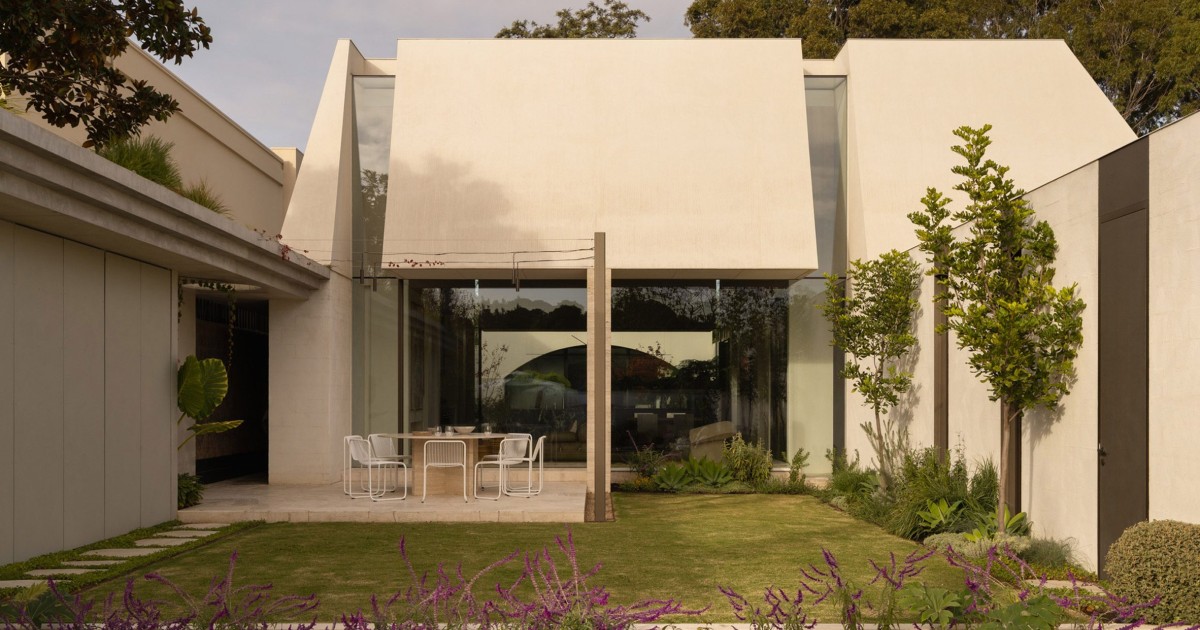
Externally, Temple House presents a series of geometric volumes finished with light, bagged masonry, creating a delicate texture and a monolithic character. This solid appearance is softened by large expanses of glazing, blurring the boundaries between the interior and exterior. The design deliberately employs a material palette that balances strength and serenity. Inside, the space revolves around a kitchen featuring a striking green marble island, which serves as a central gathering point. A dark green modular sofa and a twelve-person stainless steel dining table are arranged around it, reinforcing the idea of a formal yet inviting gathering space.
The interior design team recognized the potential for the chosen materials – stone, light-colored wood, and metal – and high ceilings to create a potentially austere environment. “The nature of the materials chosen – stone, light timber and metals – and the high ceilings could have created a hostile and unwelcoming space. My task was to work on these characteristics and ensure they became extremely welcoming and comfortable,” explained the interior design studio. Balancing the monumental scale of the materials with warm textures and a carefully curated color palette was a key challenge. Light wood, textiles, and furnishings soften the architectural boldness, while the bathrooms, designed by Golden, reinterpret the idea of an intimate sanctuary through the use of luxurious materials and precise detailing. The bathrooms, in particular, are designed to be havens of tranquility, offering a respite from the demands of daily life.
The private living quarters are located at the southern end of the central axis, while a flexible room that can serve as a guest room occupies the northern end. This arrangement allows the house to combine a quasi-liturgical organization with the practical functionality of a contemporary home. The careful consideration of spatial flow and material choices creates a home that is both aesthetically striking and deeply livable. The design team’s success lies in their ability to create a space that feels both monumental and intimate, formal and inviting – a true “domestic temple” for a modern family.
Materiality and Design Choices
The choice of materials played a crucial role in achieving the desired aesthetic and atmosphere. The use of limestone, in particular, adds a sense of weight and permanence, while the fluted texture introduces a subtle visual interest. The green marble in the kitchen provides a focal point and a touch of luxury, while the light-colored wood and textiles soften the overall palette. The combination of these materials creates a harmonious balance between strength and warmth, ensuring that the house feels both grounded and inviting. The architects also paid close attention to the play of light and shadow, using large windows and courtyards to maximize natural illumination and create a sense of openness.
The integration of indoor and outdoor spaces is another key feature of the design. The courtyards provide private outdoor areas for relaxation and recreation, while the large windows and sliding doors blur the boundaries between the interior and exterior. This connection to nature enhances the sense of tranquility and well-being, creating a home that feels both connected to its surroundings and sheltered from the outside world. The swimming pool in the north courtyard adds a touch of luxury and provides a refreshing escape during the warmer months.
The Future of Residential Design
Temple House represents a growing trend in residential design – a move towards creating homes that are not just functional but also emotionally and spiritually enriching. As people increasingly seek spaces that promote well-being and mindfulness, we can expect to see more homes that draw inspiration from sacred architecture and incorporate elements that encourage contemplation and connection. This trend is particularly relevant in today’s fast-paced world, where many people are looking for ways to create a sense of calm and sanctuary in their homes. The success of Temple House demonstrates that it is possible to create a home that is both beautiful and meaningful, a place where residents can truly feel at peace.
The project also highlights the importance of collaboration between architects and interior designers. The seamless integration of architecture and interior design is evident throughout the house, creating a cohesive and harmonious aesthetic. The collaboration between J Kidman Architecture, Golden, and Studio Tali Roth resulted in a home that is greater than the sum of its parts – a truly exceptional example of contemporary residential design. As the demand for thoughtful and well-designed homes continues to grow, we can expect to see more projects that embrace this collaborative approach.
Looking ahead, the principles embodied in Temple House – a focus on axial organization, the use of natural light, and the integration of indoor and outdoor spaces – are likely to influence residential design for years to come. The desire for homes that offer a sense of sanctuary and connection will continue to drive innovation in the field, leading to the creation of spaces that are not only beautiful but also deeply meaningful. The project serves as a reminder that architecture has the power to transform our lives, creating homes that nurture our souls and inspire us to live more fully.
Further developments regarding J Kidman Architecture’s projects can be found on their official website: http://jkidman.com/. Updates from Golden, the interior design firm, are available at https://designbygolden.com.au/, and Studio Tali Roth’s work can be viewed at https://studiotaliroth.com/.
What are your thoughts on the integration of religious architectural principles into modern home design? Share your comments below, and don’t forget to share this article with your network!
Related reading