
For many living with thyroid eye disease (TED), the sensation of pressure behind the eyes is more than just a physical discomfort; it is a constant, intrusive reminder of an autoimmune struggle. The condition, often characterized by bulging eyes (proptosis), swelling, and double vision, has historically been managed through a limited toolkit of corticosteroids, radiation, or invasive surgical interventions. However, a significant shift in the therapeutic landscape has arrived with the introduction of teprotumumab, a treatment that offers a more targeted approach to the underlying biological drivers of the disease.
Medical professionals have begun describing the effect of this treatment as a form of “medicinal decompression.” By addressing the inflammation and tissue expansion within the bony orbit of the eye, teprotumumab aims to reduce the physical volume of the orbital contents, thereby relieving the pressure that causes both cosmetic changes and functional vision impairment. This advancement represents a move away from merely managing symptoms toward a mechanism-based intervention for thyroid-associated ophthalmopathy.
As we delve into the science of this breakthrough, it is essential to understand not just how the drug works, but why it represents such a departure from previous standards of care. For patients facing the potential for permanent vision loss or significant disfigurement, this targeted therapy offers a new horizon of hope.
Understanding the Pathophysiology of Thyroid Eye Disease
Thyroid eye disease, also known as Graves’ ophthalmopathy, is an autoimmune condition that occurs when the body’s immune system attacks the tissues surrounding the eyes. While it is most frequently associated with Graves’ disease—a condition that causes hyperthyroidism—it can also occur in patients with normal thyroid function or hypothyroidism.
The core of the issue lies in the orbital tissues, specifically the extraocular muscles and the fat surrounding the eye. In patients with TED, the immune system mistakenly targets certain receptors within these tissues. This triggers an inflammatory cascade, leading to the accumulation of glycosaminoglycans—complex sugars that attract water—and the subsequent swelling of the muscles, and fat. Because the eye sits within a rigid bony socket (the orbit), this increase in tissue volume has nowhere to go but outward, resulting in the characteristic bulging of the eyes, known as proptosis.
This expansion can lead to several debilitating complications:
- Diplopia: Double vision caused by the swelling and dysfunction of the muscles that move the eyes.
- Ocular Surface Disease: Because the eyes may not close completely due to proptosis, the cornea can become exposed, leading to dryness, irritation, and potentially ulceration.
- Optic Neuropathy: In severe cases, the pressure from the swollen tissues can compress the optic nerve, which can lead to permanent vision loss if not addressed promptly.
Targeting the IGF-1 Receptor: The Science of Teprotumumab
The breakthrough of teprotumumab lies in its ability to target a specific molecular driver of this inflammation. Unlike previous treatments that broadly suppressed the immune system, teprotumumab is a monoclonal antibody designed to act as an insulin-like growth factor-1 receptor (IGF-1R) antagonist.
Research has identified that the IGF-1 receptor plays a crucial role in the pathogenesis of TED. The receptors are expressed on both the orbital fibroblasts (the cells responsible for producing the tissue that swells) and the immune cells that drive the inflammatory response. When these receptors are activated, they stimulate the fibroblasts to produce more glycosaminoglycans and expand the orbital tissue. By binding to these receptors and blocking their activation, teprotumumab effectively “shuts off” the signal that tells the orbital tissues to swell.
This mechanism is what leads to the concept of “medicinal decompression.” By inhibiting the growth and inflammatory signaling within the orbit, the drug facilitates a reduction in the volume of orbital fat and muscle. As the swelling subsides, the pressure on the eyeball and the optic nerve decreases, and the degree of proptosis can be significantly improved. This targeted approach allows for a more precise intervention that addresses the root cause of the orbital expansion rather than just the systemic inflammation.
Clinical Evidence and Regulatory Milestones
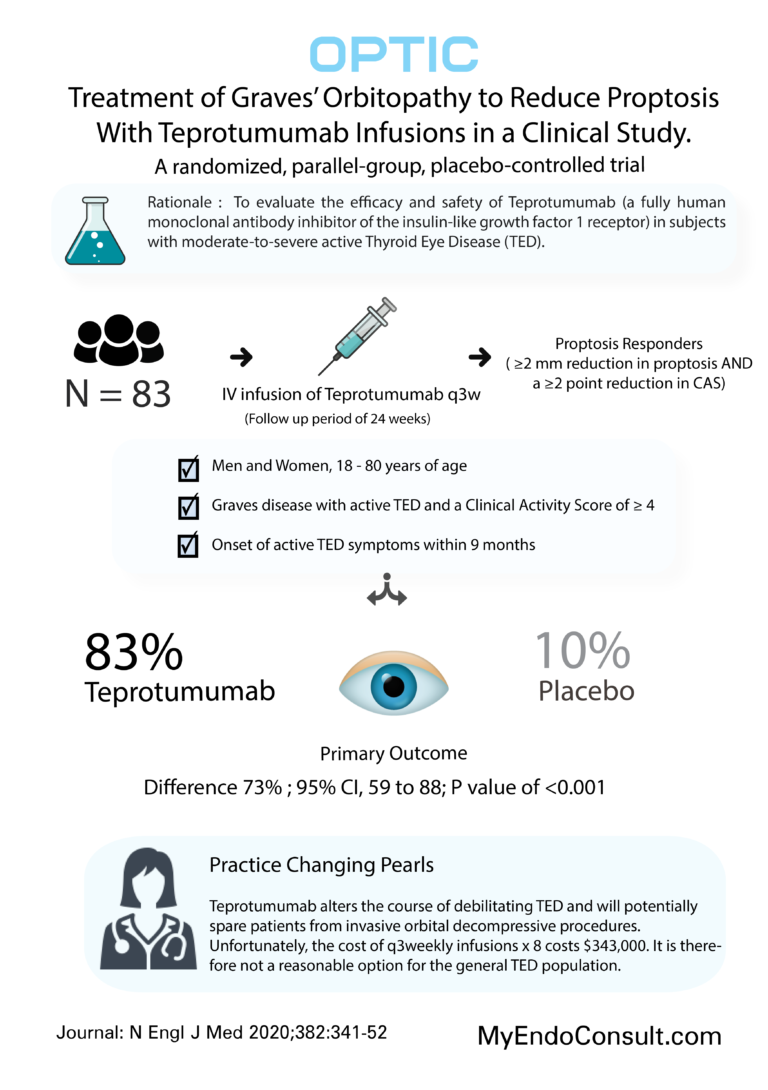
The transition of teprotumumab from a clinical candidate to a standard-of-care treatment was driven by robust clinical trial data. The development was supported by several key studies, most notably the OPTIC (Orbital Penetrating Treatment in Graves’ Ophthalmopathy) trials. These trials were designed to evaluate the efficacy and safety of the drug in patients with moderate-to-severe active TED.
The results of these studies were significant. Patients receiving teprotumumab showed a statistically meaningful reduction in proptosis and a substantial improvement in ocular motility (the ability to move the eyes) and diplopia. The data suggested that the drug could not only stabilize the disease but also actively reverse some of the most visible and functional symptoms of the condition.
Based on this evidence, the U.S. Food and Drug Administration (FDA) approved teprotumumab (marketed under the brand name Tepezza) in 2020 for the treatment of thyroid eye disease associated with moderate-to-severe active disease. This approval marked a milestone in ophthalmology, providing the first systemic therapy specifically indicated for the underlying mechanism of TED.
Navigating Risks and Side Effects
While the clinical benefits of teprotumumab are substantial, it is a potent biological therapy that carries specific risks that require careful medical monitoring. As with any monoclonal antibody treatment, patients must be closely supervised by an endocrinologist and an ophthalmologist to balance efficacy against potential adverse effects.
One of the most significant concerns identified during clinical trials and subsequent monitoring is the risk of hearing impairment. Patients have reported side effects including:
- Tinnitus: A persistent ringing or buzzing in the ears.
- Hearing Loss: Some patients experienced a decrease in hearing acuity.
The exact mechanism for this auditory side effect is still being studied, but it underscores the necessity of baseline and periodic audiometric testing for patients undergoing treatment. Because the IGF-1 receptor may play a role in the inner ear, clinicians must remain vigilant in monitoring any changes in auditory function.
Other potential side effects include changes in blood glucose levels, particularly in patients with pre-existing diabetes, as the IGF-1 receptor is closely related to insulin signaling. Metabolic monitoring is a standard component of the treatment protocol. Patients should also be aware of potential infusion-related reactions, which are common with many monoclonal antibody therapies.
Impact on Patient Quality of Life
The true measure of teprotumumab’s success is found in the lived experience of the patients. For many, TED is not just a medical diagnosis; it is a condition that profoundly affects self-esteem, social interaction, and daily functionality. The visible changes in facial appearance caused by proptosis can lead to significant psychological distress and social withdrawal.
By providing a way to reduce the bulging of the eyes and mitigate the “staring” appearance often associated with the disease, teprotumumab offers more than just physiological relief—it offers a restoration of confidence. The improvement in diplopia and ocular motility can restore independence to patients who previously struggled with tasks such as driving, reading, or navigating stairs.
The “decompression” provided by the medication is, both physical and psychological. As the orbital pressure is relieved, the patient’s ability to engage with the world is often restored, marking a significant improvement in overall quality of life.
Key Takeaways: Teprotumumab for TED
- Targeted Mechanism: Teprotumumab is an IGF-1 receptor antagonist that targets the specific cells driving orbital inflammation.
- “Medicinal Decompression”: The drug works by reducing the volume of orbital fat and muscle, relieving pressure behind the eye.
- FDA Approved: It was approved in 2020 for moderate-to-severe active thyroid eye disease.
- Clinical Benefits: Significant improvements have been seen in proptosis (bulging), double vision, and eye movement.
- Monitoring Required: Due to risks of hearing loss and blood sugar changes, regular audiometric and metabolic monitoring is essential.
The Future of Orbital Care
The success of teprotumumab has opened new doors in the study of autoimmune orbital diseases. Researchers are now looking deeper into the complexities of the IGF-1 signaling pathway and exploring whether other targeted biologics might offer even greater precision or fewer side effects. There is also ongoing interest in how these treatments might be used earlier in the disease progression to prevent the permanent structural changes that often necessitate surgery.
As our understanding of the molecular landscape of thyroid eye disease continues to evolve, the goal remains clear: to move toward a future where the debilitating symptoms of TED can be prevented or reversed through highly specific, non-invasive medical interventions.
Next Checkpoint: Clinical researchers continue to monitor long-term hearing safety data in post-market surveillance studies. We will provide updates as new longitudinal safety findings are published in major ophthalmic journals.
Dr. Helena Fischer is the Editor of Health at World Today Journal. If you found this analysis helpful, please share it with your network or leave a comment below with your questions or experiences regarding thyroid health.
Keep reading