
The Colombian automotive landscape is currently weathering a seismic shift as the entry of Tesla triggers what local reports describe as a full-scale price war in the electric vehicle (EV) sector. For consumers, the immediate result is a dramatic reduction in costs, but for manufacturers, it represents a high-stakes battle for market share in one of Latin America’s most promising emerging markets for sustainable transport.
According to reports from El Colombiano, Tesla’s aggressive pricing strategy has led to price drops of up to $80 million Colombian pesos (COP) on certain models. This volatility has forced established competitors to react swiftly to avoid being priced out of the market. Blu Radio has reported that brands such as Kia and BYD have been compelled to lower their prices by up to $50 million COP to remain competitive following Tesla’s arrival.
Although the price war in Colombia is a localized event, it mirrors a broader, more intense global struggle for EV dominance. The year 2025 marked a pivotal turning point in the industry, characterized by a massive spike in sales followed by a sharp correction. This volatility highlights the fragility of the current EV transition, where manufacturer success is often tied as much to government incentives as it is to technological superiority.
The Global Power Shift: BYD vs. Tesla
The price pressures felt in Colombia are a microcosm of a global realignment. For years, Tesla held a near-monopoly on the high-finish EV narrative, but the tide shifted decisively in 2025. In a landmark development for the industry, BYD surpassed Tesla in global sales during 2025, leveraging an affordable fleet of vehicles that undercut rivals without sacrificing perceived quality.
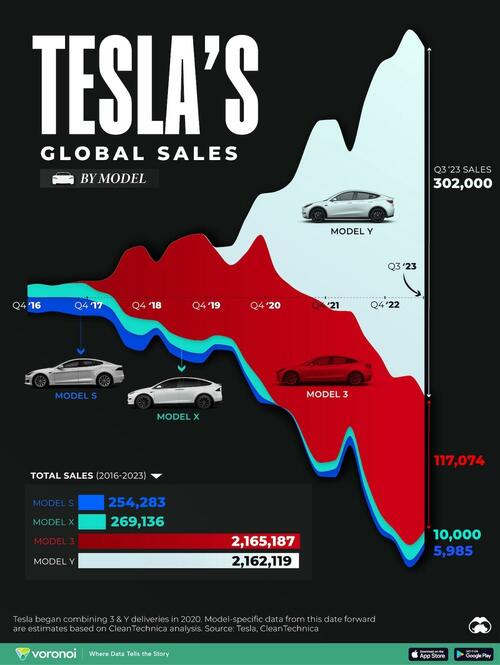
BYD’s ascent was particularly pronounced in Europe, where the Chinese brand saw a massive surge in the United Kingdom, recording an 880 percent increase in sales. While Tesla continued to grow—driven largely by the popularity of the Model 3 and Model Y—its global market share plummeted as BYD expanded its footprint across diverse international markets .
However, the growth of the EV sector has not been linear. The industry experienced a significant shock in the final quarter of 2025, when sales “flatlined” globally due to the expiration of critical tax credit lines . This event underscores a recurring theme in the electric vehicle price war in Colombia and beyond: the heavy reliance on subsidies to drive mass-market adoption.
Kia’s Strategic Counter-Offensive
Amidst the clash between the American and Chinese giants, South Korean manufacturer Kia has positioned itself as a strategic “winner” by focusing on versatility and high-quality hybrid electric vehicles (HEVs) to bridge the gap for hesitant consumers. Kia has recently revealed a recent path toward global EV domination, debuting models designed specifically to challenge the current market leaders.
Central to this strategy is the new EV4, a model designed to rival the Tesla Model 3 and the BYD Seal. In a move to capture a wider demographic, Kia is offering the EV4 as both a sedan and a hatchback . By diversifying its body styles and focusing on “winning margins across the board,” Kia is attempting to carve out a sustainable middle ground between Tesla’s brand prestige and BYD’s aggressive pricing.
The Reality Gap: Range and Infrastructure
As prices fall and more EVs enter the Colombian market, a critical tension remains between manufacturer claims and real-world performance. This “range anxiety” is a primary hurdle for adoption in regions where charging infrastructure is still developing. Reports from Ecos del Combeima suggest that while electric mobility is growing in Colombia, the existing infrastructure is not yet sufficient to support the projected surge in vehicle ownership.
This infrastructure gap is compounded by discrepancies in battery performance. Independent testing by the Australian Automobile Association (AAA) provides a cautionary tale for global buyers, revealing that real-world driving ranges often fall significantly short of laboratory claims. In their tests, the 2023 BYD Atto 3 showed the largest variation, recording a real-world range 23 percent less than the manufacturer’s promise.
Other models also struggled to meet their targets. The 2024 Tesla Model 3 performed 14 percent below its lab-tested range, while the 2022 Kia EV6 and 2024 Tesla Model Y both came in 8 percent lower than claimed . For a Colombian buyer, these figures suggest that the allure of a lower price tag must be weighed against the practical realities of charging availability and actual battery endurance.
Comparative Real-World Range Performance
| Vehicle Model | Variance from Claimed Range | Real-World Performance |
|---|---|---|
| BYD Atto 3 (2023) | -23% | 369 km |
| Tesla Model 3 (2024) | -14% | Below lab claim |
| Tesla Model Y (2024) | -8% | Below lab claim |
| Kia EV6 (2022) | -8% | Below lab claim |
| Smart #3 (2024) | -5% | 432 km |
What This Means for the Colombian Consumer
The current electric vehicle price war in Colombia is a double-edged sword. In the short term, the aggressive price cuts of up to $80 million COP make high-end technology accessible to a broader segment of the population. However, the rapid devaluation of new EVs can lead to significant depreciation for early adopters, a common side effect of “price wars” in the automotive industry.
Prospective buyers are encouraged to glance beyond the initial purchase price and consider the following factors:
- Infrastructure Availability: Assess the density of charging stations along frequent routes to mitigate the impact of real-world range shortfalls.
- Total Cost of Ownership: Evaluate the long-term value of the vehicle, considering that rapid price drops by manufacturers can lower resale values.
- Performance Verification: Look for independent, real-world range tests rather than relying solely on manufacturer laboratory data.
As the market stabilizes, the focus will likely shift from “who can offer the lowest price” to “who can provide the most reliable ecosystem.” The winner of the Colombian market will not necessarily be the brand with the cheapest car, but the one that can integrate seamless charging infrastructure with honest performance metrics.
The next major checkpoint for the region will be the 2026 sales reports, which will reveal whether the price cuts successfully drove mass adoption or if the lack of infrastructure continues to act as a ceiling for growth. We will continue to monitor the pricing trends and infrastructure developments as they unfold.
Do you think aggressive price cuts are the right way to accelerate EV adoption, or do they risk destabilizing the market? Share your thoughts in the comments below.
Worth a look
- Solar Eclipse 2026: When Is It, How to Watch Safely, and Where to See It
- ECB Survey: European Banks Anticipate Tighter Lending Conditions
- Hugging Face CEO: China’s Open Models Could Overtake US AI by Next Year (time.news)
- China’s AI Surge: Alibaba Qwen3.8-Max and DeepSeek’s Low-Cost Models Shake the Market (newsdirectory3.com)