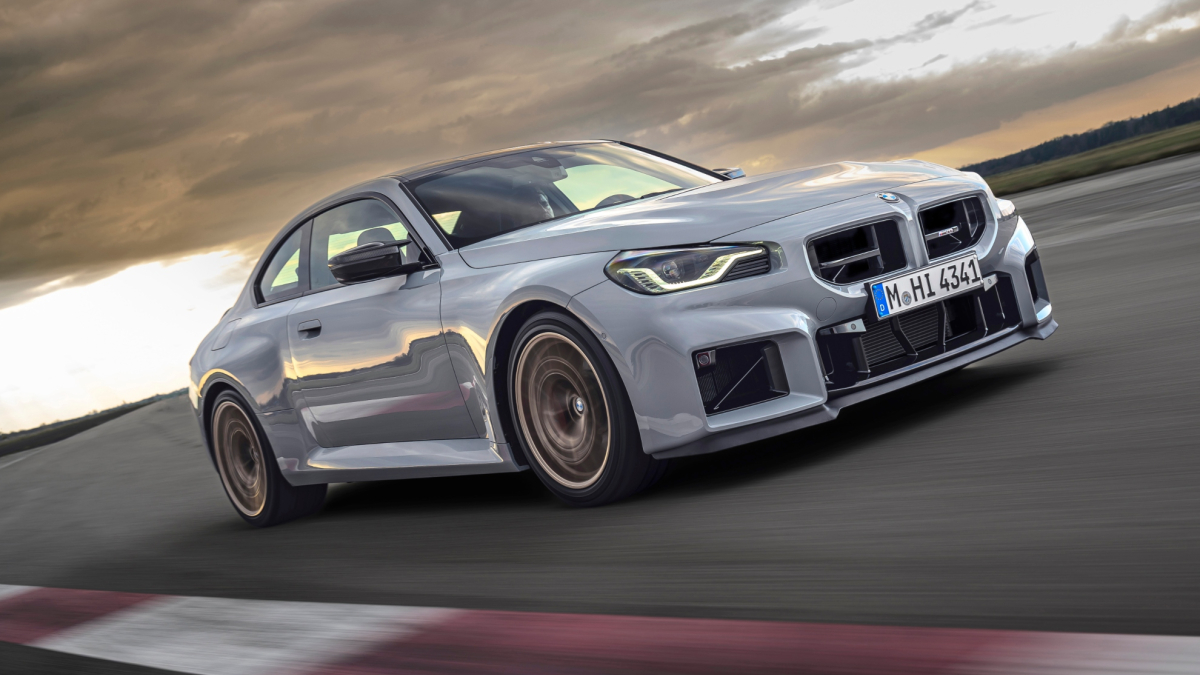
In the rapidly evolving landscape of high-performance automotive engineering, the line between mechanical mastery and software-driven precision is becoming increasingly blurred. As we move further into 2026, the industry is witnessing a shift where raw horsepower is no longer the sole metric of excellence. Instead, the focus has pivoted toward how computational intelligence can refine the visceral experience of driving. This intersection of hardware and high-speed code is nowhere more evident than in the latest release from BMW’s M Division: the 2026 BMW M2 CS.
The “CS”—standing for Competition Sport—has long been the hallmark of BMW’s most focused, track-oriented iterations. While the standard M2 and the M2 Competition have already established themselves as formidable contenders in the compact performance segment, the 2026 CS model represents a fundamental recalibration of the platform. It is a vehicle designed not just to move quickly, but to move with a level of mathematical intentionality that appeals to both the enthusiast and the technologist alike.
For the global driving community, the arrival of the M2 CS signals a significant moment in the lifecycle of the 2-Series platform. It is a machine that attempts to solve the perennial engineering paradox: how to deliver a car that is punishingly efficient on a closed circuit while remaining sophisticated enough for the complexities of modern daily transit. By leveraging advanced materials and more granular software tuning, BMW has crafted a vehicle that feels less like a traditional car and more like a precision instrument.
The Architecture of Speed: Engine and Powertrain Evolution
At the heart of the 2026 BMW M2 CS lies an evolution of the S58 straight-six engine, a powerplant that has become a benchmark for performance in the modern era. The CS variant sees this highly tuned, 3.0-liter twin-turbocharged inline-six pushed to new limits. While the base models rely on a balance of torque and reliability, the CS is optimized for high-RPM responsiveness and a more aggressive power delivery curve.
The technical refinements to the S58 in this iteration focus on thermal management and airflow efficiency. By optimizing the turbocharging architecture and utilizing lightweight internal components, BMW engineers have managed to extract a significant increase in peak output. This isn’t merely about chasing higher numbers on a spec sheet; it is about the “area under the curve”—ensuring that power is available precisely when the driver demands it, whether exiting a tight hairpin or accelerating on a long straight.
The integration of the M TwinPower Turbo technology allows for a more seamless transition between low-end torque and high-end horsepower. This is critical for a vehicle of this size, as it allows the M2 CS to maintain momentum through technical sections of a track, a characteristic that distinguishes it from more cumbersome, larger-displacement competitors. The result is a powertrain that feels lightweight and eager, rather than heavy and forced.
Chassis Dynamics and the Physics of Precision
A high-output engine is only as effective as the platform capable of transferring that energy to the asphalt. To address this, the 2026 M2 CS features a chassis that has been extensively reworked for increased torsional rigidity. Through the strategic use of Carbon Fiber Reinforced Plastic (CFRP) and lightweight aluminum components, the M Division has managed to lower the vehicle’s center of gravity while simultaneously reducing unsprung mass.
This reduction in mass is a critical factor in the car’s handling characteristics. In the world of performance driving, every kilogram saved translates directly into improved turn-in response and reduced kinetic energy during braking. The M2 CS utilizes a specialized suspension geometry that has been fine-tuned to minimize camber changes during heavy cornering, ensuring that the tire contact patch remains optimal even under extreme lateral loads.
the adaptive M suspension in the CS model operates with a higher degree of granularity than its predecessors. The dampers are capable of reacting to road surface irregularities with millisecond precision, adjusting their compression and rebound settings to maintain stability. This allows the driver to toggle between a compliant setup suitable for urban environments and a stiff, uncompromising configuration for track days, effectively changing the car’s fundamental personality at the touch of a button.
Software as a Performance Multiplier
As a technology editor, what I find most compelling about the 2026 M2 CS is not just the hardware, but the sophisticated software layer that governs it. Modern performance cars are essentially rolling data centers, and the M2 CS is no exception. The vehicle’s Electronic Stability Control (ESC) and M Traction Control systems are no longer “on/off” switches; they are highly nuanced algorithms that allow for varying degrees of slip based on driver input and real-time telemetry.
The M Drive Professional suite provides a level of customization that was previously reserved for professional racing teams. Drivers can adjust the response of the throttle, the weight of the steering, and the intervention levels of the Active M Differential. This level of control is made possible by high-speed processing units that analyze sensor data—including steering angle, lateral G-forces, and wheel speed—to predict and manage vehicle behavior before it becomes unstable.
This digital ecosystem extends to the driver interface as well. The digital instrument cluster provides critical performance data, such as real-time G-force readings and lap timers, presented in a way that minimizes cognitive load. By integrating these data streams into a cohesive user experience, BMW has ensured that the technology serves to enhance the driver’s connection to the car, rather than acting as a barrier between the human and the machine.
Market Positioning and the Competitive Landscape
The 2026 BMW M2 CS enters a highly competitive segment of the luxury performance market. It faces stiff opposition from established players who specialize in the compact, high-performance niche. To understand the M2 CS, one must look at how it compares to its primary rivals in terms of philosophy and execution.
- The Precision Specialists: Competitors that focus heavily on lightweight construction and minimalist interiors, often prioritizing track capability over daily usability.
- The Tech-Forward Rivals: Manufacturers that leverage heavy electrification and advanced driver-assistance systems (ADAS) to create a different kind of performance experience.
- The Heritage Brands: Traditionalists who rely on naturally aspirated engines and manual transmissions to appeal to purists.
The M2 CS occupies a unique middle ground. It offers more technical sophistication and daily usability than the pure track specialists, yet it retains a level of mechanical soul and driver engagement that many of the more “digitized” competitors lack. It is a vehicle for the driver who wants the latest in automotive technology but refuses to sacrifice the tactile feedback of a traditional performance car.
Key Takeaways: The M2 CS Profile
- Enhanced Powertrain: The S58 engine is optimized for higher RPM performance and more aggressive torque delivery.
- Lightweight Engineering: Extensive use of CFRP and specialized alloys reduces mass and lowers the center of gravity.
- Algorithmic Control: Advanced M-specific software allows for granular tuning of stability and traction systems.
- Dual-Purpose Design: A sophisticated suspension system enables a seamless transition between street and track configurations.
- Digital Integration: A high-performance digital cockpit provides essential telemetry for precision driving.
Final Verdict: A New Benchmark for the Compact Segment
The 2026 BMW M2 CS is more than just a faster version of a standard model; it is a testament to how much a platform can be refined when engineering and software are treated as equal partners. It succeeds in being a “precision tool”—a car that responds to the driver’s intent with remarkable accuracy and minimal latency. While its price point and uncompromising nature will naturally limit its audience, for those who value the intersection of mechanical excellence and digital sophistication, it represents the current pinnacle of the compact performance segment.
As BMW continues to roll out its high-performance lineup for the 2026 model year, all eyes will be on how the company manages to integrate increasingly complex electrification technologies into its “M” DNA without losing the visceral excitement that defines the brand. The M2 CS has set a high bar; the question is whether its successors can maintain this delicate balance.
BMW is expected to provide further updates regarding regional availability and specific trim configurations in the coming months. Stay tuned to World Today Journal for the latest developments in automotive technology and performance.
What do you think of the new M2 CS? Does the increased focus on software-driven performance enhance or detract from the driving experience? Let us know in the comments below and share this article with your fellow enthusiasts.