Thailand’s schools Grapple with Hair Regulations, Student Expression, and Mental Wellbeing
For decades, strict hair codes have been a fixture in Thailand’s schools. These regulations, often rooted in tradition and notions of discipline, are now facing increasing scrutiny as students, advocates, and even the courts question their impact on individual expression and mental health. The debate highlights a broader cultural shift within Thailand,notably regarding gender identity and personal freedom.
A History of Control
the roots of these rules are complex. Historically, short haircuts for boys and long hair tied back for girls were seen as promoting order and respectability. However, enforcement has often been harsh. A Bangkok barber recounted a case where a young boy received a forced, severely short haircut as punishment from a teacher – a stark example of the power dynamics at play.
This isn’t an isolated incident. The Supreme Administrative Court recently acknowledged the detrimental effects of rigid hair regulations on students’ mental wellbeing. Crucially, the court specifically recognized the needs of students with diverse gender identities, signaling a growing awareness of LGBTQ+ rights within the legal system.
The Impact on Transgender and Gender Non-Conforming Students
Despite the court’s acknowledgement, the reality for manny students remains challenging. Auto, a 15-year-old transgender girl, shared her experience of hiding her long hair under a wig to comply with school rules.
During a routine hair inspection, her wig was discovered, and she was threatened with its destruction. Fearful of repercussions, she was forced to cut her hair, leaving her feeling “lost.” Auto’s story underscores the emotional toll these regulations take on students simply trying to express their true selves.
* Forced Conformity: Strict rules often force students to suppress their identities.
* Mental Health Strain: The pressure to conform can lead to anxiety, depression, and low self-esteem.
* Disproportionate Impact: Transgender and gender non-conforming students are particularly vulnerable.
A Shift Towards Liberalization – but Progress is Uneven
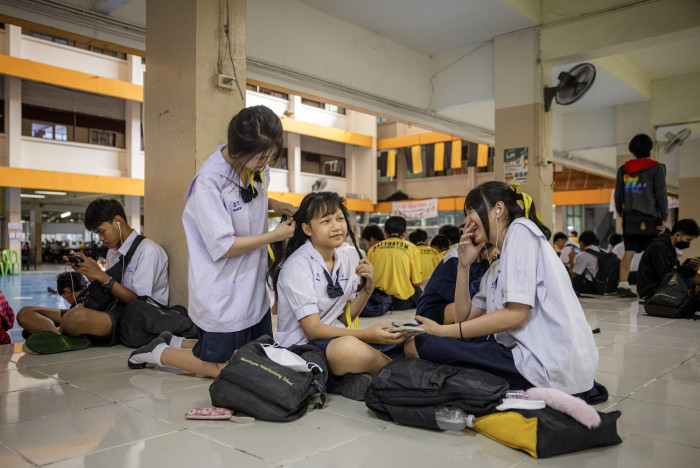
Fortunately, some schools are beginning to embrace more progressive approaches. Wat That Thong High School in Bangkok stands out as a beacon of change.
“It is their head, nobody should dictate what they want to do with it,” stated Kaokorn Suksangiamkul, a teacher at Wat That Thong, who recently opted for a buzz cut himself.the school has seen a rise in popular styles like the mullet, demonstrating a willingness to allow students to express themselves through their hair.
Phatit Kalaphakdee, known as Rin, a 16-year-old transgender student, transferred to Wat That Thong specifically because her previous school threatened punishment for maintaining her long hair. “Hair can give you confidence, or it can ruin your day,” she explained, highlighting the profound connection between self-expression and wellbeing.
Daily Battles and ongoing Concerns
Even at more liberal schools, the fight for self-expression isn’t always over. At Wat That Thong, students still face daily inspections – recently, fingernails were being checked, with those deemed too long or dirty being sent back to cut them.
rin, while complying with the nail check, remains focused on protecting her right to keep her hair long. this illustrates that even in progressive environments, remnants of restrictive policies persist.
* Nail Checks: A continued focus on minor infractions demonstrates a lingering desire for control.
* Uneven Enforcement: Experiences vary significantly between schools, creating an inconsistent landscape for students.
* The Bigger Picture: The debate over hair and nails represents a larger struggle for student autonomy and self-determination.
What Does This Mean for the Future?
The evolving conversation around hair regulations in Thailand reflects a broader societal shift. The Supreme Administrative Court‘s ruling, coupled with the emergence of more liberal schools, signals a growing recognition of the importance of student wellbeing and self-expression.
However, notable challenges remain. Ensuring consistent enforcement of progressive policies, addressing the needs of vulnerable students, and fostering a culture of acceptance are crucial steps forward. Ultimately, the goal is to create a learning habitat where all students feel safe, respected, and empowered to be themselves – hair and all.
Resources for Further Information:
*[BangkokPostArticle[BangkokPostArticle[BangkokPostArticle[BangkokPostArticle
Keep reading