
AI agents that promise to run complex workflows autonomously often stall after initial demos, requiring constant human oversight. The core issue isn’t model capability but how knowledge is embedded—whether in weights, prompts, or dynamically generated adapters. Hypernetworks, a nascent approach that builds specialist models on demand, may finally address this gap, though calibration and scale remain open questions.
Enterprises have spent millions piloting AI agents that demonstrate flawless performance in controlled settings, only to see them falter in production. According to a 2025 study by Chroma, a leading AI infrastructure firm, all 18 tested models lost accuracy as input complexity grew—a fundamental limitation of attention mechanisms, not a fixable flaw. The deeper problem? Where business knowledge lives relative to the model. Traditional solutions like fine-tuning and retrieval-augmented generation (RAG) both force humans back into the loop, either through catastrophic forgetting or context rot.
Hypernetworks, a technique that generates task-specific model weights at inference time, offer a third path. Companies like Nace.AI, which raised a $21.5 million seed round in May 2026, are commercializing this approach for regulated workflows like compliance and risk assessment. Their agents claim a 90/10 autonomy split—handling the bulk of work while humans validate only the final output—but the real test lies in calibration and scalability, both still under peer review.
Why AI Agents Fail in Production
Most enterprise AI deployments collapse under three pressures:
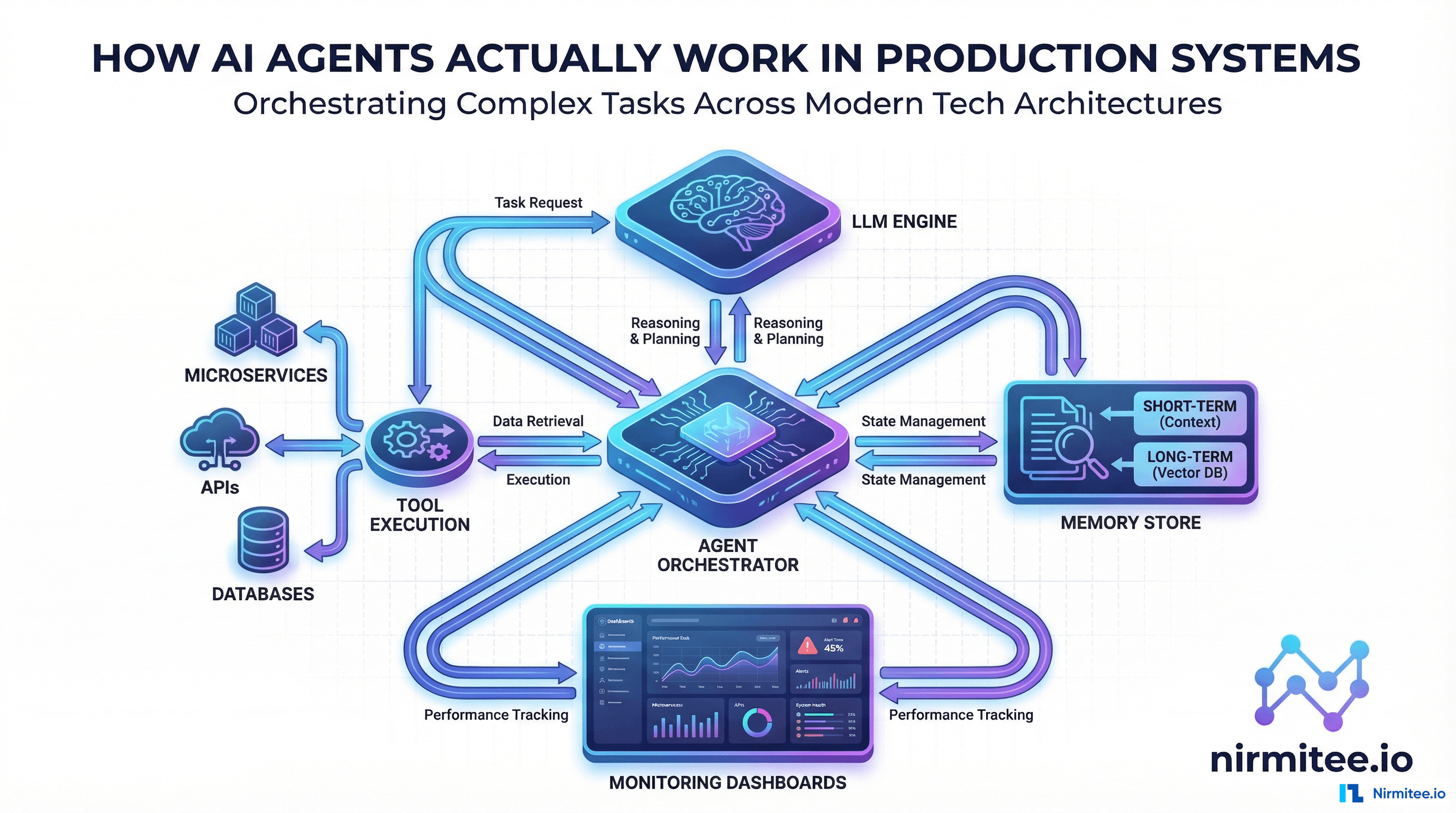
- Catastrophic forgetting: Fine-tuned models, which embed knowledge in their weights, degrade when updated. A 1980s-era problem still unresolved, it forces teams to maintain sprawling model zoos—each a snapshot of outdated policies.
- Context rot: RAG systems inject policies via prompts, but retrieval misses and token limits create “silent failures” where the model confidently cites incorrect or outdated details.
- Automation bias: The EU AI Act’s Article 14 highlights how experts overlook flawed AI-generated work when conclusions appear sound. Deloitte Australia’s $440,000 report with fabricated citations, approved after senior review, is a case in point.
These failures share a root cause: the model doesn’t truly “know” the business. Fine-tuning locks in stale snapshots; RAG requires re-explaining context on every run. The solution? Generate specialist models dynamically, tailored to the task and current policies.
How Hypernetworks Work—and Why They Matter
A hypernetwork is a neural network that outputs the weights of another network. In practice, this means:
- On-demand adaptation: Instead of retraining or stuffing prompts, a generator creates task-specific model weights at runtime from a company’s policies. Sakana AI’s Text-to-LoRA, presented at ICML 2025, demonstrated this with plain-language descriptions.
- No model sprawl: A single generator replaces hundreds of fine-tuned adapters, collapsing governance overhead. The “model zoo” becomes a generated output.
- Cost efficiency: A 2025 Nvidia paper found small models are 10–30x cheaper for narrow, repetitive tasks—exactly where agents excel.
Nace.AI’s MetaModel takes this further, producing parameter adaptations for compliance workflows. Their agents handle 90% of a task while experts validate the remaining 10%, but the critical question is what enables that split:
| Approach | Knowledge Source | Update Cost | Staleness Risk | Failure Mode |
|---|---|---|---|---|
| Fine-tuning | Model weights | High (retrain) | High (snapshot) | Forgetting |
| RAG | Prompt/context | Low (edit source) | Low (dynamic) | Context rot |
| Hypernetwork | Generated weights | Low (regenerate) | Low (current) | Calibration |
Key takeaway: Hypernetworks sidestep the core trade-off—balancing knowledge retention against update agility—by generating specialist models from current policies at runtime. But two challenges remain:
1. Calibration: Does the Model Know When It’s Wrong?
Recent research shows hypernetwork-generated adapters don’t automatically improve calibration over fine-tuning. Gains appear only under specific constraints, meaning the model may still overconfidently produce incorrect outputs. Nace claims to have scaled its generator beyond published benchmarks, but peer-reviewed validation is pending.
2. Scale: Can It Handle Real-World Workloads?
Most hypernetwork demonstrations use small models. Nace’s scaling law—shared publicly but not yet peer-reviewed—could resolve this if it holds. For now, the approach remains unproven at enterprise scale.
What Enterprises Should Ask Before Adopting AI Agents
Vendors touting “90% autonomy” often gloss over critical details. To evaluate claims, ask:
- Where does business knowledge live?
In weights? Prompts? Or generated on demand? Each has trade-offs for staleness and cost. - How is provenance verified?
Research models like HalluGuard label claims as supported or unsupported. Nace includes reasoning traces, but the EU AI Act’s automation bias warns against over-reliance on conclusions alone. - Who owns the improving asset?
Nace’s model can run inside a customer’s cloud, but feedback loops determine whether the vendor or enterprise retains the compounding value. - What’s the real autonomy split?
A 90/10 ratio isn’t a setting—it’s an outcome of how few errors the system produces. For narrow, repetitive tasks (e.g., compliance audits), hypernetworks may achieve this. For ad-hoc work, a well-prompted frontier model suffices.
When to Pilot—and When to Walk Away
Hypernetworks are the most promising solution for:

- Long, repetitive, high-volume processes
(e.g., running internal audits overnight with human review only on the final output). Here, the cost savings and reduced staleness risk justify integration. - Regulated workflows
where policies change frequently (e.g., compliance, risk assessment). Generated adapters stay current without retraining.
For short, low-volume tasks that don’t require unattended operation, the gap between hypernetworks and a well-prompted model like GPT-4 is negligible—and the integration cost may not be worth it.
What’s Next: The Calibration and Scale Test
Nace’s scaling law and calibration improvements are the papers to watch. If peer-reviewed results confirm their claims, hypernetworks could redefine enterprise AI—turning the “model zoo” into a generated output and reducing human oversight to a final validation step.
Until then, the lesson from Deloitte Australia’s flawed report remains: automation bias is real. A 10% human review only works if the reviewer can verify provenance in seconds. Grounding—tying every output to its source—is the non-negotiable foundation of trustworthy autonomy.
Next checkpoint: Nace.AI’s scaling law paper, expected for peer review in Q3 2026, will determine whether hypernetworks can handle production-scale workloads. Enterprises should pilot hypernetwork-based agents now for narrow, high-volume tasks—but proceed with caution for ad-hoc or creative work.
Have you tested hypernetworks or similar approaches in your organization? Share your experiences in the comments—or tag @worldtodayjrnl to discuss.
Related reading