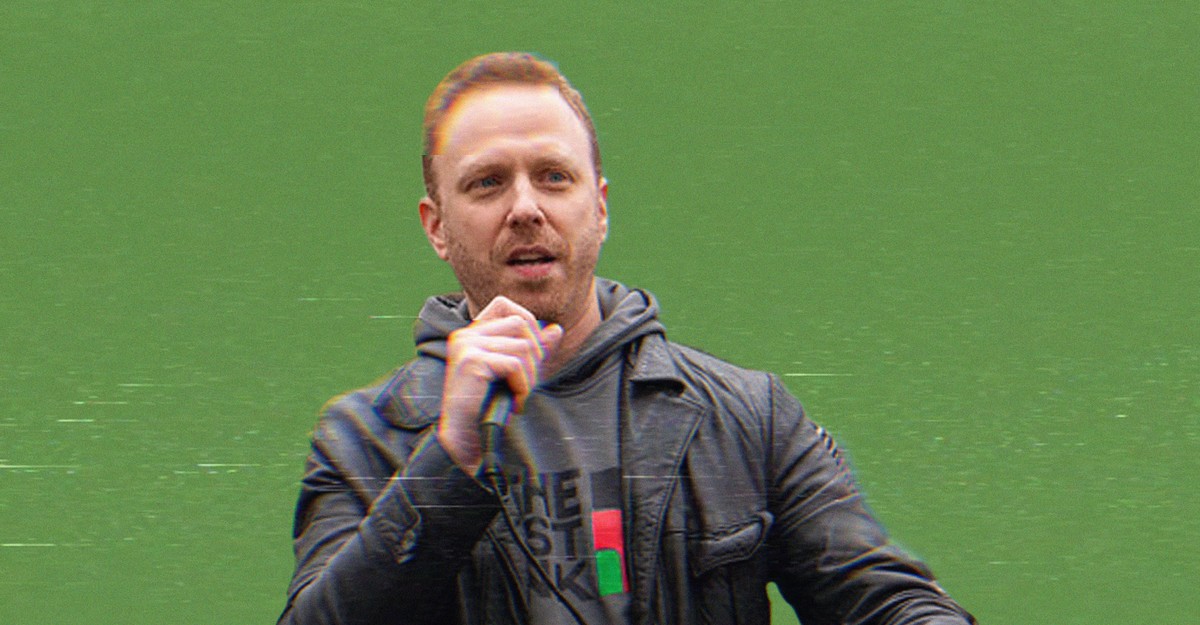
Political commentator Max Blumenthal faced sharp criticism and drew intense public scrutiny following a speech in Washington, D.C., where he defended the Iranian regime and minimized its recent violent crackdowns on domestic protesters. Speaking at the flagship location of the progressive bookstore and restaurant chain Busboys and Poets, Blumenthal addressed a standing-room-only crowd regarding his recent trip to Iran, according to reports covering the event.
The gathering took place as international tension remains high following a joint U.S.-Israeli air strike on February 28 that killed Ayatollah Ali Khamenei. Blumenthal was among approximately 400 pro-regime influencers invited by the Iranian government to cover Khamenei’s funeral earlier in the month. During his remarks, he characterized the late leader—who oversaw the mass slaughter of young Iranian protesters in January—as a religious teacher and guide, while arguing that the assassination should have sparked widespread global outrage.
Blumenthal’s commentary fits into a long-standing pattern of public figures expressing admiration for distant authoritarian states out of alienation from their own country. Critics have compared his rhetoric to historical instances of foreign apologists dismissing state-sponsored atrocities, drawing parallels to New York Times correspondent Walter Duranty’s coverage of the Soviet Union in the 1930s. Despite lacking mainstream media affiliations, Blumenthal commands a substantial digital footprint, with nearly 860,000 followers on X and regular appearances on state-funded international broadcast networks.
Confrontations Outside the Venue and State Narratives
Demonstrations preceded the event outside the Busboys and Poets location, where two young Iranian women displayed a banner honoring demonstrators killed by forces of the Islamic Republic during January’s unrest. According to eyewitness accounts, Blumenthal paused on his way inside to berate the women, shouting derogatory terms at them. Once inside, he was greeted with applause before staging a presentation that blended geopolitical conspiracy theories with praise for the Iranian government.
During the talk, Blumenthal deflected from the verified scale of violence during the January protests, where human rights groups and international reporting indicate that state security forces killed tens of thousands of citizens. While the Iranian regime claims a death toll of slightly more than 3,000 and characterizes the demonstrations as riots, internal health ministry data leaked to foreign press outlets suggested fatalities exceeded 30,000. Blumenthal dismissed these higher estimates as fabricated numbers, aligning closely with official state talking points.
Controversial Claims and Wider Repercussions
Throughout the evening, Blumenthal advanced several assertions regarding international geopolitics and domestic Iranian affairs that directly contradicted verified documentation. He repeated state media claims that 35 million people attended Khamenei’s funeral, described female representation in the Iranian parliament favorably compared to the U.S. Congress despite women holding only five percent of seats in the Majlis, and labeled exile networks as foreign intelligence fronts.
The event also drew scrutiny toward the venue and its leadership. Busboys and Poets owner Andy Shallal introduced the speaker by extolling the values of free speech, international law, and human expression. Observers noted the sharp contrast between invoking fundamental democratic rights and hosting a speaker whose platform routinely defends autocratic governance and downplays the systemic abuses faced by dissidents.
As international stakeholders continue to monitor developments in Iran and shifting Western diplomatic strategies, public forums examining these geopolitical shifts remain contentious. Readers seeking further updates on international policy developments and human rights documentation can consult reports issued by global monitoring organizations and official diplomatic briefings.
What are your thoughts on how public figures frame authoritarian regimes? Share your perspective and join the discussion in the comments below.
Worth a look