
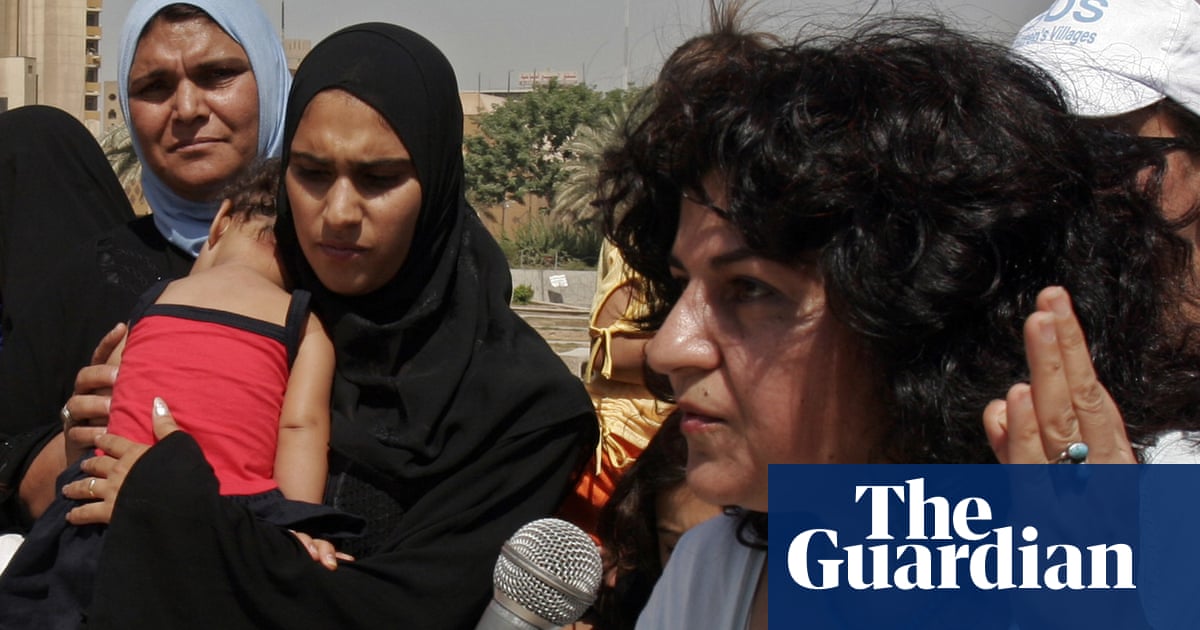
The silence that follows a gunshot in Baghdad is rarely just about the noise; it is about the message sent to everyone still breathing. On March 2, 2026, that message was delivered with brutal precision when unidentified gunmen on motorcycles opened fire on Yanar Mohammed, one of Iraq’s most courageous and prominent defenders of women’s rights, as she stood outside her home in northern Baghdad.
Mohammed, 66, did not die instantly but succumbed to her wounds in the hospital shortly after the attack. For those who have followed the precarious trajectory of Iraqi civil society, the assassination of Yanar Mohammed is not an isolated tragedy. It is a calculated strike against the remarkably infrastructure of female autonomy in a country where having a voice can be a death sentence.
As the World Editor for World Today Journal, I have covered numerous human rights crises across the Balkans and beyond, but the systematic erasure of female leadership in Iraq is particularly chilling. Mohammed was not merely an activist; she was the architect of survival for hundreds of women fleeing domestic abuse and forced marriage. Her death leaves a void in the feminist movement and signals a deepening climate of impunity that threatens to roll back decades of hard-won progress.
The reaction from the international community and local activists has been one of profound alarm. Even as the Iraqi government has initiated a formal response, the pattern of targeted violence suggests that the danger to human rights defenders in Iraq is not receding—it is evolving.
A Legacy of Sanctuary: The Work of OWFI
To understand why the killing of Yanar Mohammed is so devastating, one must understand the Organisation of Women’s Freedom in Iraq (OWFI). Co-founded by Mohammed in 2003, OWFI was established during a period of immense instability to combat gender-based violence and promote the fundamental rights of women in a society often governed by restrictive religious laws and “barbaric traditions.”
Under Mohammed’s leadership, OWFI became more than a political advocacy group; it became a lifeline. The organization developed a critical network of safe houses across several Iraqi cities, providing protection and legal support to women and girls fleeing human trafficking, “honour killings,” and forced marriages. At the time of her death, Mohammed had helped establish 11 such safe houses, offering a sanctuary for those with nowhere else to turn.
Her commitment to these causes earned her global recognition. In 2016, she was honored with the Rafto Human Rights Award, a prize dedicated to individuals who defend human rights in particularly challenging contexts. Yet, this international acclaim did not provide a shield. For years, Mohammed had been the target of death threats from the Islamic State and other armed groups, making her assassination a feared eventuality rather than a surprise.
The ‘Chilling Effect’ and the Erosion of Rights
The assassination of Yanar Mohammed is being viewed by colleagues and human rights monitors as part of a broader strategy to stifle dissent. The timing is particularly precarious, as women’s rights in Iraq have faced significant legislative setbacks. Last year, the Iraqi parliament passed a law permitting children as young as nine to marry—a move activists argue effectively legalizes child rape and traps underage girls in abusive cycles while ending their education.

The violence against women who speak out is not limited to Mohammed. In early April 2026, shortly after Mohammed’s death, a female lawyer known for her advocacy for girls was too murdered. This sequence of events has created what activists describe as a “chilling effect,” where the fear of targeted killing outweighs the impulse to protest.
According to Amnesty International, this assassination fits a documented pattern of targeted killings and attempted killings of activists that has persisted since the Tishreen protests of 2019. The failure of authorities to hold previous perpetrators accountable has entrenched a culture of impunity, where gunmen can operate with little fear of legal consequence.
The Fight for Accountability
In the immediate aftermath of the attack on March 2, Prime Minister Mohammed Shia’ al-Sudani ordered an official investigation into the killing. But, for many in the feminist movement, a government-ordered probe is insufficient without a fundamental shift in how the state protects its citizens.
Razaw Salihy, Amnesty International’s Iraq Researcher, has called for the investigation to be prompt, effective, thorough, independent, and impartial. Salihy emphasized that the killing was a “calculated assault to stifle human rights defenders,” and urged the Iraqi authorities to stop the sustained smear campaigns often used to discredit activists before they are targeted for violence.
The demand from civil society is clear: justice for Yanar Mohammed must involve more than a police report. It requires a systemic end to the targeted attacks on those who challenge the status quo. Without the conviction of those responsible, the investigation risks becoming another bureaucratic exercise in a long history of unresolved assassinations.
Key Context: The Risks for Iraqi Activists
| Risk Factor | Impact on Activists | Recent Example |
|---|---|---|
| Legislative Regression | Legalization of harmful practices reduces the safety of advocates. | Law permitting marriage for children as young as nine. |
| Climate of Impunity | Lack of convictions for past murders encourages new attacks. | Unresolved killings following the 2019 Tishreen protests. |
| Armed Group Influence | Non-state actors use violence to enforce social conservatism. | Death threats from Islamic State and other armed groups. |
| Smear Campaigns | Activists are publicly discredited to justify violence. | Targeted campaigns against feminist leaders. |
What This Means for the Global Human Rights Landscape
The death of Yanar Mohammed is a reminder that the struggle for gender equality is not a linear progression. In many parts of the world, the “progress” reported in international forums is being dismantled on the ground through violence and legislation. When a leader of Mohammed’s stature is killed in broad daylight in the capital city, it is a signal to every woman in Iraq—and every activist globally—that the cost of speaking truth to power can be absolute.

For the women currently residing in the 11 safe houses Mohammed helped build, her death is not just a political loss; it is a loss of a protector. The survival of these sanctuaries now depends on whether the Iraqi state and the international community can provide the security and support that Mohammed once provided herself.
The tragedy of this assassination lies in the fact that Yanar Mohammed spent over two decades building a fortress of safety for others, yet she herself could not find safety outside her own front door.
The next critical checkpoint in this case will be the release of the findings from the investigation ordered by Prime Minister Mohammed Shia’ al-Sudani. The world will be watching to see if the perpetrators are brought to justice in a fair trial, or if this case will join the long list of silenced voices in Baghdad.
Do you believe international pressure can effectively protect human rights defenders in volatile regions? Share your thoughts in the comments below.