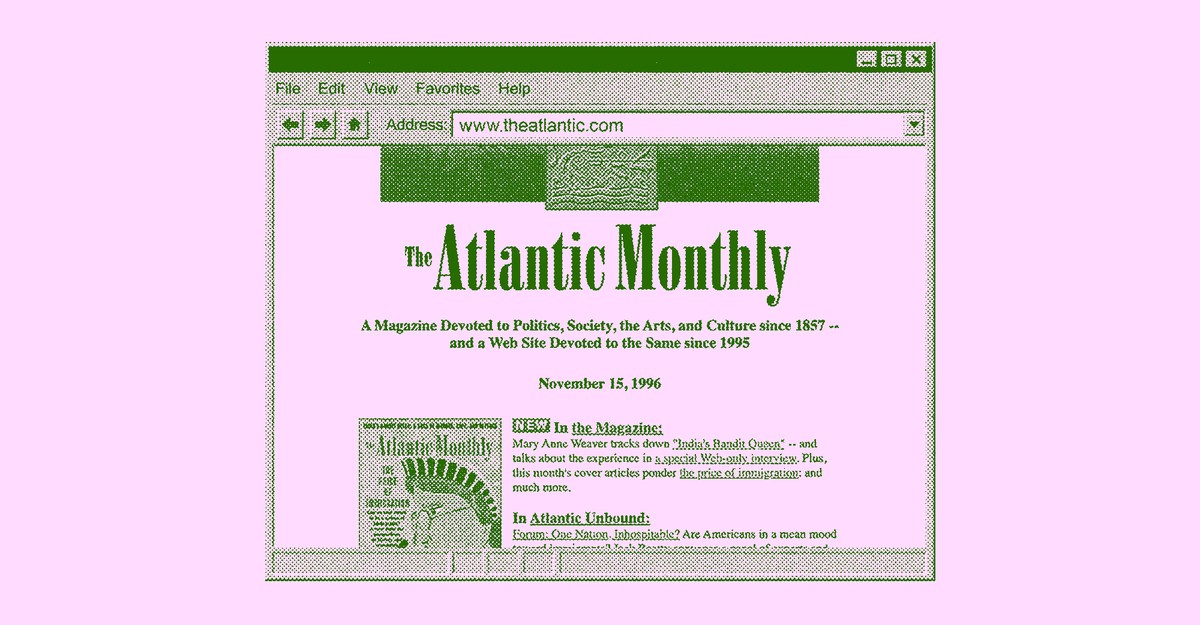
The AtlanticS Lost Vision of the Internet: A Literary Experiment
The early internet held a promise of intellectual connection, a digital space where deep engagement with ideas flourished. the Atlantic magazine, in the mid-1990s, actively explored this potential, creating a unique online experience centered around literature and author interaction. This article delves into that ambitious experiment, examining how The Atlantic envisioned the internet as a tool for fostering genuine, substantive reading – a vision that feels strikingly different from today’s online landscape.
A Digital Dante: Pioneering Online Literary Exploration
The Atlantic‘s early foray into the digital world, beginning with a partnership with AOL in 1993, wasn’t about simply replicating print content online. It was about leveraging the internet’s unique capabilities to enhance the reading experience. A prime example was their “Dante” project.
Here’s what readers could find:
* Multiple Interpretations: Selections from Robert Pinsky‘s translation of The Divine Comedy, alongside audio recordings of Pinsky reading his work.
* Historical Context: Comparisons with Henry Wadsworth longfellow’s 1867 translation, plus access to Longfellow’s own essays on the challenges of translating Dante.
* Source Material: Direct links to the original Italian text via Columbia University’s Digital Dante Project.
This wasn’t just about accessibility; it was about creating a layered, interactive experience. You could compare interpretations, explore the historical context, and even delve into the source material – all within a single digital space. This level of integrated access was revolutionary for the time.
The Promise of Connection: Author Forums and Reader Engagement
The internet’s potential for direct interaction was another key focus.The Atlantic hosted online forums where readers could engage directly with authors. This was a radical departure from the customary, one-way communication of print media.
Sven Birkerts, author of the influential 1994 book The Gutenberg Elegies (a critique of the decline of reading), participated in one such forum. Despite his own skepticism about digital culture, Birkerts gamely engaged with readers, dictating his responses to avoid direct computer interaction. The resulting conversation, as recounted by The Atlantic‘s editor Scott Stossel, was surprisingly thoughtful and substantive. It demonstrated the potential for online dialogue to be genuinely enriching.
A Lost Optimism: the Shift in Online Culture
However, the optimistic vision of the early internet didn’t fully materialize. The sense of genuine engagement and substantive discussion gradually gave way to the overwhelming, often superficial nature of modern online life. The skeptics, like Birkerts, appear to have been prescient.
A poignant example of this lost optimism exists in the earliest archived version of The Atlantic‘s website (November 1996). A cheerful graphic of an inkwell and plume invited visitors to ”click here to increase your literary fitness.” The link is now dead, and its destination remains a mystery. Even AI tools like ChatGPT can’t uncover its purpose.
This seemingly minor detail encapsulates the spirit of the early internet: earnest, hopeful, and focused on intellectual growth. Its disappearance symbolizes a shift in online culture,a move away from thoughtful engagement towards something more fragmented and fleeting.
Lessons from the Past: Reclaiming a Vision for Digital Literacy
The Atlantic‘s experiment wasn’t a failure, but a valuable lesson. it demonstrated the potential of the internet to foster deep reading and meaningful connection. While the digital landscape has changed dramatically, the core principles remain relevant.
Consider these takeaways:
* Curated Content: Prioritize quality over quantity.
* Contextualization: Provide historical and critical context alongside primary sources.
* Interactive Experiences: Encourage dialogue and exploration.
* Author Engagement: Facilitate direct interaction between readers and writers.
As we navigate the complexities of the modern internet, remembering the Atlantic‘s early vision can help us reclaim a space for thoughtful engagement and genuine intellectual exploration. It reminds us that the internet can be a powerful tool for literacy and connection – if we choose to use it that way.
Resources:
* [Robert Pinsky Readings](https://www.theatlantic.com/past/docs/unbound/aandc/dante/r
Related reading