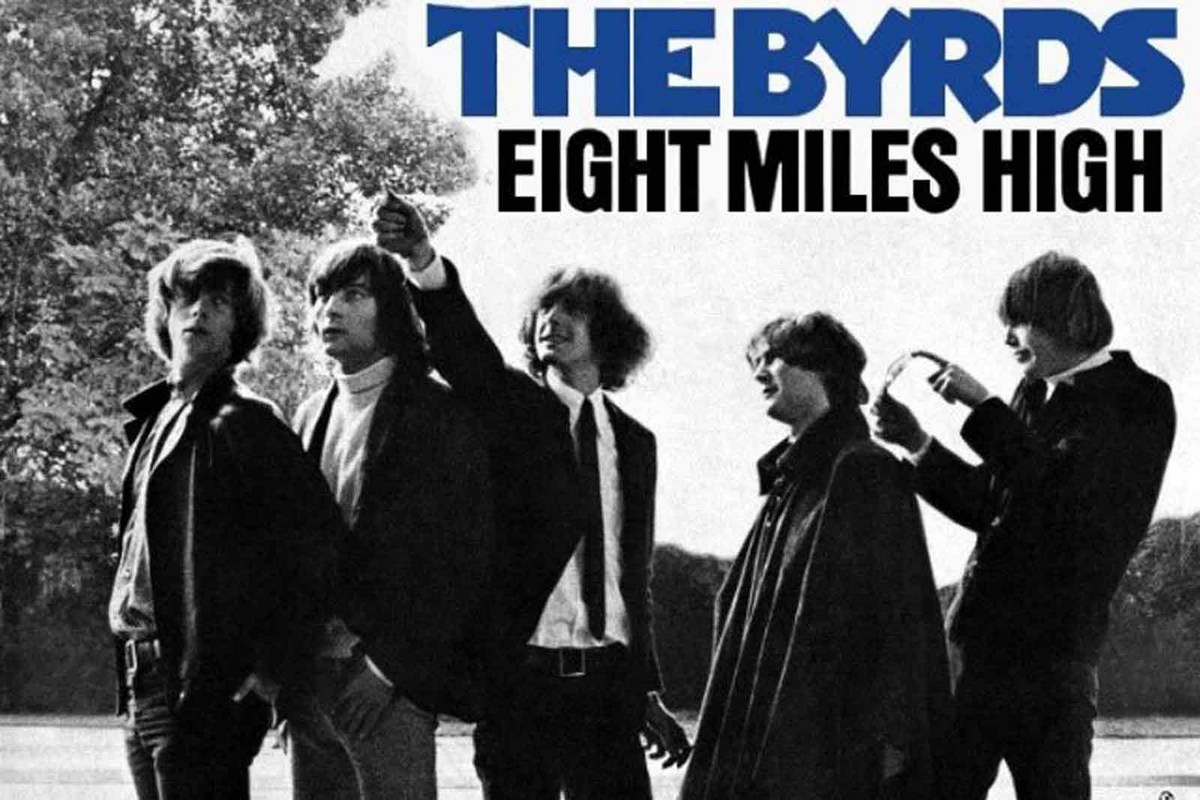
Los Angeles, CA – On March 14, 1966, The Byrds released “Eight Miles High,” a song that quickly became synonymous with the burgeoning psychedelic rock movement. More than just a hit single, the track, penned by Gene Clark, Jim McGuinn (later Roger McGuinn), and David Crosby, represented a bold sonic exploration, drawing inspiration from the innovative sounds of Indian classical music and the improvisational spirit of jazz. The song’s influence continues to resonate today, marking a pivotal moment in music history and solidifying The Byrds’ place as pioneers of the counterculture era.
“Eight Miles High” wasn’t simply a musical departure for The Byrds; it was a cultural touchstone. Emerging from the British Invasion, the band sought to push boundaries, and this song did just that. The distinctive, soaring guitar work, achieved through McGuinn’s innovative use of a Rickenbacker 12-string electric guitar, mimicked the sound of a sitar, a direct nod to the influence of Ravi Shankar, whose music had captivated a growing audience in the West. Coupled with the song’s lyrical ambiguity and a driving rhythm section, “Eight Miles High” offered a sonic experience unlike anything heard on mainstream radio at the time. The song’s release coincided with a period of significant social and political upheaval, and its ethereal quality resonated with a generation seeking alternative perspectives.
The Genesis of a Psychedelic Anthem
The story behind “Eight Miles High” is layered with both musical innovation and controversy. The song’s origins can be traced back to a flight from London to Los Angeles in August 1965, following The Byrds’ first UK tour. As the band members discussed their altitude, the conversation led to the phrase “eight miles high,” which ultimately became the song’s title. However, the seemingly innocent origin story served as a carefully constructed deflection, as the song quickly became entangled in accusations of promoting drug use.
According to a report in the Gavin Report, a broadcasting trade journal, the lyrics were interpreted as veiled references to LSD. This led to a de facto radio ban in several markets, hindering the song’s chart performance. While the band vehemently denied the allegations at the time, both Clark and Crosby later admitted that their experiences with psychedelic substances had, at least in part, informed the song’s creation. McGuinn explained in a 2016 interview that while the band did experiment with marijuana, the song wasn’t solely about drug use. Despite the controversy, “Eight Miles High” reached number 14 on the Billboard Hot 100, number 9 in Canada, and number 24 in the UK, demonstrating its enduring appeal despite the obstacles.
https://www.youtube.com/watch?v=UBnnEOmKtjA” width=”560″ height=”315″ frameborder=”0″ allowfullscreen>
Musical Influences and Innovation
The Byrds’ willingness to experiment with diverse musical styles set “Eight Miles High” apart. The song’s structure and instrumentation were heavily influenced by both Ravi Shankar and jazz saxophonist John Coltrane. McGuinn specifically aimed to emulate Coltrane’s improvisational style on the guitar, stating that he used his Rickenbacker 12-string “as if it were John Coltrane’s saxophone.” Wikipedia details how this fusion of Eastern and Western musical traditions was groundbreaking for its time, paving the way for the development of psychedelic rock and raga rock. The song’s modal harmonies and extended instrumental passages further distinguished it from the typical pop songs of the era.
The use of the Rickenbacker 12-string guitar was particularly crucial to the song’s sound. McGuinn’s innovative playing technique, which involved using a tremolo arm and creating a shimmering, ethereal effect, became a signature element of The Byrds’ music. This distinctive sound, combined with the song’s complex arrangement and lyrical ambiguity, contributed to its enduring appeal and its status as a landmark recording in the history of rock music.
“Fifth Dimension” and the Legacy of The Byrds
“Eight Miles High” was initially released as a single and later included on the album Fifth Dimension, released on July 18, 1966. The album itself is considered a masterpiece of psychedelic rock, showcasing The Byrds’ continued experimentation with diverse musical styles and lyrical themes. Fifth Dimension featured a blend of original compositions and covers, all infused with the band’s signature sound and innovative arrangements. The album’s title, inspired by a science fiction novel, reflected the band’s fascination with space and the exploration of consciousness.
Recording Details and Production
The recording sessions for “Eight Miles High” took place in January 1966 at Columbia Studios in Hollywood, under the guidance of producer Allen Stanton. The band meticulously crafted the song’s arrangement, experimenting with different instrumentation and recording techniques to achieve the desired sonic effect. The use of studio effects, such as reverb and echo, further enhanced the song’s ethereal quality. The band’s attention to detail and their willingness to experiment with new technologies contributed to the song’s innovative sound.
The title itself, “Eight Miles High,” was a deliberate choice, exceeding the typical altitude of commercial airliners (usually around six to seven miles). The band felt the title sounded more evocative and also served as a playful nod to The Beatles’ hit song, “Eight Days a Week.” This subtle reference demonstrated The Byrds’ awareness of the contemporary music scene and their desire to establish their own unique identity.
While the band initially presented the song as inspired by a simple observation during a flight, later accounts revealed a more complex story. The song’s lyrics and atmosphere were undeniably influenced by the prevalent use of LSD during the 1960s. Gene Clark, in particular, was known to experiment with the drug, and his experiences likely contributed to the song’s surreal and dreamlike quality. However, it’s important to note that the band’s initial denial of any drug references was likely a strategic attempt to avoid censorship and maintain their commercial viability.
“Eight Miles High” remains a captivating and influential piece of music, a testament to The Byrds’ creativity and their willingness to challenge conventions. Its enduring appeal lies in its innovative sound, its lyrical ambiguity, and its ability to transport listeners to another realm. The song continues to inspire musicians and captivate audiences, solidifying its place as a cornerstone of psychedelic rock and a timeless classic.
As The Byrds’ catalog continues to be re-evaluated and appreciated by new generations, “Eight Miles High” stands as a potent reminder of a pivotal moment in music history. The song’s legacy extends beyond its musical innovations, serving as a cultural artifact of a time of profound social and artistic change. Further exploration of The Byrds’ discography and the broader context of the 1960s music scene can be found through resources like The Byrds’ Wikipedia page.
What are your favorite memories of The Byrds and “Eight Miles High”? Share your thoughts in the comments below, and don’t forget to share this article with fellow music enthusiasts!
Related reading