
Hip-hop remains the dominant force in global music consumption, despite recurring industry narratives suggesting the genre is in a state of decline. While the mechanisms of how listeners discover, stream, and interact with rap music have shifted significantly over the past decade, data from major industry monitors confirms that hip-hop continues to command the largest share of total on-demand music streams in the United States and abroad. According to the Luminate 2023 Year-End Music Report, hip-hop and R&B collectively accounted for approximately 25.5% of all music consumption in the U.S., maintaining its position as the most popular genre despite a slight year-over-year dip in total volume.
The perception that “hip-hop is dead” often stems from a conflation of shifting cultural trends with actual market performance. Financial analysts and music industry experts point to the transition from the “streaming boom” era to a more fragmented media landscape where viral moments on platforms like TikTok drive consumption more than traditional radio play. As noted by Forbes, while the genre’s total share has faced increased competition from country and Latin music, the sheer volume of content produced—and the sustained influence of legacy artists—suggests an evolution rather than an expiration.
Market Dynamics and Streaming Consumption
The primary driver of the “dead” narrative is often the fluctuation in year-over-year growth statistics. For years, hip-hop served as the engine of the streaming economy, consistently outpacing all other genres. However, as the market matures, other genres have begun to capture significant streaming share. The Nielsen Music/Luminate data indicates that while hip-hop’s total share of the U.S. market saw a marginal decrease in 2023, it remains significantly ahead of rock and pop in terms of total on-demand audio and video streams.
This shift is largely attributed to the diversification of listener habits. Younger demographics, once the exclusive stronghold of hip-hop, are increasingly interacting with a wider array of genres thanks to algorithmic playlists. Industry analysts suggest that the “death” of the genre is a misreading of market saturation. When a genre becomes the default “pop” sound, it loses the novelty that previously fueled explosive growth, leading to a stabilization phase that some observers mistake for decline.
The Role of Viral Platforms in Genre Evolution
The way listeners engage with hip-hop has been fundamentally altered by short-form video platforms. Success in the current market is frequently measured by a track’s ability to “go viral” rather than its performance on traditional charts. This shift has forced labels to rethink marketing strategies, moving away from long-term artist development toward “snackable” content meant for immediate social media engagement.
According to an analysis by Rolling Stone, the emphasis on viral trends has led to shorter song lengths and a focus on “hooks” that resonate in 15-second clips. Critics argue this has diluted the artistic depth of the genre, while proponents suggest it has democratized the industry, allowing independent artists to bypass traditional label gatekeepers. This tension between commercial viability and artistic integrity is not new to the genre; it is a recurring theme that has defined hip-hop’s growth since its inception.
Legacy Influence and Economic Sustainability
Beyond current streaming charts, the economic footprint of hip-hop remains unparalleled. The genre continues to exert massive influence over fashion, technology, and global advertising. The World Economic Forum has documented how hip-hop serves as a primary vehicle for cultural entrepreneurship, with artists frequently transitioning into roles as tech investors, media moguls, and brand partners. The genre’s ability to reinvent itself through these secondary markets provides a level of economic insulation that pure streaming data fails to capture.
Furthermore, the “classic” hip-hop catalog continues to perform exceptionally well. Streaming services report that legacy artists from the 1990s and early 2000s maintain high monthly listener counts, proving that the genre has developed a multi-generational audience. This longevity is a hallmark of a mature cultural movement, not one that is dying.
What Happens Next for the Industry?
The next phase for hip-hop will likely be defined by a shift toward market segmentation. As streaming platforms refine their recommendation algorithms, the monolithic “hip-hop” category may continue to fracture into more distinct sub-genres, ranging from experimental soundscapes to hyper-localized regional styles. Industry stakeholders are currently monitoring the impact of new artificial intelligence regulations on music production, as these tools are expected to play a significant role in how the next generation of creators produces and distributes content.
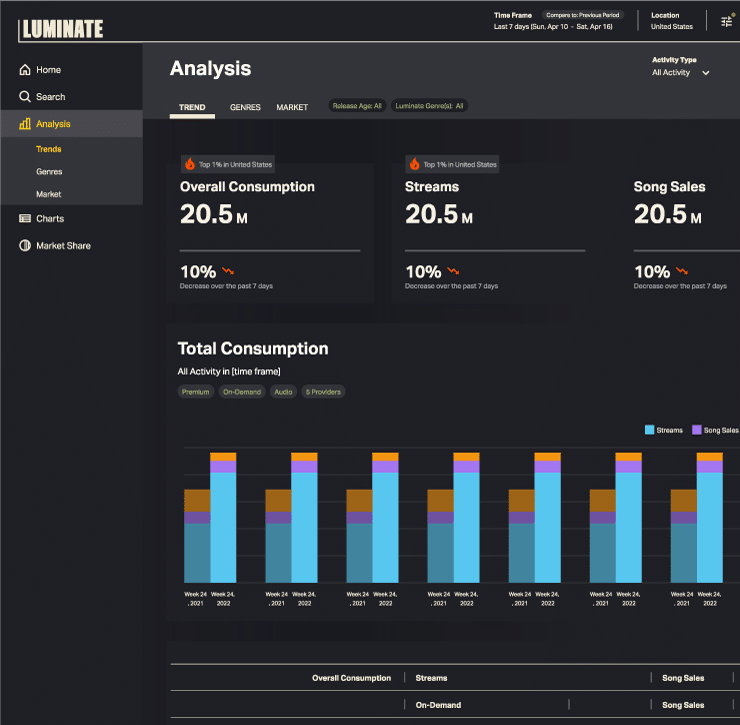
The industry is expected to release its updated mid-year performance reports in late 2024, which will provide further clarity on whether the stabilization of hip-hop’s market share will continue or if the genre will see a resurgence in its growth trajectory. Readers can track official updates through the Luminate Data Insights portal. We invite our readers to share their perspectives on the evolution of the genre in the comments section below.
Keep reading