The landscape of consumerized healthcare is shifting as patients increasingly manage their own wellness through a complex ecosystem of digital diagnostics, data interpretation tools, and direct-to-consumer therapeutic services. This evolution, characterized by a growing trend of individuals acting as their own primary care providers, is being mapped by venture capital analysts who track how technology and retail integration are decentralizing traditional medical delivery.
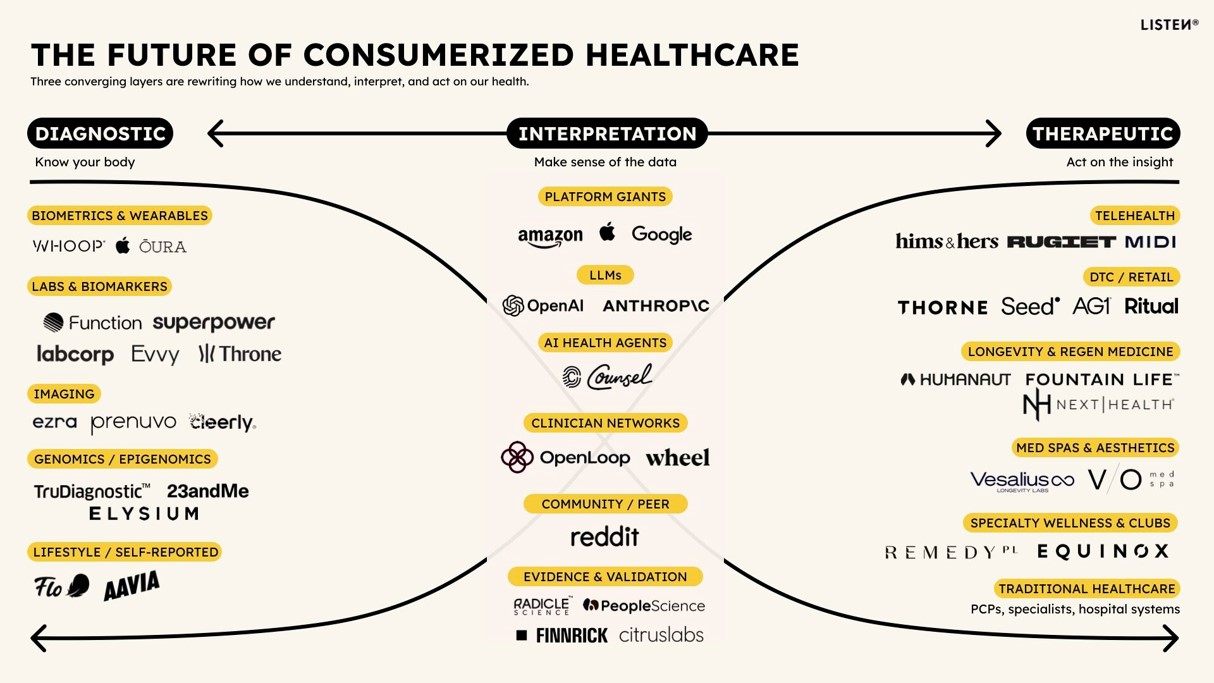
Industry analysts have identified three distinct, converging layers that currently define the consumer health ecosystem: diagnostics, interpretation, and therapeutics. This framework helps explain how patients navigate their health journey outside of the traditional physician-led model. The diagnostic layer serves as the entry point, relying on an array of hardware and data-collection tools. Wearable technology, such as devices produced by Oura and Whoop, provides continuous biometric data, while companies like Labcorp and Evvy offer direct-access testing for biomarkers. Imaging services, such as those provided by Ezra, and genomic screening through companies like 23andMe, further expand the diagnostic reach, allowing consumers to gather significant amounts of personal health data without an initial office visit.
Once this data is collected, the second layer—interpretation—becomes critical. This phase involves translating raw metrics into actionable insights. This space is currently occupied by a diverse group of stakeholders, ranging from major technology platforms like Amazon and Google to the rapidly evolving field of Large Language Models (LLMs) such as those developed by OpenAI and Anthropic. These tools, alongside emerging digital health agents and peer-to-peer networks, act as the bridge between raw data and medical understanding. The goal is to provide evidence-based validation that helps the consumer make sense of their health status.
The final layer, therapeutics and solutions, represents the application of these insights. This sector includes a broad spectrum of services: high-end wellness and fitness clubs like Equinox and LifeTime, specialized med spas, and a growing volume of direct-to-consumer telehealth programs. This layer effectively moves the point of care into the home or the retail environment, focusing on long-term wellness and aesthetics as much as traditional disease management.
The Shift Toward Self-Agency in Healthcare
The core question driving this market shift is whether the average individual will eventually become their own primary care provider. This transition is supported by a rise in consumer self-agency and a heightened interest in longevity and personalized health. The supply side of the market is responding with innovations that cater to this demand, creating a feedback loop where consumers are empowered by data and innovators are incentivized to build more integrated, user-friendly tools.
As the ecosystem matures, the role of established clinical networks remains a point of focus, as these networks must adapt to a patient base that arrives at appointments already equipped with significant amounts of personal data and preliminary interpretations. The integration of these consumer-led diagnostics into formal electronic health records remains a key area of policy and technical development that will likely define the next phase of the industry.
Future Outlook for the Health Consumer
For the health citizen, this means more control over the diagnostic process and a wider range of therapeutic options. For the healthcare system, it necessitates a recalibration of how care is delivered, moving away from a purely reactive, office-based model to one that is proactive, data-driven, and continuous.
Industry observers and stakeholders should look for updates from regulatory bodies regarding the safety and accuracy of home-based diagnostic platforms, as these will dictate the speed at which this ecosystem expands.