
Grzegorz Braun: The Polish MEP at the Center of a Storm Over War Rhetoric and Legal Challenges
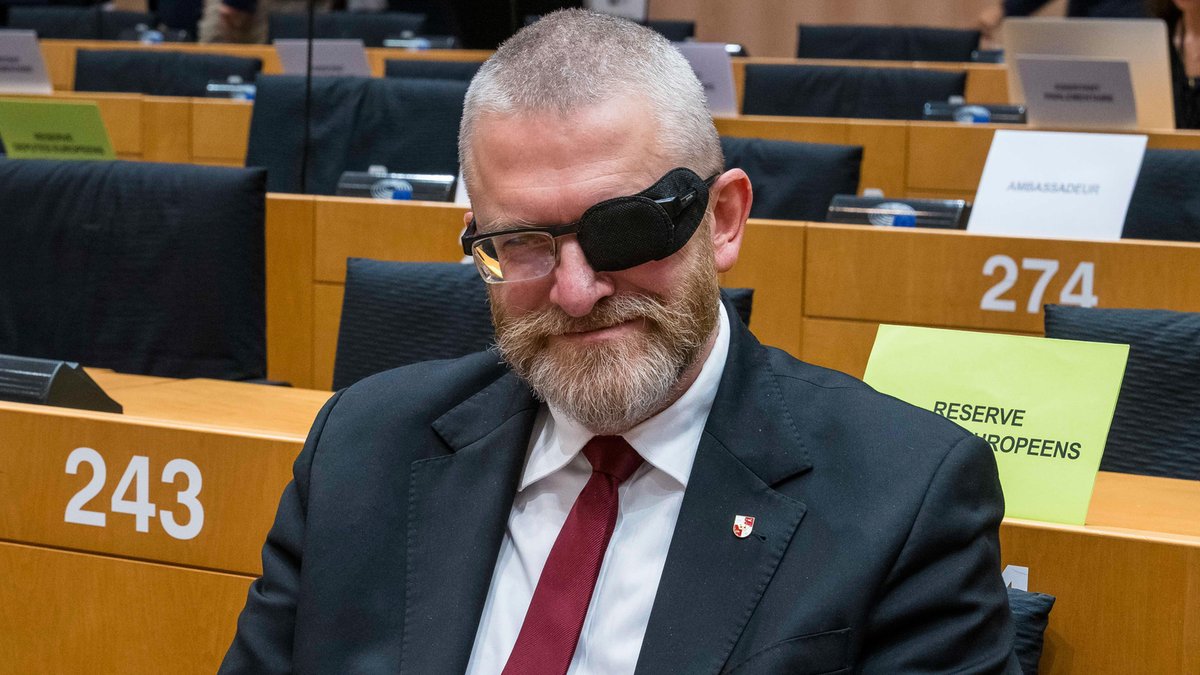
London, UK — May 25, 2026 — Grzegorz Braun, a Polish Member of the European Parliament (MEP) from the far-right Konfederacja party, has become a focal point of political controversy in Europe. His recent inflammatory remarks suggesting that “Poland and Lithuania are provoking war” during a May Day rally in Vilnius have sparked diplomatic tensions and legal proceedings. The European Parliament’s decision to lift Braun’s immunity in connection with these statements—along with separate allegations of assault against a journalist—has placed him at the center of a high-stakes political and legal battle.
Braun’s comments, delivered during a public gathering in Lithuania’s capital, came as relations between Warsaw and Vilnius have grown increasingly strained over regional security and migration policies. While Braun framed his remarks as a call for peace, Lithuanian authorities and EU officials have condemned his language as reckless and divisive. The immunity proceedings against Braun, along with three other Polish MEPs, mark a rare intervention by the European Parliament in domestic political disputes, raising questions about the boundaries of free speech in the EU and the consequences of inflammatory rhetoric in an already volatile geopolitical climate.
This investigation examines Braun’s political career, the context behind his controversial statements, the legal proceedings against him, and the broader implications for Poland’s role in European politics. We also explore the reactions from Lithuanian authorities, the European Parliament, and the Polish political landscape.
Key Developments in the Braun Case
The Controversial Remarks: What Braun Said in Vilnius
During a May Day rally in Vilnius on May 1, 2026, Braun addressed a crowd that included supporters of Konfederacja and other far-right groups. According to Lithuanian state broadcaster LRT, Braun declared: “Lithuania and Poland are provoking war, which is certainly not in the interest of decent Poles and Lithuanians. Meanwhile, I am inciting peace.”

“Lithuania and Poland are provoking war… I am inciting peace.”
Braun’s remarks were immediately condemned by Lithuanian officials. Vilnius Mayor Valdas Benkunskas publicly questioned Braun’s commitment to European values, stating that Braun “preaches against the very principles he claims to defend.” The Lithuanian Foreign Ministry issued a statement calling Braun’s words “irresponsible” and urging him to “reflect on the consequences of such rhetoric in a region already facing significant security challenges.”
The comments came amid heightened tensions between Poland and Lithuania over NATO’s eastern flank defense, migration policies, and historical grievances. Braun’s party, Konfederacja, has long advocated for a more confrontational stance toward the EU and NATO, often clashing with mainstream Polish political parties over issues like LGBTQ+ rights, migration, and relations with Russia.
Legal Proceedings: Immunity Lifted, Case Pending
On May 15, 2026, the European Parliament voted to lift Braun’s parliamentary immunity in two separate cases: one related to his Vilnius remarks and another involving allegations that he physically assaulted a journalist during a separate event in Warsaw. The immunity lift applies only to these specific incidents and does not strip Braun of his MEP status.
The decision was approved by a majority of MEPs, with opposition primarily from far-right and nationalist blocs. Braun’s Konfederacja party condemned the move as “political persecution,” while center-right and liberal groups in the European Parliament praised it as a necessary step to uphold democratic standards.
However, the legal process is not yet complete. On May 24, 2026, Poland’s Prosecutor General Dariusz Korneluk announced that the request to proceed with Braun’s case had been returned to Wrocław prosecutors for “formal and legal corrections.” This delay has fueled speculation about whether political pressures in Poland could further complicate the proceedings.
Next Steps: The Wrocław prosecutors must now resubmit the case with the necessary corrections. If approved, Braun could face charges in a Polish court, though the exact nature of the charges—whether related to incitement, assault, or both—remains unclear. The European Parliament’s Bureau has indicated it will monitor the case closely to ensure due process.
Diplomatic Fallout: Poland-Lithuania Relations Under Strain
Braun’s remarks have added to existing tensions between Poland and Lithuania, two NATO allies that have frequently clashed over regional security and EU policies. In response to Braun’s Vilnius rally, Lithuanian authorities rejected his request to hold a separate event in the city, citing concerns over public safety and Braun’s “record of inflammatory rhetoric.”
Polish Foreign Minister Radosław Sikorski described the Lithuanian decision as “unnecessary and provocative,” while Braun’s party accused the Lithuanian government of “censorship.” The incident has reignited debates in Poland about the country’s relationship with its Baltic neighbors and the role of far-right politics in shaping foreign policy.
Analysts warn that the Braun controversy could have broader implications for EU unity. With far-right parties gaining traction across Europe, his case raises questions about how the EU will handle members who openly challenge the bloc’s core values. Some legal experts suggest that the European Parliament’s immunity proceedings could set a precedent for future cases involving MEPs who make inflammatory statements.
Who Is Grzegorz Braun? A Political Career Under Scrutiny
Grzegorz Braun, 48, has been a member of the European Parliament since 2019, representing the Konfederacja party. Before entering politics, he worked as a journalist and political commentator, often criticizing mainstream Polish media for what he described as “liberal bias.” Braun has built a reputation as a vocal opponent of Poland’s ruling Law and Justice (PiS) party, frequently clashing with both the center-left and far-right on issues like EU integration, migration, and national sovereignty.
Konfederacja, founded in 2015, is one of Poland’s most controversial political parties. It combines far-right nationalist rhetoric with populist economic policies, advocating for Poland’s withdrawal from the euro, stricter border controls, and a more aggressive stance against LGBTQ+ rights. Braun’s rise within the party reflects Konfederacja’s growing influence in Polish politics, particularly among rural and conservative voters.
Despite his party’s radical platform, Braun has occasionally found common ground with other far-right groups in the European Parliament, including Italy’s Brothers of Italy and France’s Reconquest!. This alignment has allowed him to amplify his message across the EU, though it has also isolated him from more moderate political blocs.
Broader Implications: Free Speech vs. Accountability in the EU
The Braun case forces a reckoning with a fundamental question: Where do we draw the line between free speech and accountability for public figures in the EU? While Article 10 of the European Convention on Human Rights protects freedom of expression, it also allows for restrictions when speech incites violence, hatred, or public disorder.
Legal scholars argue that Braun’s remarks—particularly his suggestion that two NATO allies are “provoking war”—could potentially fall under provisions related to incitement to hatred or violence. However, proving intent and direct consequences remains a significant hurdle for prosecutors. The European Parliament’s decision to lift his immunity suggests that even if criminal charges are difficult to prove, the political cost of such rhetoric is no longer acceptable.
For Braun, the legal and political fallout could have lasting consequences. If convicted, he could face fines, imprisonment, or even the loss of his MEP seat. More immediately, the case has damaged his standing within Konfederacja, with some party members calling for a more measured approach to avoid further alienating EU partners.
What Happens Next?
The next critical checkpoint in the Braun case is the resubmission of the immunity lift request to Wrocław prosecutors. If approved, Braun could be formally charged, though the timeline for a trial remains uncertain. The European Parliament has indicated it will continue to monitor the case and may take further action if the Polish legal process is perceived as politically motivated.
In the meantime, Braun has doubled down on his rhetoric, arguing that his remarks were taken out of context and that he was simply advocating for peace. However, his refusal to apologize or retract his statements has only deepened the political divide.
For readers seeking updates, the following resources provide official information:
- European Parliament – Official statements on immunity proceedings
- Polish Ministry of Foreign Affairs – Updates on diplomatic relations
- Lithuanian National Radio and Television – Coverage of the Vilnius incident
- Polish Prosecutor General’s Office – Legal developments
As the political and legal drama surrounding Grzegorz Braun unfolds, one thing is clear: His case is more than just a personal scandal. It is a test of the EU’s ability to hold its members accountable when they cross the line between free speech and irresponsible rhetoric in an era of heightened geopolitical tensions.
What do you think? Should MEPs face consequences for inflammatory remarks, or is this an overreach by the European Parliament? Share your thoughts in the comments below.
- US Launches New Heavy Strikes on Iran as Middle East Conflict Widens
- Cardi B Shuts Down Critics Urging More Plastic Surgery: “I Like My Body How It Looks
- Braun Declines to Speak at Mass Deportation Rally (news-usa.today)
- Pus Blood Non-Healing Wound Thousands Surgeries Hidden Disease (world-today-news.com)