
Hoover Dam: How a Century of Infrastructure Faces the Reality of a Colorado River Water Crisis
The Hoover Dam, which regulates the Colorado River and supplies Lake Mead, faces critical challenges due to a persistent megadrought and rising water demand. As reservoir levels fluctuate, the Bureau of Reclamation manages complex water rights among seven states to prevent a “dead pool” scenario that would halt hydroelectric power generation and essential water deliveries across the American Southwest.
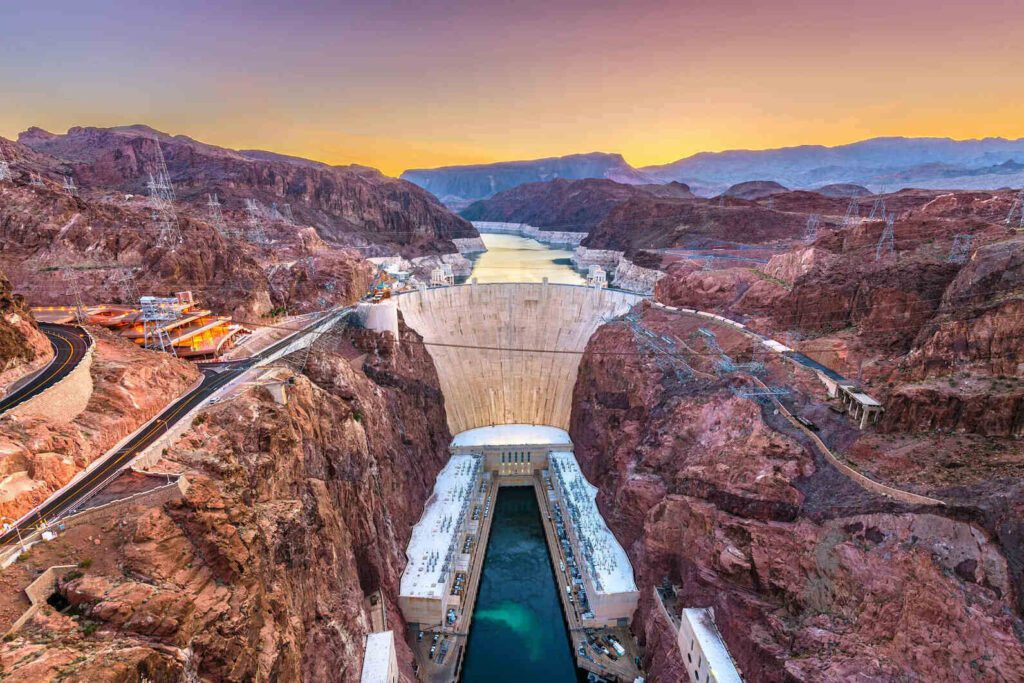
Completed in 1936, the Hoover Dam has functioned as the primary regulator of the Colorado River for nearly nine decades. Located in the Black Canyon on the border between Nevada and Arizona, the dam creates Lake Mead, one of the largest reservoirs in the United States by capacity. For decades, the facility has provided a dual service: stabilizing the unpredictable flow of the Colorado River for agricultural and municipal use, and generating massive amounts of hydroelectric power for the regional electrical grid.
However, the stability once promised by this feat of engineering is currently under threat. According to the U.S. Bureau of Reclamation, long-term drought conditions and shifting climate patterns have significantly reduced the inflow of water into Lake Mead. This reduction has forced federal and state officials into a series of high-stakes negotiations to manage dwindling resources and prevent a total collapse of the river’s management system.
How does the Hoover Dam impact water and power in the Southwest?
The Hoover Dam serves as the heart of the Colorado River Basin’s infrastructure. By capturing the flow of the Colorado River, the dam creates a massive buffer of water in Lake Mead, which is then released in controlled amounts to satisfy the legal water rights of several states and many tribal nations. This regulation allows for consistent irrigation in the Imperial Valley of California and provides drinking water to major metropolitan areas, including Las Vegas, Phoenix, and Los Angeles.
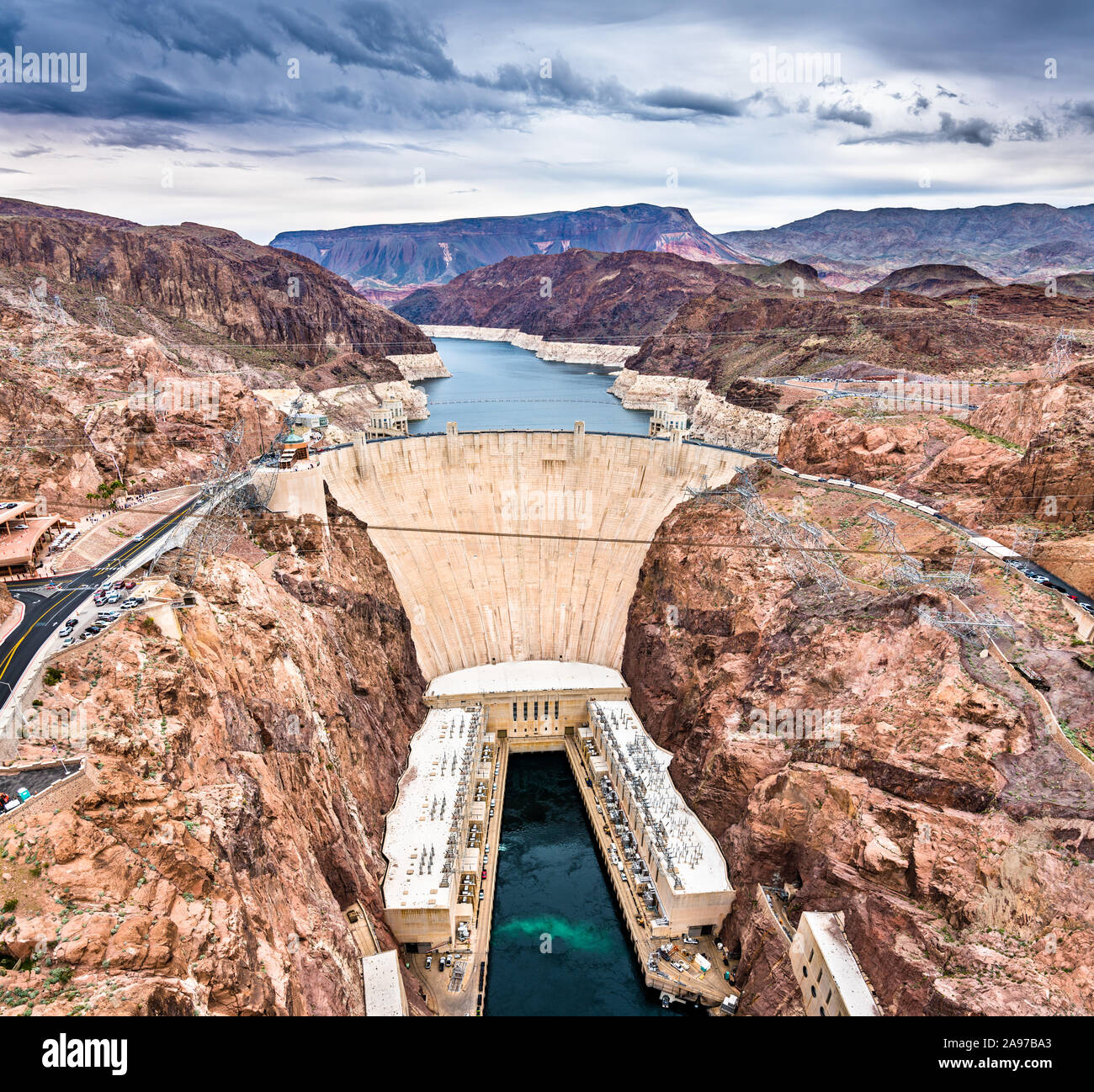
Beyond water storage, the dam is a critical component of the regional energy infrastructure. The hydroelectric plant at Hoover Dam utilizes the gravitational force of falling water to spin turbines, generating electricity that is distributed across Nevada, Arizona, and California. This renewable energy source is vital for maintaining the stability of the Southwestern power grid, especially during peak summer months when air conditioning demand reaches its zenith.
The dam’s functionality is directly tied to the elevation of Lake Mead. When water levels are high, the pressure at the base of the dam is sufficient to drive the turbines at maximum efficiency. As levels drop, the ability to generate power diminishes, creating a feedback loop where water scarcity leads to energy insecurity. This interdependence makes the dam not just a water management tool, but a central pillar of the region’s economic and physical stability.
Why are water levels in Lake Mead declining so rapidly?
The decline in Lake Mead’s water levels is the result of a “megadrought”—a period of extreme aridity that has impacted the Colorado River Basin since the early 2000s. Unlike seasonal droughts, this megadrought is characterized by its longevity and its connection to rising temperatures. Research cited by the National Oceanic and Atmospheric Administration (NOAA) indicates that warming temperatures have increased evaporation rates from the surface of Lake Mead, further depleting the stored volume.

Climate change has also altered the timing and volume of the snowpack in the Rocky Mountains, which serves as the primary source for the Colorado River. Warmer winters result in more precipitation falling as rain rather than snow, and the snow that does accumulate melts earlier in the spring. This shift prevents the slow, steady release of water into the river system that the Hoover Dam was designed to capture and store for later use.
In addition to environmental factors, the sheer volume of water being extracted from the river has outpaced the natural replenishment rates. The Colorado River Compact of 1922, which governs the allocation of water among the basin states, was drafted during an unusually wet period in the river’s history. As a result, the legal framework for water distribution is based on an inflated estimate of the river’s annual flow, leading to a structural deficit that has only widened as the drought persists.
What are the implications of a “dead pool” at Hoover Dam?
Hydrologists and water managers monitor a critical threshold known as “dead pool.” This occurs when the water level in Lake Mead falls below the level of the dam’s outlet works, meaning the water can no longer be released downstream through the dam’s infrastructure. According to data from the Bureau of Reclamation, the elevation required to maintain flow is approximately 895 feet above sea level.
If the reservoir reaches dead pool status, the consequences would be catastrophic for the American Southwest. First, the ability to generate hydroelectric power at the Hoover Dam would cease entirely, potentially causing immediate disruptions to the regional power grid. Second, the downstream flow of the Colorado River would be severely restricted, threatening the water supply for millions of people and millions of acres of farmland. This would trigger legal and political crises as states struggle to fulfill their water obligations under the 1922 Compact.
The economic impact of a dead pool scenario would likely reach billions of dollars. Agriculture in the Southwest, which relies heavily on Colorado River water, would face massive crop failures. Municipalities would be forced to implement extreme rationing, and the cost of water would skyrocket as alternative sources, such as desalination or long-distance water transfers, are sought. The threat of dead pool has become the primary driver of recent federal-state negotiations.
How are the seven basin states negotiating water rights?
The management of the Colorado River is a complex legal battlefield involving the “seven basin states”: Colorado, Wyoming, Utah, New Mexico, Arizona, Nevada, and California. These states are bound by the 1922 Colorado River Compact, but as water becomes scarcer, the existing allocations have become increasingly difficult to honor. Tensions frequently arise between the “Upper Basin” states (which control the water source) and the “Lower Basin” states (which consume the majority of the water).
In a significant attempt to mitigate the crisis, the Bureau of Reclamation facilitated a landmark agreement in 2023. Under this deal, the states of Arizona, Nevada, and California agreed to implement specific water conservation measures in exchange for hundreds of millions of dollars in federal funding. This agreement is a departure from previous years, where negotiations often stalled due to disputes over who should bear the brunt of the cuts. The federal government, through the Inflation Reduction Act, provided the financial incentive to encourage these states to reduce their usage.
Despite these successes, the long-term stability of these agreements remains uncertain. The fundamental issue is that the current system of “prior appropriation”—the legal doctrine that “first in time is first in right”—is being pushed to its limits. As newer users and growing cities demand more water, they find themselves at the bottom of the priority list, leading to ongoing legal challenges and calls for a complete overhaul of the river’s management rules.
| Metric/Status | Historical Average (Approx.) | Recent Conditions (Trends) |
|---|---|---|
| Lake Mead Water Level | ~1,200 feet | Fluctuating near 1,050–1,100 feet |
| Inflow Reliability | High (Stable) | Low (Highly variable due to drought) |
| Power Generation | Maximum Capacity | Reduced due to lower water pressure |
| Water Allocation | Based on 1922 estimates | Under renegotiation/conservation |
What is the path forward for water security in the Southwest?
The next major milestone for the Colorado River is the 2026 deadline, when the current operational guidelines for the river are set to expire. This deadline presents a critical opportunity for the Bureau of Reclamation and the basin states to negotiate a new, more realistic framework for water management. The goal is to develop a plan that accounts for the permanent reduction in river flow caused by climate change, rather than treating the current drought as a temporary anomaly.
Experts suggest that the future of the region will require a combination of aggressive conservation, technological innovation, and perhaps a fundamental rethinking of how water is valued. This includes increasing water recycling in cities, improving irrigation efficiency in agriculture, and exploring large-scale desalination projects. However, these solutions require massive capital investment and political willpower that has historically been difficult to sustain.
As the 2026 renegotiation approaches, the focus remains on preventing the most extreme outcomes. The stability of the Hoover Dam and the survival of the communities it supports depend on the ability of federal and state leaders to move beyond zero-sum competition and toward a collaborative management model. The “infrastructure legend” of the Hoover Dam is currently being redefined not by its ability to hold back water, but by the ability of humans to manage its scarcity.
Next confirmed checkpoint: The Bureau of Reclamation is scheduled to begin formal processes for the 2026 Colorado River operational guidelines renegotiation, a process that will determine the water allocation rules for the next several decades.
We invite our readers to share their perspectives on these regional water challenges. How should governments balance the needs of agriculture, industry, and growing urban populations? Share this article and join the conversation in the comments below.