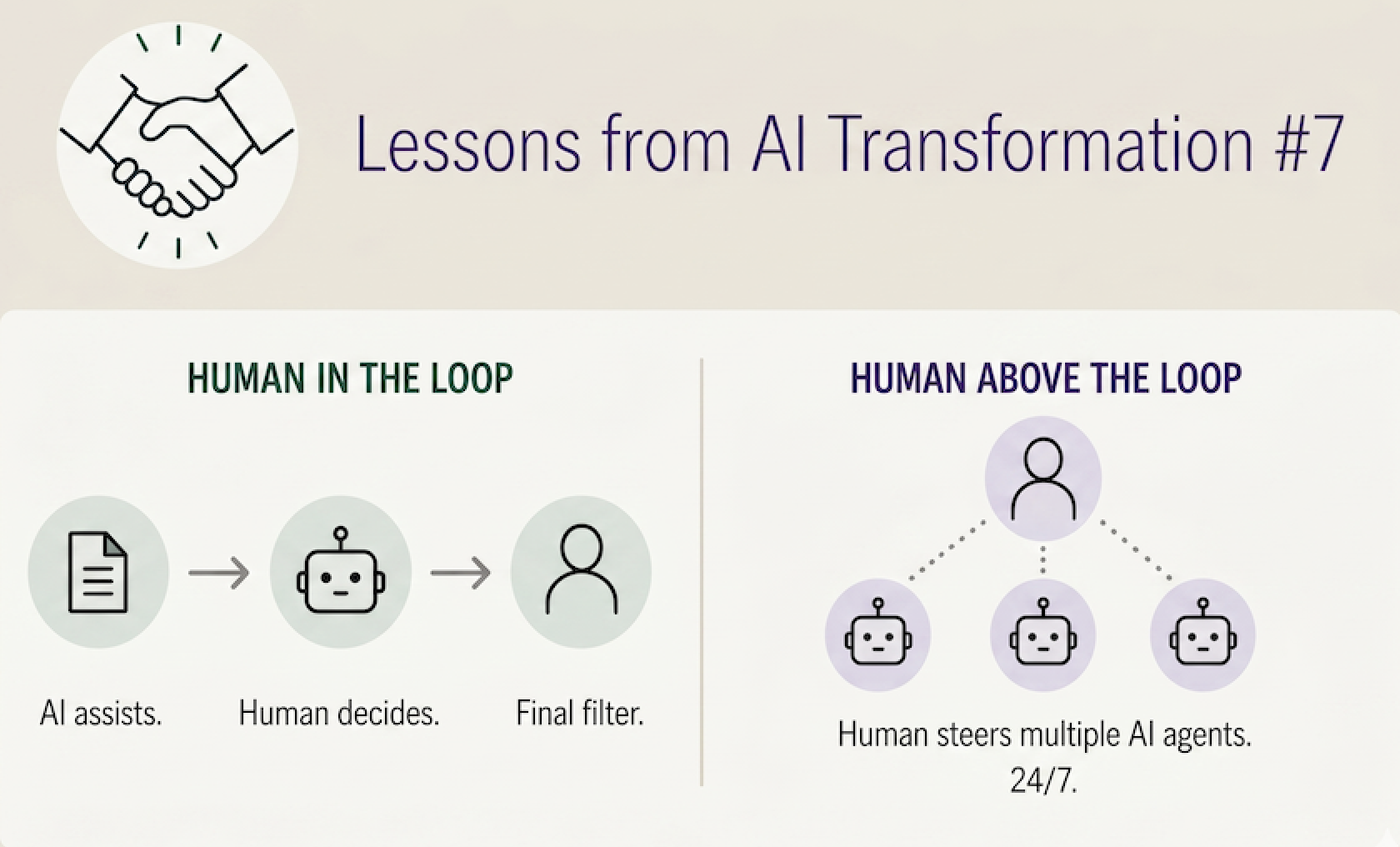
As we navigate an era defined by the rapid proliferation of synthetic media, the fundamental role of the journalist is undergoing a profound transformation. Recent industry analysis indicates that the digital landscape is increasingly saturated with automated content; for instance, research from the NewsGuard Misinformation Monitor has tracked the growth of “unreliable AI-generated news websites,” highlighting how easily synthetic text can populate the web. This shift forces a critical re-examination of the “human in the loop” model—a framework where human editors provide the final check on AI-assisted workflows. However, the next frontier in newsroom management is moving beyond simple oversight toward a more sophisticated concept: the human above the loop.
For those of us working in international media, this shift is not merely technological; it is existential. We are returning to our core identity as the stewards of truth, facts, and rigorous verification. As the volume of low-quality, AI-generated material grows, the scarcity of verified, human-centered journalism increases, making the “human above the loop” model an essential strategy for maintaining editorial integrity in a complex global environment.
Beyond the Loop: Orchestrating the Newsroom
The traditional “human in the loop” approach—where AI handles research, translation, or drafting, and a human performs a final review—is now becoming a baseline expectation. The emerging “human above the loop” model, however, represents a fundamental change in how editorial leadership functions. In this structure, senior editors move away from individual story-level editing and toward a supervisory role, overseeing multiple autonomous AI agents operating 24 hours a day across various facets of the publication process.

This evolution requires a new set of leadership skills that are currently being defined in real-time. Leading human journalists requires empathy, mentorship, and a clear vision. Leading AI agents, by contrast, requires an understanding of data pipelines, prompt engineering, and algorithmic accountability. The “human above the loop” must be capable of holding standards across both human and machine domains simultaneously. What we have is not about removing the human from the process; it is about elevating the human to a position of strategic orchestration, ensuring that the brand’s commitment to accuracy remains the priority, even as the machinery of production accelerates.
The Rising Value of Human Presence
In an environment where content can be generated at scale, the value of individual personality, voice, and presence has reached an all-time high. Trust is fundamentally a human-to-human relationship. While brands provide a necessary framework for stability, audiences are increasingly looking for the human behind the byline. This necessitates a shift in how newsrooms manage their talent. Journalists can no longer rely solely on the authority of the masthead; they must be willing to engage directly with their audience, putting their names and faces on the platforms where their readers reside.
This also forces a rethink of the creator economy within journalism. Independent creators now have the tools to distribute content globally without the traditional support of a newsroom. To remain competitive, media organizations must offer something that platforms cannot: a long-term, stable, and trustworthy partnership. This includes providing the infrastructure of editorial independence, legal support, and professional standards that individual creators often lack. If publishers fail to provide these incentives, they risk losing top-tier talent to platforms that prioritize reach over rigor.
Key Takeaways for Modern Newsrooms
- Prioritize Verification: As AI-generated content becomes more prevalent, the value of the “human check” increases. Establish clear, transparent guidelines for AI usage that are subject to regular updates.
- Invest in Human Talent: Encourage journalists to build their own professional brands and engage directly with their audiences to foster deep-rooted trust.
- Adopt Strategic Oversight: Begin training editorial leaders to transition from “in-the-loop” editors to “above-the-loop” architects who can manage and verify the output of multiple AI agents.
- Foster Collaborative Learning: The industry is currently in a phase of rapid experimentation. Share successes and failures openly with peer organizations to accelerate collective knowledge.
Intentionality in the Age of Synthetic Content
The transition toward more automated workflows does not diminish the need for human judgment; it intensifies it. Judgment is a quintessentially human capacity. It involves understanding the nuance of a local context in Sofia, the geopolitical implications of a policy change, or the ethical weight of a sensitive report. These nuances do not transfer to machines, regardless of the sophistication of the underlying large language models. The challenge for modern news organizations is to remain intentional about where and how we deploy these tools.

We must act with speed to skill up our teams, learning from the work-in-progress experiments currently taking place across the industry. The goal is to build systems that allow for efficiency without compromising the core values of journalism. As we look toward the upcoming World News Media Congress, the conversation will likely focus on these exact challenges: how to balance the necessity of technological adoption with the unwavering demand for verified, high-quality information.
The industry is currently navigating a period of significant uncertainty, but it is also one of immense opportunity. By centering the human above the loop, we ensure that our judgment, ethics, and voice remain the final, most critical components of every story we tell. The next chapter of journalism is not being written by machines; it is being written by the humans who choose to lead them.
As we continue to monitor these shifts, we invite you to share your experiences. Where is the “human-above-the-loop” model showing up in your organization? What are the biggest hurdles you face in maintaining editorial standards in an age of synthetic content? The path forward is a collective one, and we look forward to exploring these questions with you.
Related reading