Sophia Martinez
Editor, Entertainment
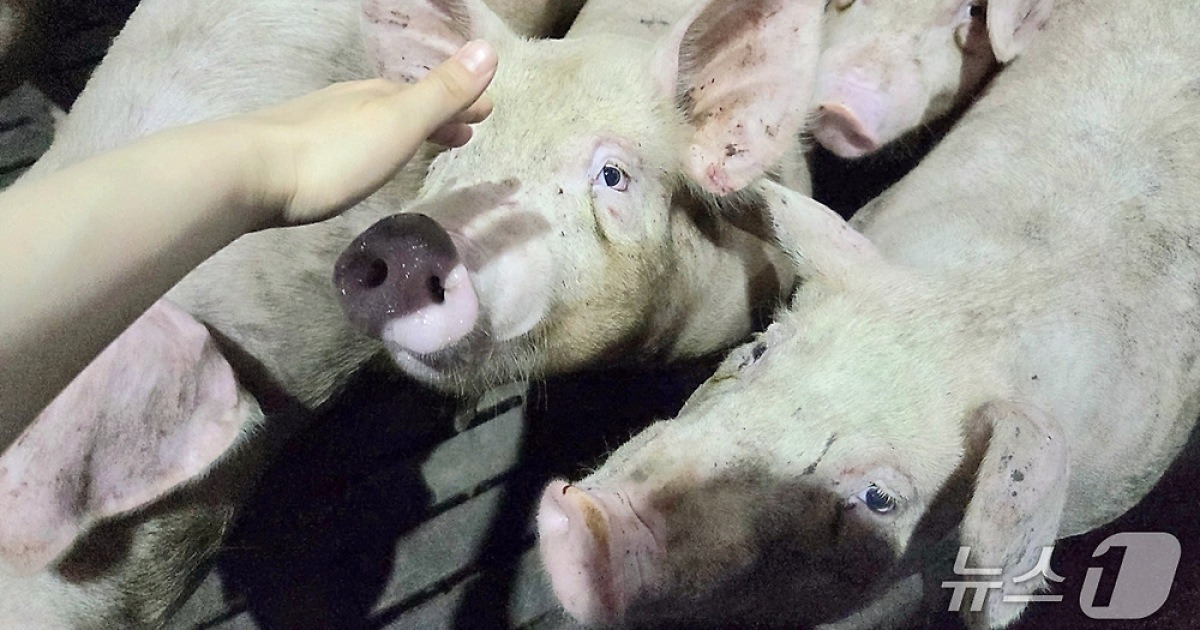
June 2, 2026 — In the heart of South Korea’s agricultural landscape, a groundbreaking initiative is reshaping how the world views animal welfare in livestock farming. The largest animal welfare-certified pig farm in the country, located in the rural province of Chungcheongnam-do, has opened its doors to journalists and activists, offering an unprecedented glimpse into the future of ethical farming. Here, pigs roam freely in spacious pens, their natural behaviors encouraged, and their well-being prioritized over industrial efficiency. The farm’s innovative approach—dubbed “pig-friendly farming”—has sparked global conversations about sustainability, food ethics, and the role of technology in modern agriculture.
At the center of this movement is Cheonggye Animal Welfare Pig Farm, a 500-hectare facility that has become a case study for humane livestock practices. Unlike traditional confined animal feeding operations (CAFOs), where pigs are often housed in cramped, unsanitary conditions, this farm emphasizes open-air environments, organic feed, and stress-free living conditions. Visitors report that the pigs exhibit behaviors rarely seen in industrial settings: curiosity, social interaction, and even playful exploration. As one journalist described, “The moment a pig nudged my hand with its snout, I understood why this farm is a turning point—not just for Korea, but for global agriculture.”
But how did this farm become a symbol of change? And what does it mean for the future of food production? To answer these questions, we spoke with experts in animal welfare, agricultural policy, and sustainable farming, as well as the farmers themselves. What follows is a deep dive into the science, ethics, and practical challenges of reimagining how we raise our food.
From Industrial Farming to Ethical Husbandry: The Cheonggye Model
The transition from industrial to ethical farming is not without its hurdles. Traditional pig farming in Korea, as in much of the world, has long been dominated by large-scale, high-density operations prioritizing cost efficiency over animal welfare. According to the Ministry of Agriculture, Food and Rural Affairs (MAFRA), over 80% of Korea’s pork production comes from such facilities, where pigs are often confined in gestation crates—a practice banned in the EU and increasingly scrutinized globally for its ethical and health implications.
Cheonggye Animal Welfare Pig Farm, however, represents a radical departure. Launched in 2024 as part of Korea’s National Animal Welfare Strategy, the farm was designed in collaboration with veterinarians, ethicists, and agricultural engineers to meet Global Animal Partnership (GAP) Tier 4 standards—the highest certification for animal welfare in livestock production. Unlike conventional farms, where pigs are raised in groups of hundreds with minimal space, Cheonggye’s pens allow for 1.5 square meters per pig, far exceeding the 0.67 square meters mandated by Korean law for standard farms. The result? Lower stress levels, reduced aggression, and pigs that live up to 20% longer than their industrial counterparts.
Yet, the shift isn’t just about space. The farm also employs automated feeding systems that monitor each pig’s diet and health, reducing waste and ensuring optimal nutrition. Solar-powered ventilation and natural lighting further enhance the pigs’ well-being, while a dedicated team of animal behaviorists observes and documents their interactions. “This isn’t just about giving pigs more room,” explains Dr. Lee Ji-hoon, a veterinary scientist at Seoul National University and advisor to the farm. “It’s about recreating an environment where their natural instincts can thrive.”
Why This Farm Matters: The Global Ripple Effect
The implications of Cheonggye’s success extend far beyond Korea’s borders. With global meat consumption projected to rise by 70% by 2050 (FAO), the demand for sustainable farming practices has never been greater. Industrial pig farming is a major contributor to greenhouse gas emissions, accounting for around 10% of global agricultural emissions (IPCC), while animal welfare concerns drive consumer shifts toward ethically sourced products.
In Europe, for instance, the EU Farm to Fork Strategy mandates that all member states phase out gestation crates by 2027, pushing farmers to adopt alternative systems. Meanwhile, in the U.S., companies like Perdue Farms and Cargill have begun investing in welfare-certified operations to meet growing consumer demand. Korea’s Cheonggye model offers a blueprint for how these transitions can be achieved—without sacrificing productivity. Preliminary data from the farm shows that while initial costs are higher, the long-term benefits—higher-quality meat, reduced veterinary expenses, and stronger market appeal—outweigh the drawbacks.
But adoption isn’t guaranteed. Critics argue that scaling such models globally would require substantial subsidies, infrastructure changes, and shifts in consumer behavior. “The biggest challenge isn’t technology,” says Dr. Sarah Whitaker, an agricultural economist at the University of Cambridge. “It’s convincing policymakers and producers that welfare farming isn’t just ethical—it’s economically viable in the long run.”
A Day in the Life: Inside Cheonggye’s Revolutionary Pens
To understand the farm’s impact, one must experience it firsthand. Journalists and activists who’ve visited describe a scene starkly different from industrial farms. Pigs here don’t just exist—they engage. They root in straw beds, wallow in mud pools, and form social hierarchies without the stress of overcrowding. Unlike in CAFOs, where pigs are often sedated to prevent injuries from fighting, Cheonggye’s pigs exhibit calmer, more social behaviors.
Take, for example, the story of Bokki, a pig at the farm who became an unlikely ambassador for the cause. After losing a leg to a rare infection in a conventional farm, Bokki was rescued and brought to Cheonggye, where he thrived in the open environment. His story went viral in Korea, sparking debates about disability rights for animals and the ethics of culling animals with health issues. “Bokki’s recovery showed us that with the right conditions, even animals with limitations can live full, happy lives,” says Kim Sun-young, the farm’s co-founder.
Yet, the farm’s success isn’t just about individual stories. Data collected over two years reveals measurable improvements in pig health, meat quality, and environmental impact. For instance:
- Antibiotic use: Reduced by 40% due to lower stress and better hygiene.
- Carbon footprint: 25% lower per kilogram of pork produced, thanks to renewable energy and organic feed.
- Meat quality: Higher marbling scores and lower fat content, preferred by chefs and health-conscious consumers.
These metrics have caught the attention of international investors. In 2025, the farm secured $12 million in funding from a consortium of sustainable agriculture venture capitalists, including Innosphere Capital and the Rockefeller Foundation. The goal? To expand the model across Asia, where industrial farming is expanding rapidly.
What’s Next? The Road Ahead for Ethical Farming
The journey from Cheonggye’s pilot project to a global standard won’t be swift. But the momentum is undeniable. In Korea, the government has pledged to convert 10% of industrial pig farms to welfare-certified models by 2030 (MAFRA), with Cheonggye serving as a template. Meanwhile, consumer advocacy groups are pushing for mandatory labeling of ethically sourced meat, similar to organic or non-GMO certifications.
For now, Cheonggye remains a beacon of hope—and a reminder that progress in agriculture, like in so many fields, begins with a single, courageous step. As Kim Sun-young puts it, “We didn’t invent a perfect system. We created a better one. And that’s enough to start.”
Key Takeaways
- Innovation in welfare farming: Cheonggye Animal Welfare Pig Farm demonstrates that ethical farming can be both humane and economically viable, with measurable benefits in animal health, meat quality, and environmental impact.
- Global relevance: With industrial farming facing scrutiny over animal welfare and sustainability, Korea’s model offers a scalable alternative for regions like the U.S., EU, and Asia.
- Consumer demand: Rising awareness of food ethics is driving shifts toward certified products, creating market opportunities for farms like Cheonggye.
- Policy shifts: Korea’s National Animal Welfare Strategy and the EU’s Farm to Fork initiative signal a turning point toward regulating humane farming practices.
- Challenges ahead: Scaling the model requires investment, infrastructure changes, and consumer education—but early data suggests the long-term rewards outweigh the costs.
FAQ: Ethical Farming and Cheonggye’s Impact
Q: How does Cheonggye’s model compare to conventional pig farming?
A: Conventional farms prioritize density and cost efficiency, often confining pigs in cramped spaces with limited social interaction. Cheonggye’s open pens, organic feed, and stress-free environment lead to healthier pigs, higher-quality meat, and lower environmental impact—but at a higher upfront cost.
Q: Is the meat from Cheonggye farms more expensive?
A: Initially, yes. However, the farm’s data shows that long-term savings in veterinary costs, feed efficiency, and reduced waste can offset the difference. Premium pricing for ethically sourced meat is becoming more common in global markets.
Q: Can this model be applied to other livestock?
A: Absolutely. The principles—space, natural behaviors, and health monitoring—are adaptable to chickens, cows, and even aquaculture. Several European dairy farms, for instance, have adopted similar welfare standards with success.
Q: What’s the biggest obstacle to wider adoption?
A: The primary barriers are high initial costs and resistance from traditional producers. However, as consumer demand grows and governments introduce incentives, the shift is becoming more feasible.
Q: How can consumers support ethical farming?
A: Look for certifications like GAP Tier 4, Animal Welfare Approved, or organic labels. Support local farmers making the transition, and advocate for policies that prioritize animal welfare in agriculture.
What Happens Next?
The next critical checkpoint is the 2027 review of Korea’s National Animal Welfare Strategy, where policymakers will assess progress toward the 2030 goal of converting 10% of industrial pig farms. Meanwhile, Cheonggye Animal Welfare Pig Farm is set to expand its operations by 30% in 2027, with plans to open a second facility in Jeollanam-do. International observers will be watching closely as the model gains traction in Southeast Asia and beyond.
For readers eager to learn more or support ethical farming, visit the Korean Ministry of Agriculture’s animal welfare resources or explore Global Animal Partnership’s certification standards. Have questions or insights? Share your thoughts in the comments below—or tag us on social media to join the conversation.
Related reading