
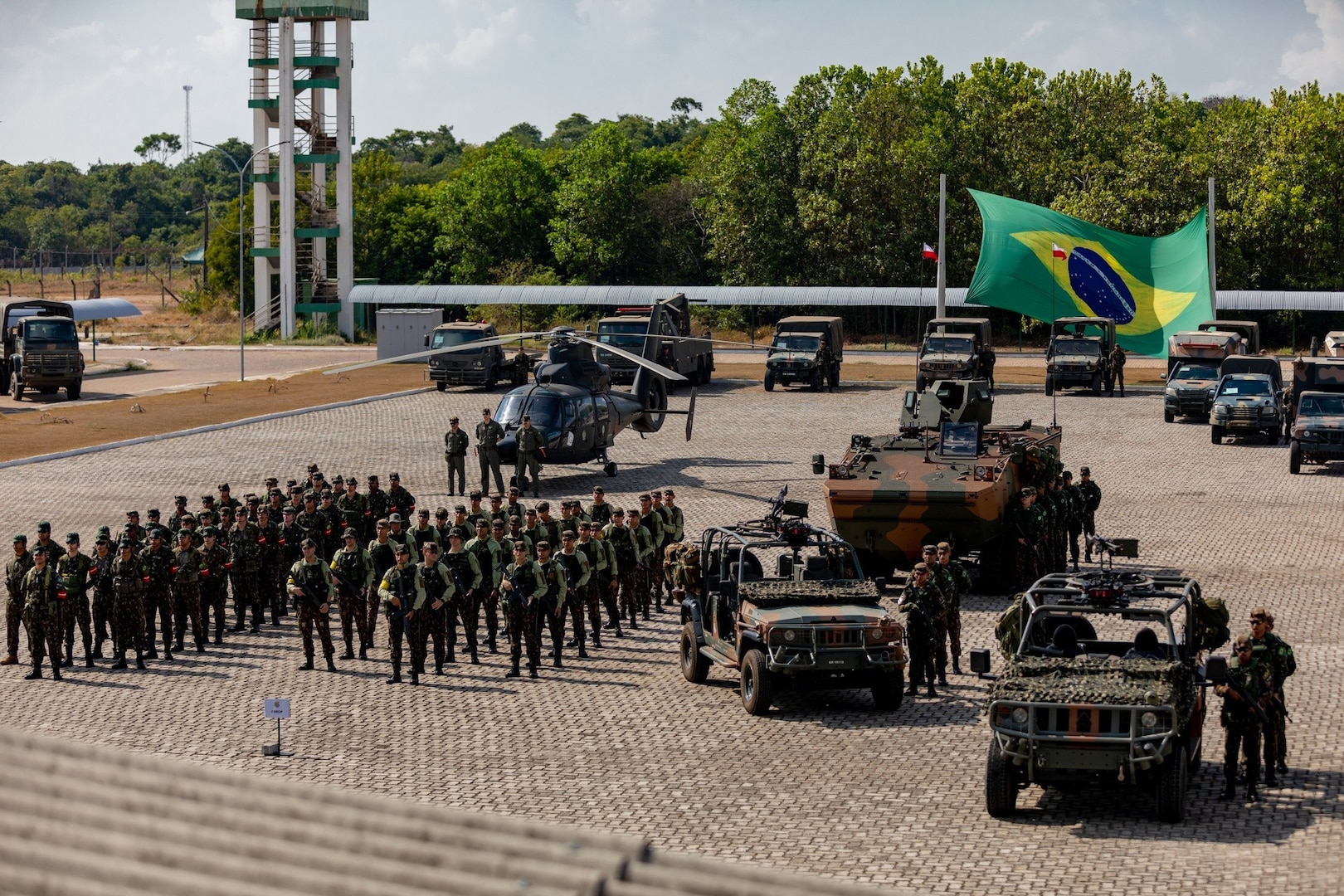
Brazil continues to solidify its position as the preeminent military power in Latin America, leveraging a combination of massive manpower, a growing domestic defense industry, and a strategic modernization program designed to protect its vast territorial interests. As the region navigates a complex geopolitical landscape, Brasília is shifting its focus toward high-technology assets and industrial self-reliance to ensure sovereignty over its borders and maritime zones.
The scale of the Brazilian Armed Forces (Forças Armadas do Brasil) is unmatched in the Western Hemisphere. With over 360,000 active personnel and a reserve force exceeding 1.3 million, the country possesses a national mobilization capacity that far exceeds regional standards Military Power Rankings. This manpower is not merely a matter of numbers but of strategic deployment, with a heavy emphasis on the Amazon region and the critical monitoring of land and riverine borders.
While Brazil does not follow an expeditionary doctrine, its defense strategy is centered on territorial integrity and regional stability. This approach is reflected in its current global standing; depending on the metric used, Brazil is ranked as one of the strongest militaries in the world. The 2025 Global Firepower rankings place Brazil 11th globally, while the 2025 Military Power Rankings (MPR) rank the nation 15th Al Jazeera.
Strategic Modernization: Air and Naval Ambitions
A central pillar of Brazil’s current military evolution is the transition toward advanced technology to reduce dependence on foreign suppliers. In the air, the acquisition of Gripen E fighter jets represents a leap in combat capability and electronic warfare, providing the Brazilian Air Force with a modern platform capable of maintaining air superiority over the continent’s largest landmass.
At sea, the Brazilian Navy (Marinha do Brasil) is pursuing one of the most ambitious projects in the Southern Hemisphere: the development of a nuclear-powered submarine. The SSN Álvaro Alberto project, which is projected for completion by 2030, aims to provide Brazil with long-term underwater endurance and a significant deterrent capability Military Power Rankings. This project is complemented by the Riachuelo-class submarines, based on Scorpène technology, which enhance the navy’s stealth and surveillance capabilities.
These naval assets are critical to the “Blue Amazon” (Amazônia Azul) initiative. This strategic concept focuses on the protection of Brazil’s vast offshore resource zones, ensuring that the nation can secure its maritime borders and the natural wealth found within its Exclusive Economic Zone (EEZ).
Securing the Amazon and Border Integrity
The sheer geography of Brazil presents a unique security challenge. The military’s role in the Amazon is not only about defense against foreign incursions but also about internal security and the interdiction of drug trafficking. The use of the SIPAM (System for the Protection of the Amazon) and specialized jungle warfare units allows the Army to maintain a presence in some of the most inaccessible terrain on Earth.

To support these operations, the Army utilizes mechanized brigades and Rapid Deployment Forces (Força de Ação Rápida Estratégica) to respond quickly to crises across its diverse states. This territorial presence is a key reason why Brazil is viewed as the leading military weight in Latin America, blending scale with a constant presence in sensitive areas.
The Role of the Defense Industrial Base
Unlike many of its neighbors, Brazil has invested heavily in its own defense industrial base. By fostering domestic production and technology transfers, the country is attempting to build a sustainable ecosystem of military hardware. This industrial self-reliance is intended to shield the military from the volatility of international arms markets and diplomatic pressures.
The focus on indigenous development extends from naval shipbuilding to aerospace engineering. By integrating technology from international partners while maintaining domestic control over production, Brazil is transforming its military from a force of quantity into a force of quality and technological sophistication.
Comparative Regional Power
When compared to other regional powers, Brazil’s military budget and asset count create a significant gap. In a standard assessment of active personnel, combat tanks, and naval assets, Brazil maintains a clear lead over other Latin American nations. For instance, according to 2025 Global Firepower data, Mexico ranks 32nd globally, Colombia 46th, Venezuela 50th, and Cuba 67th Al Jazeera.
| Country | Global Rank | Regional Status |
|---|---|---|
| Brazil | 11th | Regional Leader |
| Mexico | 32nd | Secondary Power |
| Colombia | 46th | Secondary Power |
| Venezuela | 50th | Secondary Power |
| Cuba | 67th | Secondary Power |
What So for Regional Stability
Brazil’s military growth is generally framed as a defensive necessity rather than an aggressive expansion. By focusing on the “Blue Amazon” and the rainforest, Brasília is signaling that its priorities are sovereignty and resource protection. Still, the sheer scale of its modernization—particularly the nuclear submarine program—inevitably alters the strategic balance of power in the South Atlantic.

For other Latin American nations, Brazil’s role as a regional stabilizer is crucial. Its involvement in UN peacekeeping operations and its emphasis on regional stability suggest that while it possesses the capacity to dominate, its doctrine remains focused on leadership through stability and diplomatic weight.
Key Takeaways on Brazil’s Defense Strategy
- Manpower Lead: Brazil maintains the largest military force in Latin America with over 360,000 active troops and 1.3 million reserves.
- Technological Leap: The integration of Gripen E fighters and the pursuit of the SSN Álvaro Alberto nuclear submarine mark a shift toward high-tech deterrence.
- Resource Protection: The “Blue Amazon” initiative prioritizes the security of offshore economic zones and maritime sovereignty.
- Industrial Autonomy: A strong emphasis on a domestic defense industrial base reduces reliance on foreign military imports.
- Global Standing: Brazil is consistently ranked among the top 15 most powerful militaries globally across various 2025 indices.
The next major milestone for the Brazilian military will be the continued development and testing phases of the SSN Álvaro Alberto, with the goal of commissioning the nuclear submarine by 2030. This will be the definitive test of Brazil’s ability to execute a complex, long-term strategic project of this magnitude.
Do you believe Brazil’s military modernization will lead to greater stability in South America, or will it spark a regional arms race? Share your thoughts in the comments below.