
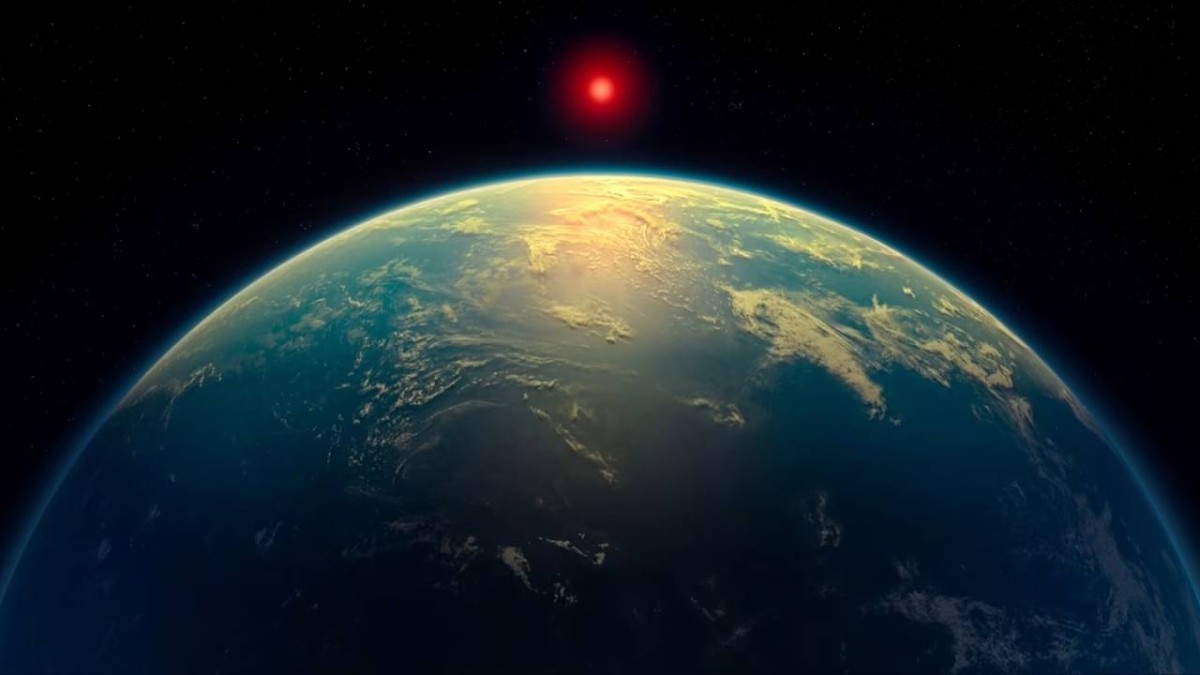
The quest to find a “second Earth” has transitioned from the realm of science fiction into a rigorous, data-driven scientific era. As we move through 2026, the global scientific community is witnessing what many experts describe as a new golden age of space exploration, characterized by a shift from simply discovering exoplanets to analyzing their potential for habitability.
For decades, astronomers focused on the sheer volume of planetary discoveries. However, the current strategic focus has pivoted toward identifying “Earth 2.0″—a planet that not only shares a similar size and rocky composition with Earth but too orbits within the habitable zone of a Sun-like star, potentially possessing a breathable atmosphere and liquid water.
This pursuit is being driven by a synergy of next-generation hardware and advanced computational analysis. From the ongoing contributions of the James Webb Space Telescope (JWST) to the development of dedicated “habitable world” hunters, the goal is no longer just to find a planet, but to find a home.
The Shift Toward Direct Imaging and Atmospheric Analysis
Historically, most exoplanets were discovered via the transit method—observing the slight dip in a star’s brightness as a planet passes in front of it—or the radial velocity method, which detects the gravitational “wobble” of a star. While effective for counting worlds, these methods provide limited information about a planet’s surface or air.

The new frontier is direct imaging. By blocking the overwhelming light of a parent star, telescopes can capture the faint glow of the planet itself. This allows scientists to perform spectroscopy, analyzing the light filtering through a planet’s atmosphere to look for “biosignatures”—chemical markers such as oxygen, methane, and carbon dioxide that might indicate the presence of life.
NASA is currently advancing this capability through the proposed Habitable Worlds Observatory (HWO). This next-generation flagship telescope is being designed specifically to image Earth-like planets orbiting nearby stars and to determine if they possess the chemical ingredients necessary for life.
A Teeming Cosmos: The Scale of Discovery
The scale of the search has expanded exponentially. In the 1990s, the first planets orbiting stars beyond our own were only just being confirmed. Today, the data suggests a universe far more crowded than previously imagined. According to reporting from IEEE Spectrum, the number of known exoplanets has recently crossed a milestone of more than 6,000.
This massive dataset provides a statistical foundation for the search for Earth 2.0. By mapping these thousands of worlds, astronomers can better understand the distribution of rocky planets and the frequency of “Goldilocks” zones—regions where temperatures are neither too hot nor too cold for liquid water to exist.
The TWINSTAR Concept and Fiscal Pragmatism
While flagship missions like the HWO represent the gold standard, new pragmatic mission concepts are emerging to accelerate the search. One such proposal is the TWINSTAR mission concept. As detailed in The Space Review, TWINSTAR proposes a balance between high-level science and fiscal constraints.
The TWINSTAR concept involves using a four-meter telescope paired with an external starshade positioned at the Sun-Earth L2 Lagrange point. This configuration aims to identify a “Twin Earth” orbiting a Sun-like star with a breathable atmosphere, avoiding some of the extreme stability requirements that create other designs prohibitively expensive.
2026: A Pivotal Year for Planetary Science
The current year is serving as a catalyst for several intersecting milestones in space exploration. Beyond the search for exoplanets, the return of crewed missions to the lunar vicinity is providing critical data on long-term human survival in deep space, which is a prerequisite for any future interstellar ambitions.
According to analysis from The Conversation, 2026 is marked by a combination of global cooperation and competition. This includes the planning of crewed flights around the Moon and the deployment of new telescopes designed to survey billions of galaxies and hunt for habitable worlds.
The convergence of these efforts suggests that the “Golden Age” is not merely about the technology we possess, but about the global commitment to answering the fundamental question: Are we alone in the universe?
Key Technological Pillars of the Search
- Infrared Spectroscopy: Used to pierce through cosmic dust and identify the chemical composition of distant atmospheres.
- Starshades: Massive, flower-shaped screens that block starlight to allow the direct imaging of orbiting planets.
- L2 Lagrange Point: A stable gravitational point in space used by telescopes like JWST and the proposed TWINSTAR to maintain a clear view of the deep cosmos.
- High-Precision Photometry: The measurement of extremely minute changes in light intensity to detect small, rocky planets.
What In other words for the Future of Humanity
The search for an “improved version of Earth” is often framed as a backup plan for humanity, but its primary value is currently scientific and philosophical. Finding a planet with a breathable atmosphere would fundamentally change our understanding of biology and the prevalence of life in the galaxy.

the technologies developed for these missions—such as advanced optics, autonomous navigation, and life-support systems—have direct applications on Earth, from medical imaging to climate monitoring satellites.
As NASA and its international partners continue to mature the technologies for the Habitable Worlds Observatory, the transition from “detecting” to “characterizing” planets will likely yield the first definitive evidence of a truly Earth-like world within the next few decades.
The next major checkpoint for the community involves the continued maturation of key technologies for the HWO and the upcoming crewed lunar trajectories scheduled for 2026. These missions will provide the operational experience necessary for the next leap in deep-space exploration.
We want to hear from you: Do you believe finding an “Earth 2.0” is a necessity for human survival, or a scientific curiosity? Share your thoughts in the comments below.