
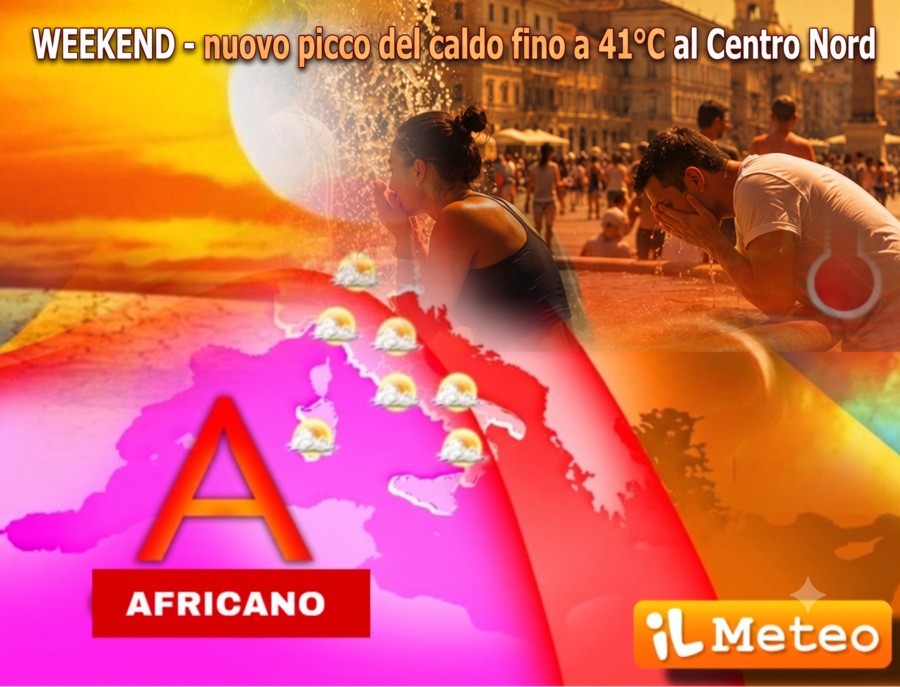
Meteorological services across Southern Europe are tracking a significant heatwave driven by a surge of high-pressure air moving from North Africa, with forecasts indicating peak temperatures reaching 41°C this weekend, Saturday, July 27, and Sunday, July 28. According to data from the Copernicus Climate Change Service, this influx of subtropical air is expected to elevate thermal anomalies across the Mediterranean basin, placing several regions under high-level heat health alerts.
The movement of this high-pressure system, often referred to by meteorologists as a “subtropical ridge,” involves the transport of hot, dry air from the Sahara desert toward the European continent. As this mass of air travels northward, it undergoes adiabatic warming—a process where air pressure increases as it descends or moves across varying altitudes, causing the air mass to compress and heat up further. This phenomenon is a primary driver for the sustained temperature spikes currently being monitored by national weather agencies, including Italy’s Aeronautica Militare and Spain’s AEMET.
Understanding the Atmospheric Dynamics
The current weather pattern is characterized by a “pulsazione africana” or African pulse, a term used in European synoptic meteorology to describe a temporary but intense expansion of the African anticyclone. Unlike a stationary heat dome, this pulse is a dynamic wave that pushes warm air toward the Mediterranean, often leading to rapid temperature increases over a 48-hour period. By Saturday, July 27, thermal models suggest that inland areas of Sicily, Sardinia, and parts of Southern Spain will experience the most significant impacts, with mercury levels potentially hitting the 41°C mark.

Experts from the World Meteorological Organization note that such events are becoming more frequent as part of broader climatic shifts. The compression of the air mass as it encounters the cooler Mediterranean surface waters can sometimes lead to increased humidity in coastal areas, exacerbating the “perceived temperature” or heat index, even if the thermometer reading remains slightly below the absolute maximums recorded in arid inland zones.
Regional Health Impacts and Official Advisories
Public health authorities have issued urgent guidance for residents and tourists in affected regions. The primary risk associated with these temperatures is heat-related illness, particularly for vulnerable populations such as the elderly, children, and those with pre-existing cardiovascular conditions. Health ministries in Italy and Greece are advising citizens to limit outdoor physical activity between 11:00 AM and 6:00 PM, when solar radiation is at its peak intensity.

According to the World Health Organization, adequate hydration and the use of light-colored, breathable clothing are essential during prolonged heat exposure. Local municipalities are also activating emergency cooling centers and increasing staffing in hospital emergency departments to manage potential surges in heat-related admissions. Residents are encouraged to monitor local civil protection bulletins for specific regional lockdown or heat-alert levels, which are updated daily based on real-time sensor data.
Predicting the Duration of the Heatwave
While the peak of the heat is anticipated for the weekend, long-range models from the European Centre for Medium-Range Weather Forecasts (ECMWF) suggest that the intensity of the heatwave may begin to subside by the middle of the following week. This transition is typically triggered by a shift in the jet stream, which allows cooler, Atlantic-originated air to penetrate the Mediterranean basin, effectively displacing the stagnant subtropical air mass.
However, until this shift occurs, the risk of wildfire outbreaks remains a critical concern for regional forestry services. High temperatures coupled with low humidity levels create ideal conditions for rapid fire propagation. Consequently, authorities have implemented strict bans on outdoor burning and are conducting increased aerial surveillance over high-risk forested areas to ensure rapid response capabilities in the event of an ignition.
Preparing for Extreme Conditions
For those living or traveling in the Mediterranean this weekend, the following measures are recommended by local authorities:

- Stay hydrated by drinking water regularly, even if you do not feel thirsty.
- Avoid strenuous physical activity during the hottest parts of the day.
- Keep residential environments cool by closing shutters and blinds during daylight hours.
- Check on neighbors and family members who may be at higher risk for heat exhaustion.
- Monitor official updates from national meteorological services to stay informed of shifting weather fronts.
The situation remains fluid, and weather agencies will provide updated bulletins as the high-pressure system moves across the region. Readers are encouraged to share this information with those traveling to Southern Europe this weekend. Further updates will be provided as official meteorological data is released following the weekend cycle. We invite you to join the conversation in the comments section below regarding local weather conditions in your area.