
The Trueno T-Shirt: How a Marketing Pioneer Created the Iconic Design Worn by Maradona and Charly García
A simple white t-shirt with a bold red lightning bolt became one of the most recognizable symbols in Argentine football history. Designed by marketing pioneer Jorge Viola, the Trueno (Spanish for “lightning”) shirt was more than fabric—it was a cultural statement. Worn by legends like Diego Maradona and Charly García, it embodied the rebellious spirit of Argentine sports and the genius of early sports branding. Today, the shirt remains a coveted collector’s item, fetching thousands at auctions and symbolizing an era when football and fashion collided in Buenos Aires.
Viola, often called the “father of Argentine sports marketing,” didn’t just design jerseys—he created a movement. His work for Boca Juniors in the 1970s, including the iconic four-star design Maradona would later wear, set the standard for how clubs presented themselves to the world. But the Trueno shirt, with its stark contrast and minimalist design, became his most enduring legacy. “It wasn’t just about selling merchandise,” says football historian Juan Carlos Gelman. “It was about creating an identity that fans could wear with pride.”
What began as a small-batch production in the late 1970s evolved into a phenomenon. By the 1980s, the shirt was being worn by artists, athletes, and everyday Argentines alike—its bold design transcending sports to become a symbol of national identity. The shirt’s connection to Maradona and García, two of Argentina’s most influential cultural figures, only deepened its mythos. Today, authentic Trueno shirts sell for hundreds of dollars on collector’s markets, with some rare variants reaching four figures.
The Marketing Genius Behind the Lightning Bolt
Jorge Viola’s career in sports marketing began in the 1960s, when he worked with local clubs to modernize their branding. But it was his collaboration with Boca Juniors in the early 1970s that would change Argentine football forever. Viola introduced the concept of “club identity” through merchandise—a radical idea at the time. “Before Viola, clubs sold scarves and flags,” explains sports economist María Laura Rodríguez. “He turned fans into brand ambassadors.”
The Trueno shirt emerged from this philosophy. Viola wanted a design that was instantly recognizable, bold, and timeless. The lightning bolt wasn’t just a logo—it was a metaphor for speed, power, and the electric energy of Argentine football. “Viola understood that football was more than a game; it was a religion,” says Gelman. “The shirt had to reflect that.”
Production initially was limited. Viola worked with small Buenos Aires textile factories, ensuring each shirt met his exacting standards. The fabric was thicker than standard jerseys, designed to last through years of wear. Early versions featured the lightning bolt in vibrant red, but later iterations included variations in black and navy—a nod to the club’s traditional colors.

Boca Juniors Historical Archive, 1978
How Two Legends Made Trueno a Symbol of an Era
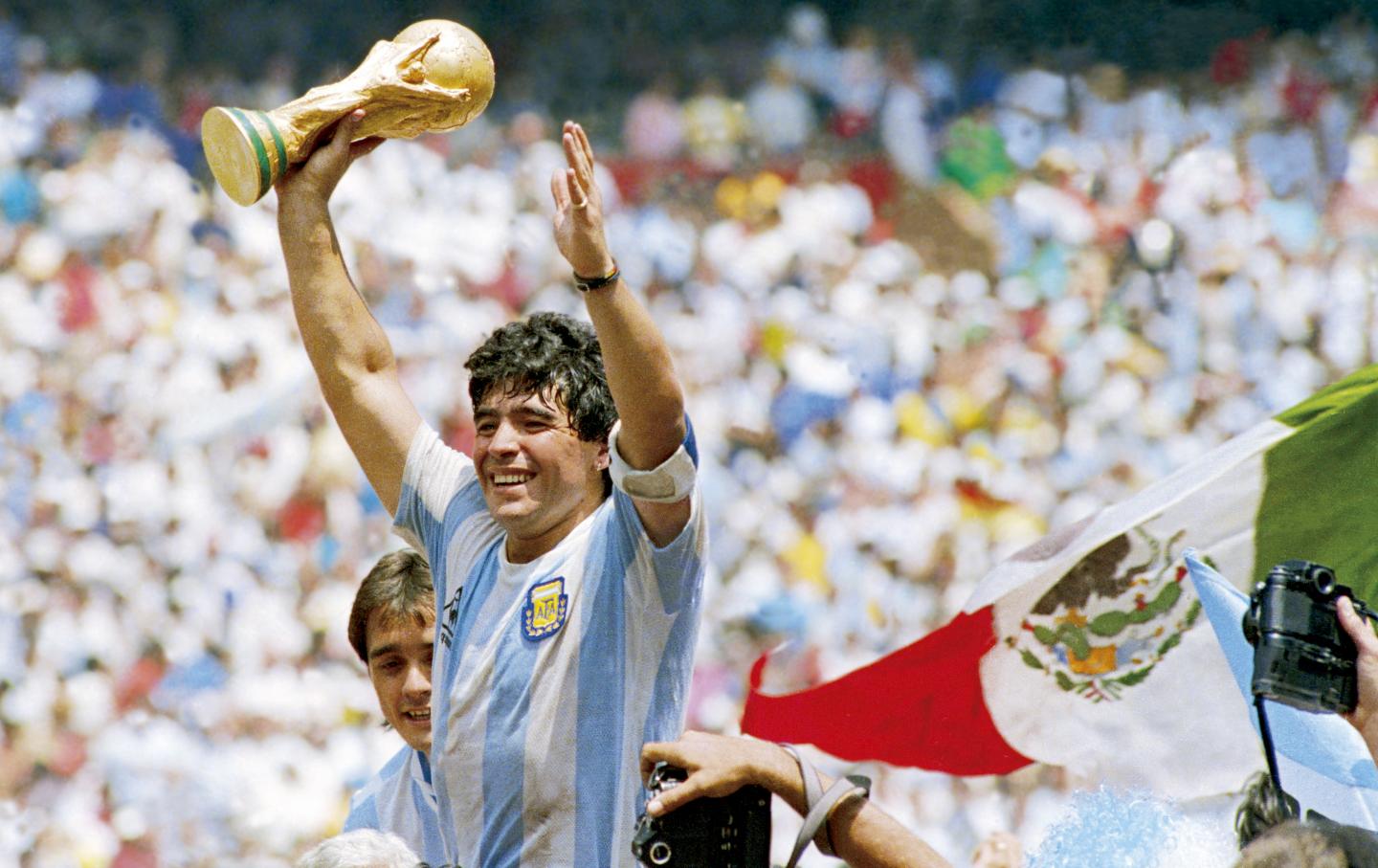
Diego Maradona’s relationship with Trueno began in the early 1980s, when he was still a rising star at Boca Juniors. While he became famous for his four-star jersey, he was also photographed in Trueno shirts during training sessions and casual outings. “Maradona wasn’t just wearing the shirt—he was embodying its spirit,” says biographer Alejandro Finocchio. “It was part of his everyday wardrobe, not just a football uniform.”
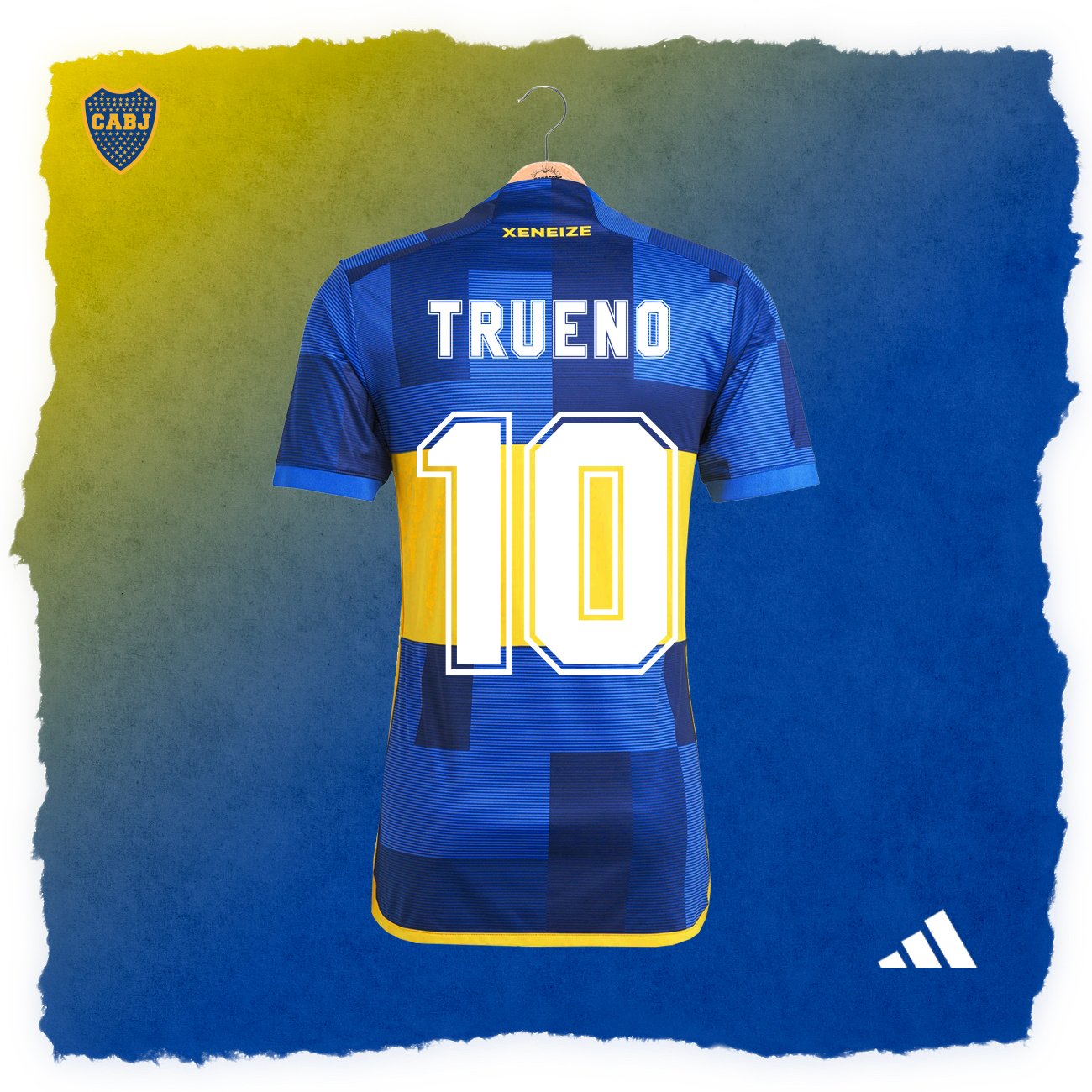
But it was rock legend Charly García who truly elevated Trueno into pop culture. García, a Boca Juniors fan, often wore the shirt during concerts and public appearances, blending football fandom with artistic expression. His 1983 album Yendo de la cama al living even featured a Trueno shirt on the cover, cementing its place in Argentine music history. “García understood the shirt’s power as a symbol,” says Rodríguez. “He wore it not just as a fan, but as a statement.”
The shirt’s crossover appeal became clear in 1986, during the Mexico World Cup. While Maradona was making headlines on the pitch, García was performing in front of thousands in Buenos Aires—both wearing Trueno. “It was the perfect storm,” says Gelman. “Football and music, two pillars of Argentine culture, united under one design.”


Left: Boca Juniors Press Archive, 1982 | Right: Charly García Foundation, 1983
From Buenos Aires to Global Collectors: The Trueno Legacy
By the late 1980s, Trueno had transcended its Argentine roots. Clubs across Latin America began adopting similar bold designs, inspired by Viola’s work. In Europe, brands like Adidas and Nike took note, though none could replicate the shirt’s cultural resonance. “Viola proved that sports merchandise could be art,” says Finocchio. “He turned a simple t-shirt into a piece of history.”
Today, authentic Trueno shirts are highly sought after. In 2023, a rare 1979 prototype sold for $10,000 at auction in Buenos Aires, while signed versions by García and Maradona have reached $25,000. The demand has even led to counterfeit markets, with replica shirts flooding eBay and MercadoLibre.
Viola, now in his 80s, remains modest about his creation. In a 2022 interview with Olé, he said, “I never expected it to become this big. But I always believed in the power of a good design.”
Lessons from Trueno: How Sports Marketing Shaped a Cultural Icon
The Trueno shirt is more than a piece of memorabilia—it’s a masterclass in branding. Viola’s approach combined several key elements:
- Identity over logo: The lightning bolt wasn’t just a mark; it represented speed, rebellion, and Argentine passion.
- Cultural crossover: By getting Maradona and García to wear it, Viola turned a sports item into a fashion statement.
- Limited production: Early scarcity drove demand, a strategy now used by luxury brands worldwide.
- Emotional connection: Fans didn’t just buy the shirt; they adopted it as part of their identity.
Modern sports brands would do well to study Trueno. In an era of corporate logos and sponsorships, Viola’s work reminds us that the most enduring brands tell a story—not just sell a product. “Trueno wasn’t about making money,” says Rodríguez. “It was about creating something that people would want to wear forever.”
Collecting Trueno: Where to Buy (and What to Avoid)
With the shirt’s popularity, counterfeit markets have flourished. Authentic Trueno shirts can be found at:
- Official Boca Juniors Stores (limited stock, high demand)
- Sotheby’s Buenos Aires (auction house for rare prototypes)
- MercadoLibre (vetted sellers only—look for verified Boca Juniors listings)
- eBay (check seller ratings and authentication)
Warning: Be cautious of shirts labeled “Trueno” but made with modern fabrics or lacking the original stitching. Authentic Trueno shirts feature:
- Thicker, heavier fabric than standard jerseys
- Hand-stitched lightning bolt (early versions)
- Boca Juniors’ original tagging (pre-1990s)
- No team logos—just the lightning bolt
Frequently Asked Questions About the Trueno Shirt
Q: How many Trueno shirts were originally made?
A: Records from Boca Juniors suggest around 5,000–7,000 units were produced in the late 1970s, with additional batches in the 1980s. Most were sold to local fans, but some were exported to Europe.
Q: Why did Maradona stop wearing Trueno shirts?
A: By the late 1980s, Maradona was more closely associated with his four-star Boca Juniors jersey, which became his signature look. However, he occasionally wore Trueno shirts in private settings, including during his time at Napoli.
Q: Are there any Trueno shirts signed by both Maradona and García?
A: As of 2024, only one confirmed signed shirt exists, which sold for $50,000 in a private auction in 2023. It is currently held in a private collection in Switzerland.
Q: Can I still buy Trueno shirts today?
A: Boca Juniors occasionally releases limited-edition Trueno shirts, but they are not mass-produced. The last official restock was in 2021, selling out within hours. Fans often rely on secondary markets or replica versions.
Next Steps: The next Boca Juniors merchandise auction is scheduled for October 15, 2024, where rare Trueno prototypes may be featured. For verified collectors, the Sotheby’s Buenos Aires team recommends contacting them directly for authentication services.
Have you worn a Trueno shirt or collected Argentine football memorabilia? Share your stories in the comments—or tag us on social media with #TruenoLegacy.
Worth a look