
The Catholic Church maintains no official doctrine regarding the existence of extraterrestrial life, leaving the scientific and theological exploration of the cosmos to individual scholars and observers. While popular media often portrays the discovery of aliens as a potential crisis for religious faith, historical and contemporary Catholic thought suggests that extraterrestrial life is not inherently incompatible with Christian theology. Figures ranging from 15th-century scholars to modern Vatican astronomers have long engaged with the possibility of life beyond Earth, viewing the vastness of the universe as a testament to divine creativity rather than a challenge to human significance.
Jonathan Reed, News Editor at World Today Journal, reports that public discourse surrounding the intersection of faith and astrobiology often relies on the assumption that discovery would undermine traditional belief systems. However, archival records and statements from the Vatican Observatory indicate that the Church has historically encouraged scientific inquiry into the natural world. This tradition includes the work of Georges Lemaître, a Belgian priest who proposed the theory that would become known as the Big Bang, and Gregor Mendel, whose studies of garden peas established the foundations of modern genetics.
Historical Perspectives on Extraterrestrial Life
The consideration of life on other worlds is not a modern innovation within Catholic intellectual history. Cardinal Nicholas of Cusa, writing in the 15th century, famously suggested that the stars might not be empty, proposing that other regions of the cosmos could host “brilliant, illustrious, and intellectual” inhabitants. His writings reflect an early theological openness to a populated universe, a sentiment that persisted among later thinkers.
In the 19th century, the French philosopher Joseph de Maistre wrote critically of contemporaries who viewed other planets as “mere globes, destitute of life and beauty.” De Maistre argued that such a narrow view limited the perceived scope of divine creation. These historical perspectives demonstrate that the possibility of extraterrestrial life has been a subject of interest for centuries, often framed by theologians as a way to contemplate the infinite nature of God’s work.
Scientific Inquiry and Theological Reflection
Modern Catholic astronomers have continued this tradition of integrating faith with the exploration of the cosmos. Brother Guy Consolmagno, who has served as the director of the Vatican Observatory, stated in a 2010 interview that he would be “delighted” if intelligent life were discovered elsewhere in the universe. According to Consolmagno, the physical universe is a place where humans encounter God, and scientific discovery serves as a method for witnessing the “creative freedom” of the creator.
This approach extends to the work of contemporary scientists like Karin Öberg, a professor of astronomy at Harvard University. In a 2022 lecture, Öberg addressed the potential existence of “alien siblings,” arguing that the presence of other intelligent life would not diminish the value or the divine relationship humanity holds with God. Her perspective is shared by scholars such as Christopher Baglow, director of the Science & Religion Initiative at the University of Notre Dame. Baglow has noted that speculative theological questions regarding aliens—such as how they might fit into the concept of original sin or salvation—are useful tools for the faithful to deepen their understanding of humanity’s relationship with the divine.
Addressing Misconceptions in Public Discourse
Recent media portrayals of the relationship between faith and extraterrestrial life have occasionally suggested that the latter is a threat to the former. Critics and commentators have at times alleged that films or scientific narratives are designed to cause Christians to “second-guess their faith.” However, these accusations often overlook the historical comfort the Catholic tradition has maintained regarding the supernatural, including concepts of angels, miracles, and the vast, unexplained wonders of the cosmos.
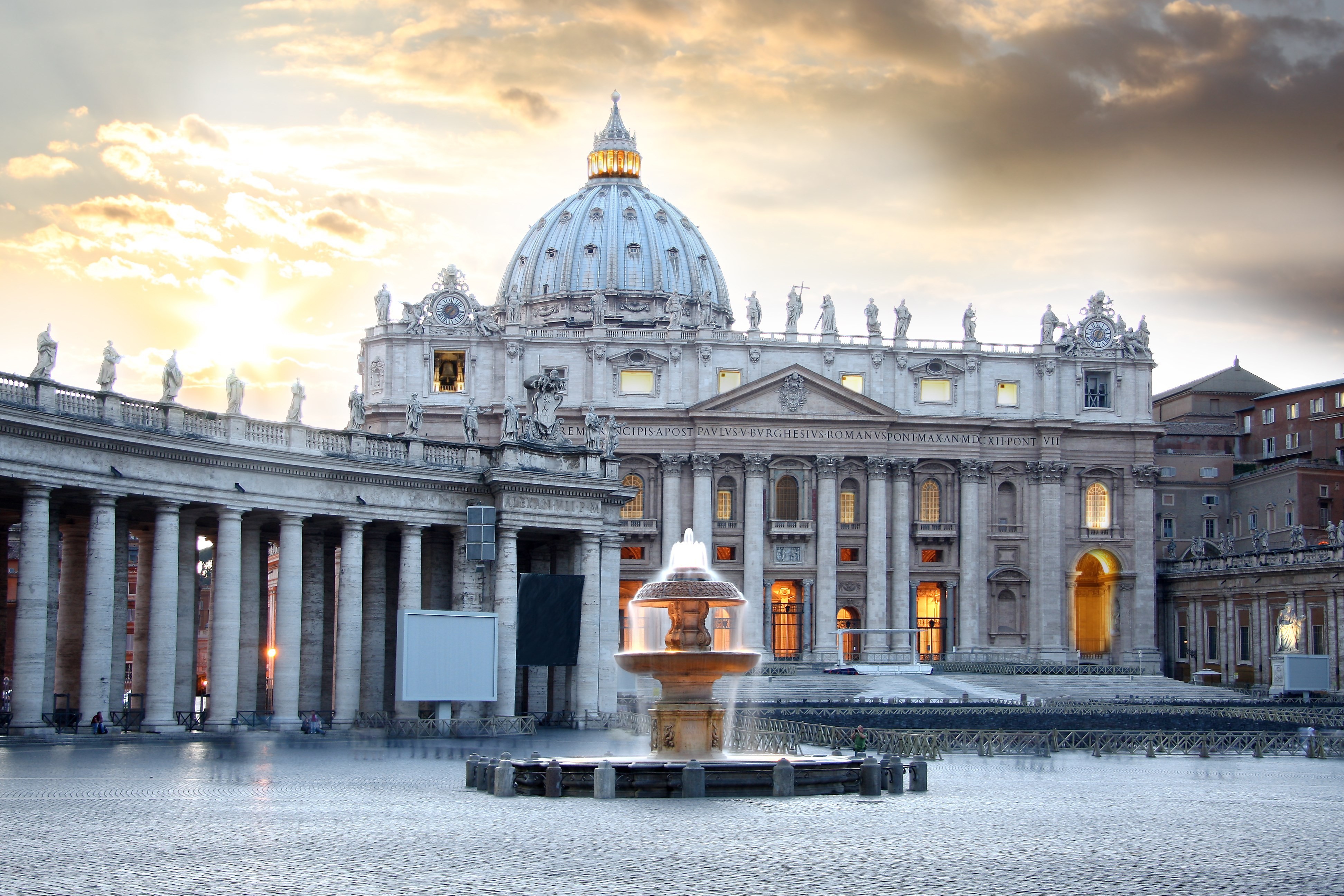
The prevailing view among many Catholic thinkers is that the discovery of alien life would not be a “game-changer” that invalidates scripture, but rather a new chapter in the human effort to understand the scale of creation. By viewing the cosmos with awe rather than anxiety, proponents of this perspective argue that faith remains resilient in the face of scientific advancement. The ongoing dialogue between science and religion continues to evolve as new astronomical data becomes available, with the next major updates likely to come from ongoing research at the Vatican Observatory and global academic institutions. Readers are encouraged to share their thoughts and engage with this ongoing discussion in the comments section below.
Worth a look