
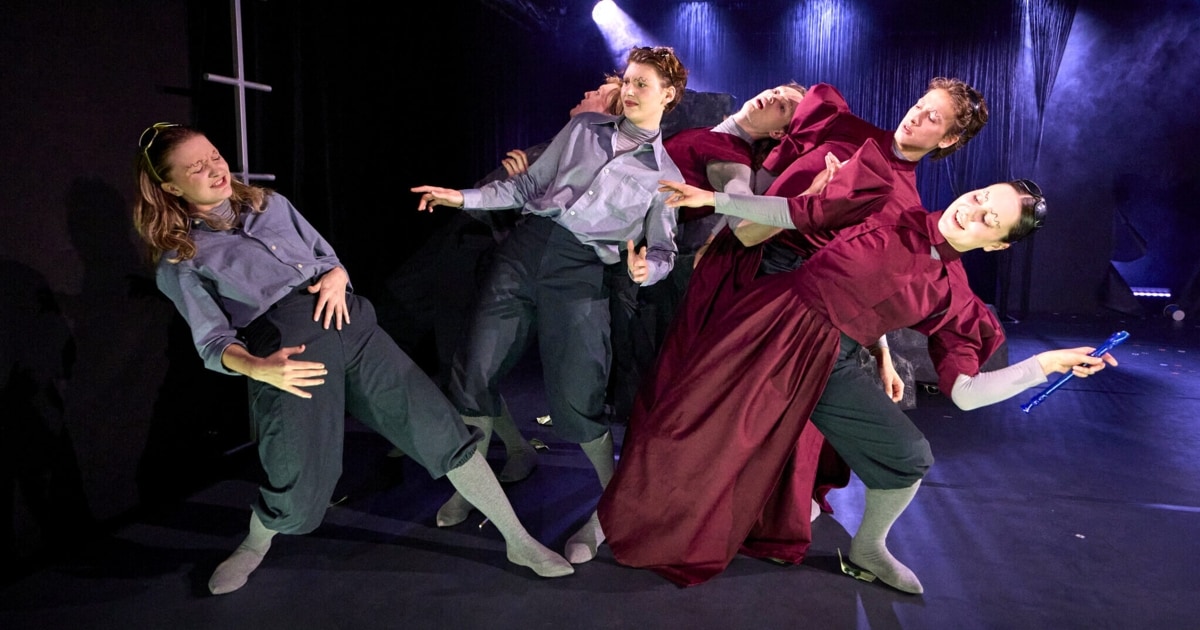
The intersection of classical drama and modern interpretation continues to captivate audiences, as seen in the recent focus on “Räuber der Herzen” (Robbers of the Heart) at the Studiobühne Linz. This production draws its emotional and thematic weight from one of the most influential works of the German Sturm und Drang movement: Friedrich Schiller’s The Robbers (Die Räuber).
At its core, the production explores the volatile relationship between passion and control, posing the provocative idea that those who love often lose their grip on stability, and those who steal eventually find themselves robbed of their own humanity. By bridging the gap between Schiller’s historical tragedy and contemporary theatrical sensibilities, the Studiobühne Linz offers an intensive experience that examines the “robbers” not just as criminals, but as individuals driven by profound, often destructive, emotions.
To understand the weight of this adaptation, one must glance at the foundation laid by Schiller. First published in 1781 and premiering on January 13, 1782, in Mannheim, The Robbers served as a catalyst for Schiller’s sudden rise to fame. The play is a quintessential example of “Storm and Stress” literature, characterized by its high emotionality, depiction of physical violence, and the struggle of the individual against restrictive societal norms.
The Eternal Conflict: Reason Versus Emotion
The narrative of The Robbers centers on the intense rivalry between two aristocratic brothers, Karl and Franz Moor. This sibling conflict serves as a broader allegory for the clash between the heart and the mind. Karl, the charismatic and rebellious eldest son, is deeply loved by his father, yet he finds himself pushed toward a life of anarchy and banditry in the Bohemian Forest.
In stark contrast, the younger brother, Franz, is depicted as a cold and calculating villain. While Karl is driven by an idealistic, albeit misguided, sense of justice, Franz is motivated by a desire to seize Karl’s inheritance through manipulation and deceit. This dichotomy—the passionate rebel versus the calculating strategist—creates a tension that defines the play’s dramatic structure.
Schiller’s work does not present a simple morality tale. Instead, it delves into the “inner machinery” of vice. In the original text, the author describes how vice can dissolve the “confused shudders of conscience” into powerless abstractions, effectively silencing the voice of religion and stripping away the guiding feelings of morality ([S. 7]). This psychological depth is what allows modern adaptations, like those seen at Studiobühne Linz, to remain relevant; they explore the timeless human struggle between intellectual ambition and emotional authenticity.
The Legacy of Sturm und Drang
The Sturm und Drang movement, which flourished in the late 18th century, prioritized individual subjectivity and extreme emotion over the rationalism of the Enlightenment. The Robbers embodies this movement through its highly emotional language and its willingness to challenge the “narrow palisades” of traditional Aristotelian dramatic structures. Schiller himself noted in his preface that the complexity of the characters—whose actions depend on “perhaps a thousand little wheels”—made it impossible to confine the story within the strict limits of a three-hour theatrical window ([S. 6]).
This rebellion against form and tradition is a key element that modern productions echo. By focusing on “robbers with great feelings,” the Studiobühne Linz production emphasizes the human element over the criminal act. It asks the audience to consider the motivations behind the rebellion: is the pursuit of revolutionary anarchy a pursuit of freedom, or a descent into madness?
Key Elements of the Original Play
- Protagonists: Karl and Franz Moor, brothers whose conflict drives the plot.
- Setting: Germany, spanning a period of approximately two years.
- Structure: A traditional five-act tragedy with alternating scenes that contrast the brothers’ paths.
- Themes: The conflict between reason (Verstand) and feeling (Gefühl), the corruption of the soul, and the consequences of rebellion.
From Stage to Opera and Beyond
The impact of Schiller’s first dramatic play extends far beyond the initial Mannheim audience. Its influence is evident in the development of European melodrama and its subsequent adaptations across different media. Notably, the play served as the basis for Giuseppe Verdi’s opera, I masnadieri, further cementing its place in the Western artistic canon ([Wikipedia]).
The enduring appeal of the story lies in its ability to mirror the internal chaos of the human experience. Whether through the original 1805 improved edition or a contemporary production in Linz, the story of the Moor brothers reminds us that the most dangerous battles are often those fought within the heart. When the “directing sensation” is skeletonized and the “serious voice of religion” is laughed away, the individual is left alone with their ambition and their grief.
For those interested in the historical context of the work, the original text remains a study in the dangers of prioritizing the intellect at the expense of the heart. As the Studiobühne Linz suggests, the cycle of robbery and loss is not merely about material wealth, but about the emotional cost of losing one’s control.
Further details regarding the current performance schedule and ticketing for Studiobühne Linz can be found through their official regional channels.
Do you believe the conflict between reason and emotion is still the central struggle of the modern individual? Share your thoughts in the comments below.