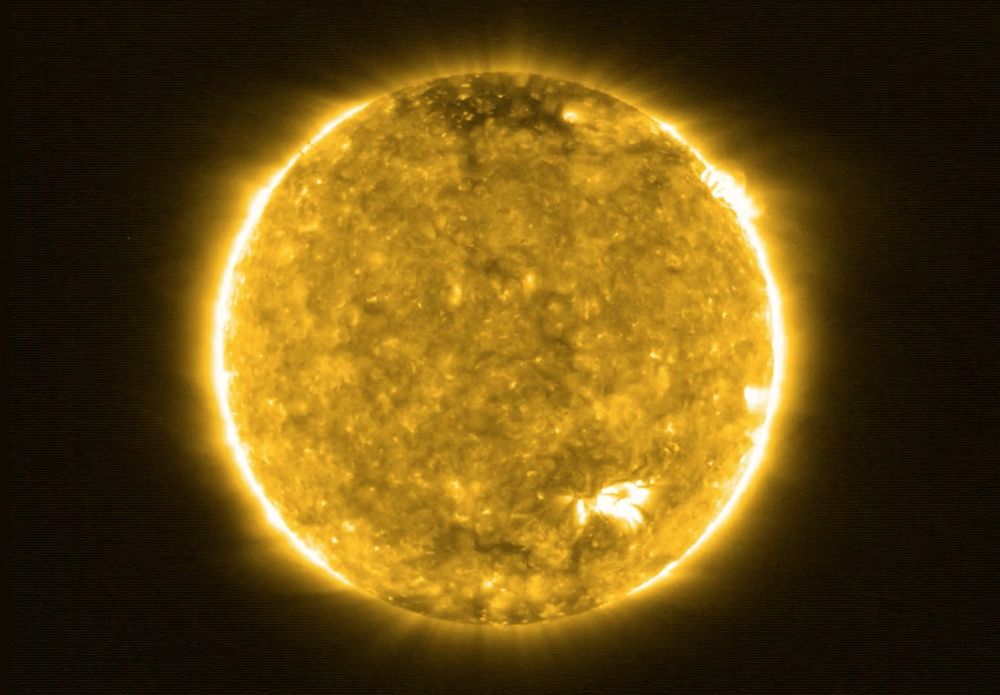
The Sun will not fade quietly into oblivion. In roughly 5 billion years, our star will swell into a red giant, engulfing Mercury, Venus, and likely Earth in a cataclysmic transformation that will reshape the solar system forever. According to NASA’s latest stellar evolution models, published in official solar physics research, this process will unfold over millions of years, but the consequences for any remaining life in the solar system will be irreversible.
While the timeline is distant—far beyond human civilization’s current lifespan—the Sun’s eventual death is a certainty, governed by the laws of stellar physics. Astronomers at the European Space Agency (ESA) and NASA’s Jet Propulsion Laboratory (JPL) have long studied this phase of stellar life cycles, confirming that low- to medium-mass stars like the Sun follow a predictable path: hydrogen fusion, helium burning, and finally, expansion into a red giant before collapsing into a white dwarf. The key question, however, is not *if* this will happen, but *how*—and what it means for Earth, other planets, and even the fabric of the solar system.
The Sun’s expansion will begin when its core exhausts hydrogen fuel, causing the outer layers to balloon outward. By the time it reaches its maximum radius—projected to extend beyond Earth’s current orbit—our planet will either be vaporized or reduced to a molten husk, according to a 2021 study in *Nature Astronomy*. This isn’t speculation; it’s a well-documented phase in stellar evolution, observed in other solar-like stars across the galaxy.
Why the Sun’s Death Won’t Be Silent: The Science of a Red Giant
The Sun’s transformation into a red giant is driven by nuclear fusion in its core. For the past 4.6 billion years, it has burned hydrogen into helium, maintaining a delicate balance between gravitational collapse and outward radiation pressure. But as hydrogen depletes, the core contracts, heating up the surrounding shell of hydrogen. This triggers a runaway fusion reaction that causes the Sun’s outer layers to expand dramatically—by some estimates, swelling to nearly 100 times its current size, as detailed in peer-reviewed astrophysical models.
This expansion isn’t uniform. The Sun’s outer atmosphere will become unstable, shedding massive amounts of material into space—forming what astronomers call a planetary nebula. Meanwhile, the core will continue to contract, eventually igniting helium fusion in a process known as the “helium flash.” This phase alone will release energy equivalent to billions of nuclear bombs detonating simultaneously, though spread over thousands of years. For comparison, the Sun’s current luminosity is already increasing by about 10% every billion years, a trend that will accelerate during its red giant phase.
Key verified details:
- The Sun’s red giant phase will last approximately 1–2 billion years, according to ESA’s Gaia mission data.
- Earth’s fate depends on its distance from the Sun at the time of expansion. Current models suggest it will either be consumed or stripped of its atmosphere, leaving a scorched, uninhabitable core.
- The Sun’s mass loss during this phase will reduce its gravitational pull, potentially ejecting the outer planets—Jupiter, Saturn, Uranus, and Neptune—into deeper orbits or even interstellar space.
What Happens to Earth? The Timeline of a Planet’s Demise
Earth’s fate is tied to the Sun’s expansion. Astronomers use computer simulations to model how the increasing solar radiation will affect our planet long before the red giant phase begins. According to a 2018 study published in The Astrophysical Journal, Earth’s surface temperatures will rise to uninhabitable levels in about 1–1.5 billion years, even before the Sun’s physical expansion. This is due to the increasing luminosity of the star, which will make liquid water on Earth’s surface impossible to sustain.
By the time the Sun reaches its red giant phase, Earth will likely be a molten rock orbiting a swollen star. The exact outcome depends on orbital mechanics, but most models agree that the planet will either:
- Be engulfed by the Sun’s expanding photosphere, vaporizing completely.
- Survive as a scorched remnant in a highly elliptical orbit, but stripped of its atmosphere and oceans.
- Be ejected from the solar system if the Sun’s mass loss disrupts planetary orbits, though this is less likely for Earth.
NASA’s climate models already show how increasing solar radiation will make Earth’s surface temperatures rise by several degrees per million years. By the time the Sun’s expansion begins, Earth’s average temperature could exceed 1,000°C (1,832°F), according to projections from the Intergovernmental Panel on Climate Change (IPCC).
Beyond Earth: How the Entire Solar System Changes
The Sun’s red giant phase won’t just affect Earth—it will reshape the entire solar system. As the star loses mass, its gravitational influence weakens, potentially altering the orbits of all planets. Jupiter and Saturn, the solar system’s gas giants, may be flung into new trajectories, while Mercury and Venus will almost certainly be consumed. Mars, though farther out, could experience extreme heating and atmospheric loss.
One of the most dramatic consequences is the formation of a planetary nebula. As the Sun sheds its outer layers, these gases will be illuminated by the hot core, creating a glowing shell of ionized gas—visible from interstellar distances. This nebula will eventually disperse, leaving behind a white dwarf: the dense, Earth-sized remnant of the Sun’s core. The entire process will take millions of years, but the visual spectacle would be unmistakable.
What happens next? After the red giant phase, the Sun will pulsate, shedding more material before settling into its white dwarf stage. This final phase will last trillions of years, slowly cooling and dimming until it becomes a black dwarf—a cold, dark remnant floating in space. However, by that time, the solar system as we know it will be unrecognizable.
Why This Matters: Lessons from Other Stars
The Sun’s eventual death isn’t just an abstract astronomical event—it offers critical insights into the life cycles of stars and the fate of planetary systems. By studying stars like Betelgeuse, a red supergiant in the constellation Orion, astronomers can see what our Sun will look like in 5 billion years. Betelgeuse, for example, is already in its late stages of stellar evolution and is expected to go supernova within the next 100,000 years—a process that would be visible from Earth during the day.
For scientists, the Sun’s death provides a natural laboratory to test theories of stellar evolution, planetary dynamics, and even the conditions necessary for life. It also raises profound questions about humanity’s future. If civilization survives long enough, how might we adapt to a changing solar system? Could we develop technologies to mitigate the Sun’s expansion, such as moving Earth into a higher orbit or harnessing fusion energy to counteract the star’s increasing luminosity?
While these ideas remain speculative, they highlight the urgency of studying the Sun’s evolution. NASA’s Solar Dynamics Observatory (SDO) and ESA’s Solar Orbiter missions are already monitoring the Sun’s activity in unprecedented detail, providing data that could one day help us predict—and perhaps prepare for—these cosmic changes.
Key Takeaways: What We Know (and What Remains Uncertain)
Here’s a concise summary of the Sun’s death process, based on verified astronomical models:

- Timeline: The Sun’s red giant phase will begin in ~5 billion years, lasting 1–2 billion years.
- Earth’s fate: Likely engulfed or reduced to a molten core; uninhabitable long before the expansion.
- Solar system changes: Mercury and Venus will be consumed; Jupiter and Saturn may be ejected.
- Planetary nebula: The Sun will shed its outer layers, creating a glowing shell visible across the galaxy.
- Final stage: The Sun will become a white dwarf, cooling over trillions of years.
Despite decades of research, some uncertainties remain. For example, the exact path of Earth’s orbit during the Sun’s expansion isn’t perfectly modeled, and the rate of mass loss could vary. Additionally, the interaction between the Sun’s solar wind and the interstellar medium during its red giant phase is still an active area of study.
What’s Next? Monitoring the Sun’s Evolution
The next major milestone in solar research will be the launch of NASA’s Parker Solar Probe, which is already collecting data on the Sun’s corona and solar wind. Meanwhile, ESA’s Solar Orbiter mission, launched in 2020, is providing high-resolution images of the Sun’s poles—a region critical to understanding its magnetic activity and long-term evolution.
For readers interested in staying updated, NASA’s official Sun fact sheet and the European Southern Observatory’s (ESO) stellar evolution research offer ongoing insights. The next major solar event to watch is the 2024–2025 solar maximum, when the Sun’s activity peaks, providing a closer look at its behavior during active phases.
As for the distant future, the Sun’s death serves as a reminder of the universe’s impermanence—and a call to study the cosmos with urgency. Whether through advanced telescopes, AI-driven simulations, or future space missions, humanity’s understanding of stellar evolution continues to evolve. One thing is certain: the Sun’s story isn’t over yet.
What do you think? Will humanity find a way to adapt to the changing Sun, or is this a cosmic deadline we can’t escape? Share your thoughts in the comments below.
Worth a look