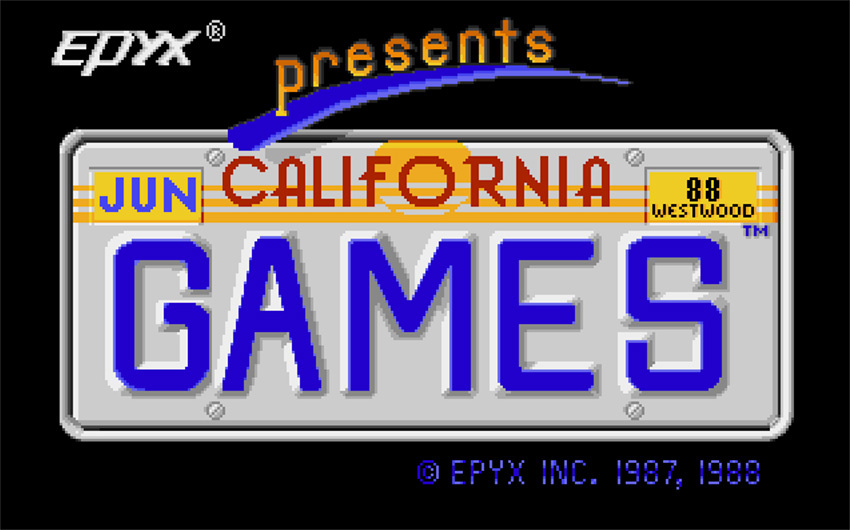
Released in 1988 during the peak of the 8-bit computer era, California Games captured the laid-back, sun-drenched aesthetic of West Coast sporting culture and turned it into a global phenomenon. Developed by Epyx and ported to nearly every major gaming system of the decade, the title sold over a million copies and defined a generation of digital recreation. Yet, behind the iconic images of surfing, skateboarding, and hacky sack lay a shifting corporate landscape and a brilliant development team whose broader legacy remains largely forgotten by modern players.
According to historical records from computer gaming archives, Epyx originally built its reputation on innovative sports titles, including Summer Games and Winter Games. When the company turned its attention to the Pacific coast, programmers and designers sought to capture a specific counter-cultural energy. Rather than focusing on traditional stadium sports, the game offered players a series of distinct micro-events: half-pipe skateboarding, BMX stunt riding, footbag, surfing, roller skating, and disc throwing. Each event required distinct timing and joystick maneuvers, creating a challenging yet addictive arcade experience that resonated with millions of home computer users on platforms like the Commodore 64, Apple II, and Atari ST.
Behind the cartridge design and marketing success was a dedicated studio culture at Epyx that embraced rapid innovation during a turbulent era for the software industry. While industry historians often focus on the hardware giants of the late 1980s, the software houses that actually built the software libraries faced intense financial pressures. Epyx pioneered multi-load disk systems and battery-backed saves for certain titles, pushing contemporary hardware to its absolute limits. Understanding the true history of California Games requires looking past the colorful box art and examining the brilliant programmers, artists, and musicians who translated the physical thrills of Venice Beach into machine code.
The Creative Forces Behind the Silicon Valley Studio
Epyx was founded in 1978 by Jim Connolly and Dan Bunten under the original name Automated Simulations, before rebranding to focus on action-oriented software. By the time development on California Games began in the late 1980s, the company operated out of Redwood City, California, right in the heart of the burgeoning tech boom. The development team included notable programmers and designers who balanced technical constraints with fluid gameplay mechanics.
According to historical retrospectives published by gaming historians, creating simultaneous physics models for both fluid motion in surfing and aerial tricks on a half-pipe required highly optimized assembly language code. The hardware limitations of 8-bit microprocessors meant that every sprite cycle mattered. Designers utilized clever color-cycling and parallax scrolling tricks to simulate the crashing ocean waves and sprawling boardwalks that became the game’s visual signature. Despite these technical hurdles, the team delivered a polished product that critics praised for its intuitive controls and vibrant presentation.
The music also played a crucial role in establishing the mood. The iconic chiptune soundtrack, featuring catchy, upbeat melodies that looped during event selection screens, remains instantly recognizable to retro gaming enthusiasts. Sound designers worked within strict channel constraints to deliver audio tracks that evoked the feeling of a sunny California afternoon, proving that auditory design was just as vital as pixel art in creating an immersive digital environment.
Commercial Triumph and the Epyx Legacy
Upon its release, California Games became a massive commercial hit, securing top spots on software sales charts across North America and Europe. The title proved particularly popular in the United Kingdom, where it dominated the Commodore 64 charts for months. Its success prompted a wave of conversions for the Nintendo Entertainment System (NES), Sega Master System, Atari Lynx, and the Amiga, cementing its status as a multi-platform powerhouse.
However, the tremendous success of the game could not completely insulate Epyx from the broader financial instability affecting the software industry at the turn of the decade. Shifts in market preferences toward 16-bit console systems and rising development costs created severe fiscal challenges for many pioneering 8-bit publishers. Epyx eventually filed for restructuring, and while various iterations and sequels—such as California Games II—were released in the early 1990s, the original studio eventually dissolved, leaving its core intellectual properties to change hands multiple times.
Today, the legacy of California Games survives largely through emulation communities, retro gaming exhibitions, and digital storefronts that preserve classic software. Modern indie developers frequently cite the title’s split-screen multiplayer design and event-based structure as direct inspirations for modern party and sports titles. While few contemporary players remember the corporate struggles of the studio that built it, the cultural footprint of those pixelated skateboards and surfboards remains firmly etched in gaming history.
Retro Preservation and Finding Official Archives
For enthusiasts looking to explore the verified history and original documentation surrounding Epyx and its catalog, several digital archives provide access to primary sources. Organizations such as the Internet Archive maintain extensive collections of vintage computing magazines, developer interviews, and original instruction manuals from the late 1980s. These repositories offer researchers and fans a transparent look at how software was marketed, reviewed, and distributed during the formative years of the video game industry.
As digital preservation efforts continue to rescue aging magnetic media and cartridge data, researchers urge enthusiasts to rely on verified museum databases and academic software history projects rather than unverified blog posts. Official retrospectives from established computing institutions provide the most accurate account of the technical hurdles and creative triumphs that defined the era.
Readers interested in contributing to ongoing discussions about retro gaming preservation or sharing memories of classic 8-bit titles are encouraged to leave a comment below or share this article with fellow enthusiasts.