
Berlin, Germany — May 18, 2026 — Cardiovascular disease remains the leading cause of global mortality, accounting for an estimated 17.9 million deaths annually, per the World Health Organization. For patients with conditions like atrial fibrillation, coronary artery disease, or heart failure, medication regimens must strike a delicate balance: controlling blood pressure and preventing clots while minimizing bleeding risks. How do clinicians navigate these trade-offs? And what are the latest evidence-based strategies for optimizing cardiovascular therapy?
As Editor of Health at World Today Journal, I’ve reviewed the most recent guidelines from the European Society of Cardiology (ESC) and the American College of Cardiology (ACC) to distill the core principles for clinicians and patients alike. The key? A personalized, risk-stratified approach that prioritizes shared decision-making.
This article explores:
- The dual challenge of anticoagulation and bleeding risk in atrial fibrillation
- Antiplatelet strategies for coronary artery disease patients
- Hypertension management algorithms for high-risk populations
- Emerging therapies and real-world implementation barriers
The Bleeding-Anticoagulation Paradox in Atrial Fibrillation
Atrial fibrillation (AFib) affects over 33.5 million people worldwide, with stroke risk increasing fivefold in untreated patients. Oral anticoagulants (OACs) like warfarin, dabigatran, rivaroxaban, apixaban, and edoxaban reduce stroke by 64% but introduce bleeding risks—particularly in elderly patients or those with renal impairment.
According to the 2020 ESC Guidelines on AFib, clinicians now use the HAS-BLED score to assess bleeding risk (Hypertension, Abnormal renal/liver function, Stroke, Bleeding history, Labile INR, Elderly, Drugs/alcohol). A score ≥3 warrants intensified monitoring or alternative strategies:
- Dose adjustment: Reducing OAC doses (e.g., apixaban 2.5 mg twice daily) for patients with CrCl 15–29 mL/min.
- Alternative agents: Preferring agents with lower bleeding risks (e.g., apixaban over warfarin in REDUCE AF trial data).
- Combination therapy: In high-risk AFib + coronary stent patients, short-term triple therapy (OAC + dual antiplatelets) may be necessary, but limited to ≤1 month per ACC 2021 guidelines.
Key Takeaway: Bleeding risk should be reassessed every 6–12 months, with OAC choices tailored to renal function, fall risk, and patient preference.
Antiplatelet Strategies: Balancing Clot and Bleed in CAD
For patients with coronary artery disease (CAD), antiplatelet therapy is critical but fraught with trade-offs. The 2019 ACC/AHA Guideline on the Primary Prevention of CVD emphasizes that dual antiplatelet therapy (DAPT) with aspirin + P2Y12 inhibitor (e.g., clopidogrel, ticagrelor) reduces major adverse cardiovascular events (MACE) by 20% post-PCI—but at the cost of bleeding.
Recent data from the TWILIGHT trial (2021) demonstrated that shortening DAPT to 3 months (vs. 12 months) in ACS patients reduced bleeding by 50% without increasing stent thrombosis. The 2019 ESC Guidelines on Chronic Coronary Syndromes now recommend:
- Short-duration DAPT: 1–3 months for stable CAD. 6–12 months for ACS (with risk stratification).
- De-escalation: Switching from ticagrelor to clopidogrel after 12 months in low-risk patients.
- Monitoring: Regular hemoglobin checks and HAS-BLED assessment for patients on aspirin alone.
Emerging Trend: Wearable sensors (e.g., FDA-approved cardiac monitors) are being tested to predict bleeding risks via biomarkers like platelet reactivity.
Hypertension Control: Precision Medicine in High-Risk Patients
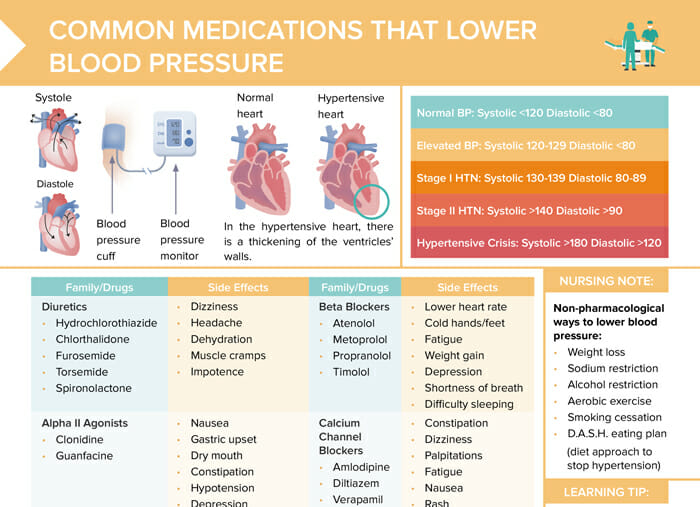
Uncontrolled hypertension (>140/90 mmHg) complicates 75% of cardiovascular therapies. The 2017 ACC/AHA/HFSA Guideline now advocates for personalized blood pressure (BP) targets:
- General population: <130/80 mmHg (if tolerable).
- High-risk patients (e.g., AFib, CKD): <120/70 mmHg, with careful titration.
- First-line agents:
- ACE inhibitors/ARBs (e.g., lisinopril, losartan) for diabetic nephropathy.
- CCBs (e.g., amlodipine) for elderly or black patients.
- Thiazide diuretics (e.g., hydrochlorothiazide) for volume overload.
- Avoid: NSAIDs (increase BP by 5–10 mmHg) and high-dose aspirin (unless cardioprotective).
Real-World Challenge: A 2025 study in JAMA Network Open found that only 38% of hypertension patients achieve target BP, citing medication complexity and cost barriers.
Emerging Therapies and Implementation Gaps
Three innovations are reshaping cardiovascular therapy:
- Direct oral anticoagulants (DOACs): Non-warfarin agents (e.g., edoxaban) now dominate AFib management due to 30% lower bleeding rates (ENGAGE AF-TIMI 48 trial).
- SGLT2 inhibitors (e.g., empagliflozin): Reduce heart failure hospitalization by 26% in diabetic patients (EMPA-REG OUTCOME).
- AI-driven dosing: Systems like IBM Watson for Drug Discovery are being piloted to optimize polypharmacy regimens.
Barriers to Adoption:
- Cost: DOACs cost $1,200–$2,500/year in the U.S., limiting access in low-income countries.
- Literacy: 40% of patients misunderstand medication instructions, leading to non-adherence.
- Polypharmacy: The average AFib patient takes 5–7 medications, increasing pill burden.
Key Takeaways for Patients and Clinicians
- Shared Decision-Making: Use tools like the AFib Decision Guide to weigh stroke vs. Bleed risks.
- Monitoring: Regular hemoglobin checks (every 3–6 months) and BP logs via apps like American Heart Association’s BP Tracker.
- Lifestyle Synergy: DASH diet + 150 mins/week exercise can reduce BP by 11/6 mmHg without medication.
- When to Seek Help: Signs of bleeding (e.g., unexplained bruising, dark stools) or BP >180/120 mmHg (hypertensive crisis).
What’s Next: Upcoming Guidelines and Trials
The ESC Congress 2026 (August 2026) will unveil updates on:
- New DOACs (e.g., betrixaban for VTE prophylaxis).
- AI algorithms for real-time bleed risk prediction.
- Global access initiatives to reduce polypharmacy costs.
In the meantime, patients can access free resources:
Your Turn: How has your experience with cardiovascular medications shaped your approach to risk management? Share your stories in the comments below—or tag @WorldTodayJ to join the conversation.
Worth a look
- How to Manage Ongoing Medical Treatments During Emergencies
- Embryo Culture Media in IVF: Which Solution Gives the Best Live Birth Rates?
- FDA Approves Groundbreaking mRNA Vaccine Booster for Adults 50+, Boosting Immunity and Protecting Against Chronic Health Risks (archyworldys.com)
- The Future of Health Insurance Coverage and Healthcare Standards (world-today-news.com)