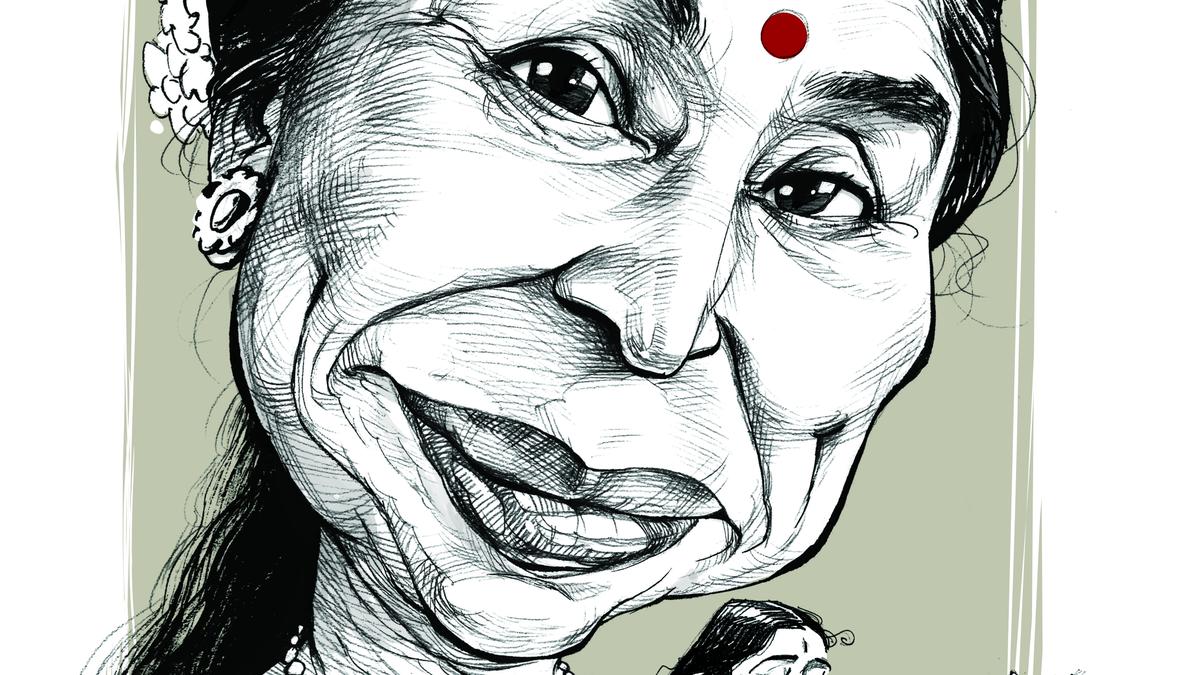
The landscape of Indian cinema is often defined by its towering icons, but few voices have navigated the complexities of fame and artistry as uniquely as Asha Bhosle. Known for a versatility that spanned genres and decades, Bhosle emerged as a force who redefined the very nature of Hindi playback singing. While often discussed in the shadow of her sister, Lata Mangeshkar, Bhosle carved out a distinct identity that bridged the gap between traditional Indian film music and the evolving sounds of global pop.
For many, Asha Bhosle represents the “reluctant superstar,” a performer whose enduring presence in the spotlight was driven less by a raw ambition for celebrity and more by the necessity of her craft and the demands of a changing industry. Her career was not merely a series of hits, but a transformative journey that altered how music was integrated into Hindi cinema, moving it toward a more eclectic, bold, and experimental sonic palette.
The legacy of this legendary artist has recently taken on a poignant tone following reports of her passing. Asha Bhosle has died at the age of 92, leaving behind a void in the world of music. Her departure marks the end of an era for a voice that served as a vital bridge between the classical foundations of Indian film songs and the modern, globalized sounds of pop music.
Redefining the Playback Tradition
To understand Asha Bhosle’s impact, one must look at the rigid structures of Hindi playback singing during the mid-20th century. For decades, the industry was dominated by a specific, ethereal vocal style. Bhosle, however, challenged this hegemony. She did not seek to replicate the purity of the era’s dominant voices but instead leaned into a range of expressions—from the sultry and seductive to the high-energy and playful—that allowed her to inhabit a wider variety of characters on screen.


This versatility was not an accident of talent alone, but a strategic navigation of her role within the industry. By embracing the “cabaret” and “item” songs that were becoming staples of Bollywood, she provided a sonic texture that was previously missing. Bhosle redefined Hindi playback singing by moving beyond the perceived rivalry with Lata Mangeshkar, establishing a singular voice that was valued for its ability to adapt to any mood or tempo.
Her perform became essential for music directors who wanted to experiment with jazz, rock, and western pop influences. By blending these elements with Indian sensibilities, she ensured that Hindi film music remained relevant to a global audience and a younger, more cosmopolitan India. Her ability to switch between a classical ghazal and a fast-paced dance number made her an indispensable asset to the studios.
The Evolution of Sound and the Gen Z Critique
The trajectory of Bollywood music, which Bhosle helped shape, has continued to evolve long after her peak years. The transition from the melodic complexities of the Golden Age to the digital productions of today has not been without friction. This tension is evident in the perspectives of industry veterans who witnessed the transition from live orchestral recordings to synthesized beats.
For instance, lyricist Sameer Anjaan has recently voiced strong criticisms regarding the direction of modern music. Anjaan has slammed Gen Z Bollywood music, describing it as “jarring noise” and stating that “shor badh gaya hai” (the noise has increased). This critique highlights the stark contrast between the era of vocal mastery championed by artists like Bhosle and the current trend of sound-heavy, lyric-light productions.
While Bhosle’s career was built on the necessity of adapting to the industry’s needs, the current era is often seen by traditionalists as a departure from the artistry of the voice. The “noise” Anjaan refers to is a byproduct of the very global pop influences that Bhosle first helped introduce to the Indian mainstream, though the execution has shifted from melodic integration to aggressive sonic saturation.
A Legacy of Necessity and Artistry
The narrative of Asha Bhosle as a “reluctant superstar” suggests a complex relationship with fame. Unlike those driven by a desire for the limelight, Bhosle’s longevity can be attributed to her professional discipline and the necessity of her role in the cinematic ecosystem. She remained in the spotlight because she provided a service that no other singer could replicate: a voice that could be both a whisper and a scream, a traditional lament and a modern party anthem.
Her career serves as a case study in how necessity can drive innovation. By filling the gaps left by other singers, she discovered new territories of vocal expression. This process not only sustained her career for over six decades but also expanded the emotional vocabulary of Indian cinema. She proved that a singer could be successful without conforming to a single, idealized image of “the female voice.”
As the industry grapples with the loss of such a titan, the focus shifts to the enduring nature of her recordings. In an age where music is often criticized for being “jarring,” the precision and emotion in Bhosle’s work offer a blueprint for future generations of artists seeking to balance commercial appeal with genuine musicality.
Key Contributions to Hindi Cinema
| Area of Influence | Contribution | Result |
|---|---|---|
| Vocal Range | Introduced versatility beyond the “pure” soprano style | Expanded the types of characters voices could portray |
| Genre Blending | Integrated global pop and jazz into film songs | Bridged Indian film music with international sounds |
| Industry Role | Provided an alternative to the dominant playback style | Ended the monopoly of a single vocal aesthetic |
The passing of Asha Bhosle at 92 concludes a storied chapter in the history of global music. Her journey from a supporting voice to a singular icon reflects the broader evolution of the Indian entertainment industry itself. While the modern era may be characterized by “noise” to some, the foundation of that sound was laid by pioneers who dared to experiment with the limits of the human voice.
There are currently no further official scheduled memorial events or public filings regarding her estate. We invite our readers to share their favorite Asha Bhosle tracks and memories of her influence in the comments below.
Related reading