
The boundary between investigative journalism and state-sponsored narrative is often thin, especially when reporting from within the borders of an authoritarian regime. This tension has recently come to the forefront regarding the Thomas Erdbrink Russia reporting controversy, as discussions intensify over whether journalists operating in Russian-controlled territories are uncovering truths or inadvertently serving as conduits for Kremlin disinformation.
At the heart of the debate is the challenge of maintaining journalistic independence while relying on state-sanctioned access. In conflict zones, particularly in the occupied territories of Ukraine, the ability to move and interview sources is often strictly curated by military and intelligence services. When a reporter’s itinerary is managed by the state, the resulting coverage risks becoming a curated tour designed to validate a specific political agenda rather than an objective account of reality.
For professional journalists, the stakes extend beyond reputation to legal jeopardy. Entering occupied regions of Ukraine via Russia is a direct violation of Ukrainian law, a fact that complicates the ethical standing of any reporter who chooses this route. The resulting discourse highlights a fundamental conflict in modern war reporting: the desire to provide a “complete” picture by visiting the adversary versus the risk of legitimizing an illegal occupation through the act of entry.
As the global media landscape grapples with the sophistication of Russian psychological operations, the case of Thomas Erdbrink serves as a critical case study in media transparency and the dangers of “both-sidesism” in the face of documented aggression.
The Ethics of Access in Occupied Territories
The central criticism surrounding Erdbrink’s work involves the nature of his access to occupied Ukrainian territories. In any conflict, “access journalism” refers to reporting that depends on the permission of the authorities. When that authority is a belligerent state, the risk of manipulation is extreme. Critics argue that by accepting curated trips, journalists may unknowingly propagate narratives that dehumanize the opposing side or sanitize the realities of military occupation.
The Kremlin has a long history of utilizing foreign journalists to project an image of stability and legitimacy in seized regions. By providing “exclusive” access to hand-picked locals and officials, the state can create a veneer of consent, and normalcy. This tactic is designed to confuse international audiences and create a false equivalence between the aggressor’s claims and the documented evidence provided by independent international observers.
From a professional standpoint, the responsibility lies with the journalist to disclose the limitations of their access. When the parameters of a trip are set by a government known for systemic disinformation, the failure to explicitly frame the reporting as “state-curated” can mislead the public. This is not merely a matter of bias but a matter of journalistic integrity and the duty to prevent the medium from being used as a tool for propaganda.
Legal Implications and Ukrainian Sovereignty
Beyond the ethical debate, there is a stark legal reality regarding the movement of people into occupied Ukraine. The Ukrainian government maintains strict controls over who enters its territories, particularly those under Russian control. Entering these zones via the Russian border is considered an illegal entry into Ukraine.
Under official Ukrainian government guidelines, such entries are viewed as a violation of national sovereignty and can lead to permanent bans from entering the country or, in some cases, criminal charges. For a journalist, the decision to bypass official checkpoints is not just a logistical choice but a political one that acknowledges the de facto control of the occupier over the de jure sovereignty of the state.
This legal breach creates a paradox for the reporter. While they may argue that such a route is the only way to reach certain populations, the act itself aligns them with the laws of the occupying power. This alignment can be interpreted by the host state as a sign of cooperation, making the journalist more susceptible to being used in the state’s strategic communications plan.
The Mechanism of Kremlin Disinformation
Understanding why this reporting is so contentious requires an understanding of how modern disinformation works. The goal of the Kremlin is often not to make people believe a single lie, but to make them doubt the existence of any objective truth. By placing a Western journalist in a setting where they see “happy” citizens in an occupied town, the state creates a contradiction with the reports of war crimes and forced deportations documented by the United Nations.
This “contradiction” is the intended product. When a journalist publishes these observations without sufficient critical context, they contribute to a narrative of ambiguity. In the eyes of the propagandist, a journalist who reports “some people here seem content” is far more useful than one who simply repeats state talking points, because the former brings a perceived layer of independent credibility to the scene.
The danger is compounded when such reporting is amplified by mainstream media outlets that may not be fully aware of the curated nature of the journey. This creates a feedback loop where the state-curated narrative is laundered through a reputable journalist and then broadcast to a global audience as an independent finding.
Press Freedom vs. Journalistic Responsibility
In defense of such reporting, some argue that press freedom necessitates the ability to travel and speak with all parties involved in a conflict. The argument is that avoiding the “enemy” creates a vacuum of information and that seeing the world through the eyes of the adversary is essential for a comprehensive understanding of the war.
However, there is a critical distinction between “seeing the other side” and “being led by the other side.” True press freedom is the ability to report without censorship, but it does not grant a journalist immunity from the consequences of their methods. Professional ethics require that the method of acquisition—how the information was gathered and who facilitated it—be as transparent as the information itself.
When a reporter is escorted by state minders, their “freedom” is an illusion. They are seeing only what the state wants them to see, and they are speaking to people who may be under extreme duress or are paid informants. In such environments, the only way to maintain integrity is to report not just on the sights and sounds, but on the restrictive nature of the access itself.
Key Considerations for Reporting in Conflict Zones
- Transparency of Access: Clearly stating who arranged the trip, who provided security, and who selected the interviewees.
- Verification of Sources: Cross-referencing “on-the-ground” anecdotes with satellite imagery, leaked documents, and testimonies from refugees.
- Legal Compliance: Understanding the laws of the sovereign state whose territory is being entered to avoid legitimizing illegal occupations.
- Avoidance of False Equivalence: Recognizing that providing “balance” in a situation of clear aggression can inadvertently validate disinformation.
The Broader Impact on Public Perception
The implications of the Thomas Erdbrink Russia reporting controversy extend beyond a single journalist. It reflects a broader struggle within the global media to handle the “Information War.” As audiences become more polarized, the appetite for “alternative” perspectives grows, which can unfortunately be exploited by state actors.
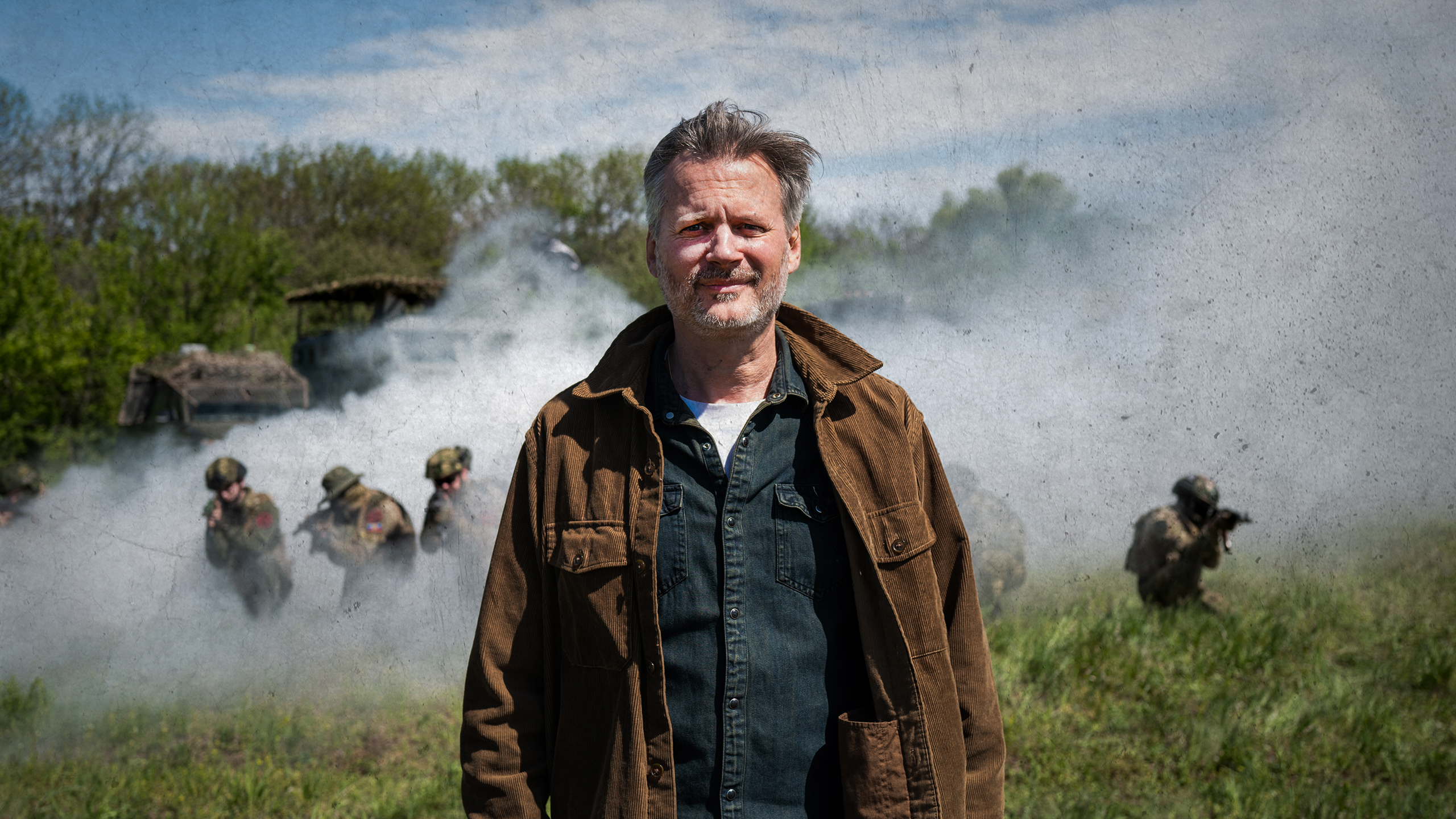
When high-profile journalists are perceived as being “too close” to a regime or too trusting of its narratives, it erodes public trust in journalism as a whole. The perception that a reporter has been “played” by a foreign intelligence service damages the credibility of the outlet they represent and provides ammunition to those who claim that all media is biased or compromised.
For the global audience, the lesson is the importance of media literacy. Readers must ask not only what is being reported, but how the reporter gained access to the story. If a journalist is reporting from a restricted zone and the narrative feels suspiciously aligned with the state’s goals, it is a signal to look for corroborating evidence from independent bodies such as the Human Rights Watch or the International Criminal Court.
Conclusion and Future Outlook
The debate over Thomas Erdbrink’s reporting is a reminder that in the age of hybrid warfare, the journalist is often a target—not just for censorship, but for co-option. The desire to be “the one who saw the other side” can be a powerful motivator, but without rigorous safeguards and total transparency, it can lead to a breach of the most fundamental journalistic tenet: to seek the truth and report it.
As the conflict in Ukraine continues, the international community will likely see more attempts by the Russian state to utilize foreign media to soften its image or sow doubt about its actions. The standard for reporting from these regions must remain exceptionally high, prioritizing verified evidence over curated experiences.
The next significant checkpoint in this discourse will likely be the further analysis of reporting patterns from occupied zones as more independent investigations into war crimes are released by international tribunals. These findings will provide the necessary benchmark to evaluate whether “access-based” reporting from these regions accurately reflected the reality on the ground.
We invite our readers to share their thoughts on the ethics of war reporting and the balance between access and independence in the comments section below.
Keep reading