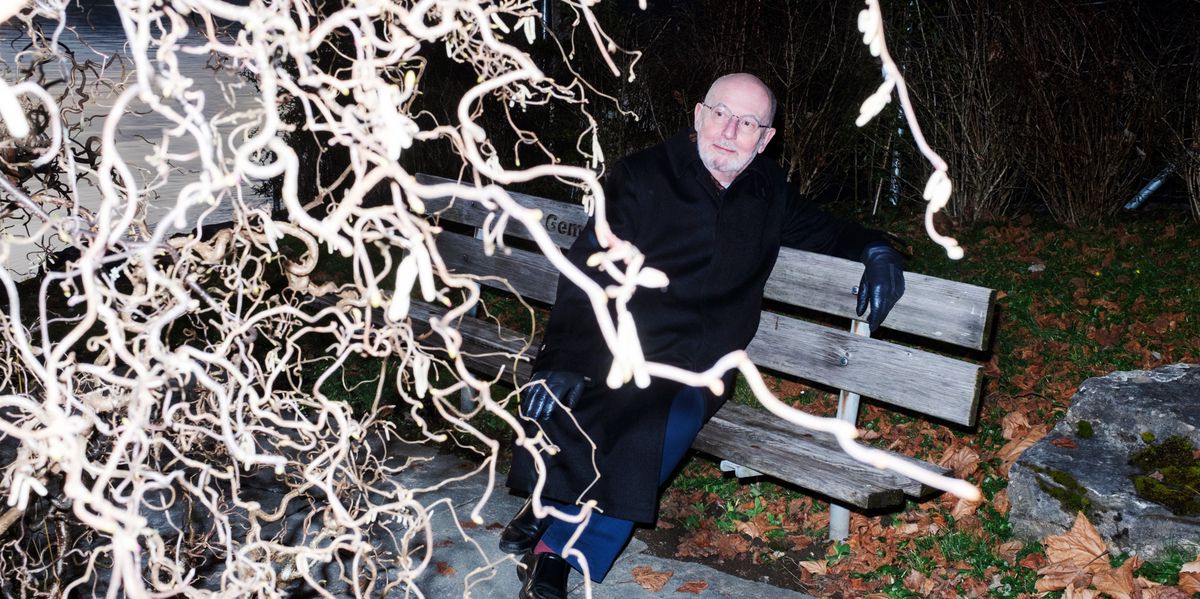
The complexities of life, illness, and homecoming often intertwine in unexpected ways. For Swiss author Thomas Hürlimann, a cancer diagnosis unexpectedly led him back to his roots in Walchwil, a village on Lake Zug, after two decades spent in Berlin. This return wasn’t simply a geographical shift. it was a profound journey back to a place he’d long distanced himself from, forcing a reckoning with his past and a confrontation with mortality. Hürlimann’s story, as reported by the Neue Zürcher Zeitung and other outlets, is a poignant exploration of identity, belonging, and the enduring power of place.
Hürlimann, now 75, initially left Walchwil seeking a life beyond the confines of a strict Catholic upbringing. His early life was marked by a rigid education at a Klosterschule, a boarding school resembling a “Catholic barracks,” as he described it. This experience fueled a desire for exploration, leading him on travels through Africa and Asia with friends after completing his Matura (Swiss secondary school leaving qualification). A subsequent move to West Berlin, then an enclave within East Germany, offered a sense of liberation and a stark contrast to his childhood. But, a prostate cancer diagnosis years later dramatically altered his trajectory, prompting a return to Switzerland.
A Return Prompted by Illness
The diagnosis of prostate cancer, and the subsequent need for extensive treatment, proved to be the catalyst for Hürlimann’s return to Walchwil. According to reports from tagesanzeiger.ch and zentralplus.ch, the author underwent three major operations, experiencing significant complications and spending seven months in the hospital. The physical and emotional toll of the illness led him to seek the familiarity and comfort of his homeland. Initially, he attempted to maintain a connection to Berlin, commuting back and forth, but ultimately found himself feeling unmoored in both locations.
“I didn’t think I’d ever return to live in my homeland,” Hürlimann stated in an interview, as reported by tagesanzeiger.ch. “I was drawn to the world, I never thought about coming back.” This sentiment underscores the depth of his initial desire to escape Walchwil and forge a new life elsewhere. The irony of being brought back by illness is not lost on him, highlighting the unpredictable nature of fate and the often-circuitous routes we take through life.
Confronting Mortality and the Near-Death Experience
Hürlimann’s experience with cancer wasn’t merely a physical battle; it was a profound confrontation with his own mortality. The Neue Zürcher Zeitung detailed his harrowing experience after a third operation, where a non-healing wound caused excruciating pain and brought him to the brink of consciousness. In this liminal state, he described feeling a hand reaching for his, identifying it as his partner, Fedora Wesseler. He believes her presence, her grasp, prevented him from “crossing the border,” suggesting a near-death experience that profoundly impacted him.
This brush with death prompted introspection and a reevaluation of his life. While the article doesn’t detail specific metaphysical experiences, it highlights the emotional and spiritual weight of facing one’s own finish. Hürlimann’s story resonates with broader themes explored in near-death experience research, where individuals often report feelings of peace, connection, and a sense of being pulled back from the threshold of death.
A Complicated Relationship with Home
Despite returning to Walchwil, Hürlimann’s relationship with his homeland remains complex. He acknowledges a sense of detachment, a feeling of not quite belonging even in the place of his birth. This sentiment, as explored in zentralplus.ch, stems from the significant changes he’s experienced and the passage of time. The Walchwil he returned to wasn’t the same as the one he left behind, and he, too, had been irrevocably altered by his experiences.
The author’s early experiences at the Klosterschule clearly left a lasting impression, shaping his desire to escape and explore the world. The rigid structure and austere environment of the school contrasted sharply with the freedom and vibrancy he sought in Berlin. This early rejection of his upbringing contributes to his current sense of alienation, even as he finds a degree of solace in the familiar landscape of Lake Zug. The feeling of being an outsider, a perpetual traveler, seems to be deeply ingrained in his identity.
Life at the Lake: A New Chapter
Currently, Hürlimann resides in a boathouse in Walchwil, a setting that provides a sense of tranquility and connection to nature. The Neue Zürcher Zeitung describes him as appearing “slimmer” but “content,” suggesting a degree of peace despite the ongoing challenges of his health. This new chapter in his life is marked by a slower pace and a renewed appreciation for the simple things. He continues to write, drawing inspiration from his experiences and his reflections on life and death.
The return to Walchwil, while not a complete resolution of his internal conflicts, represents a significant turning point in Hürlimann’s life. It’s a story of resilience, adaptation, and the enduring search for meaning in the face of adversity. His journey highlights the complex relationship between place, identity, and the human experience, offering a poignant reminder that home is not always where we start, but often where we find ourselves, unexpectedly, along the way.
As Thomas Hürlimann continues his recovery and writing, his story serves as a powerful testament to the human spirit’s capacity for resilience. Further updates on his health and literary work can be found through the Neue Zürcher Zeitung (https://www.nzz.ch/), which has closely followed his journey. Readers are encouraged to share their own experiences with illness, homecoming, and finding meaning in life’s challenges in the comments below.
Worth a look