
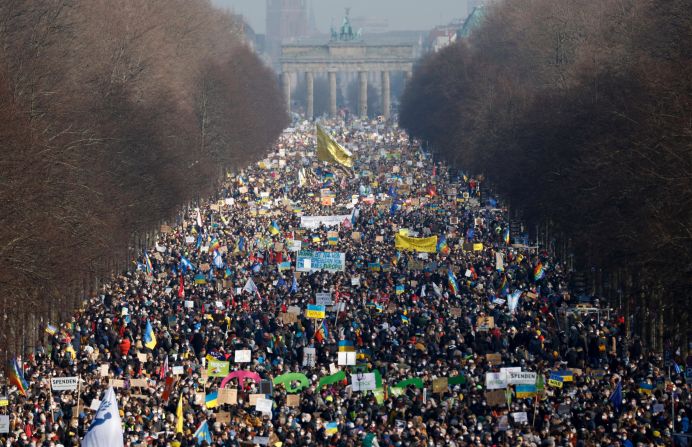
Thousands of workers and activists gathered across Berlin and Brandenburg on Friday, May 1, 2026, to mark International Workers’ Day. The demonstrations, spearheaded by the German Trade Union Confederation (DGB), focused on the urgent need for higher wages, improved working conditions, and a more equitable distribution of wealth amidst a tightening economic climate.
The day’s events were characterized by a mixture of traditional political rallies and modern street protests. In the heart of the capital, the DGB organized a central rally at the Rotes Rathaus, which featured live talks and cultural performances. Simultaneously, youth-led initiatives took to the streets with more aggressive slogans, reflecting a growing anxiety over job security and the cost of living.
The scale of the mobilization was supported by a significant security presence. According to reports from Tagesschau, the Berlin police deployed approximately 5,000 officers to monitor the various rallies, raves, and demonstrations occurring throughout the city.
Demands for Economic Security and Fair Wages
The overarching theme of the 2026 Labor Day protests was the protection of employment in an era of corporate restructuring. The DGB-Jugend (DGB Youth) adopted a particularly sharp tone for their demonstrations, operating under the motto Erst unsere Jobs, dann eure Profite
(Our jobs first, then your profits). This slogan highlighted a perceived conflict between corporate profitability and the stability of the workforce.
Union leaders emphasized that workers are currently facing a “double pressure”: the demand to increase productivity and work longer hours, while simultaneously dealing with stagnant real wages and the threat of site relocations. The DGB Bezirk Berlin-Brandenburg explicitly called for higher wages, better working conditions and redistribution
to ensure that the benefits of economic growth reach the average employee according to official DGB communications.
The protests were not limited to a single location. While the Rotes Rathaus served as the institutional hub for the DGB’s “May Festival,” other actions were staged at Strausberger Platz and throughout Brandenburg, ensuring that the demands for social security were heard across both the urban center and the surrounding state.
A Diverse Landscape of May Day Activism
While the DGB provided the organized, institutional face of the day, May 1 in Berlin remains a fragmented event with various ideological currents. Alongside the trade union rallies, the city saw the emergence of several “alternative” gatherings:
- The Revolutionary Demo: A tradition in Berlin, this march typically passes through the Görlitzer Park area, often blending political demands with counter-cultural expressions.
- Bicycle Demonstrations: Various groups organized rides toward the Brandenburg Gate to highlight urban mobility and environmental concerns.
- The “Rave against the Zaun”: Combining music and political protest, these events focused on the intersection of youth culture and social critique.
This diversity of action underscores the unique nature of Berlin’s May Day, where the “classic” labor struggle of the DGB exists alongside more radical or niche social movements. However, the common thread across all these events in 2026 was a shared frustration with the current economic trajectory and a demand for systemic change in how labor is valued.
Key Takeaways from the 2026 Labor Day Protests
- Primary Focus: Job security and wage increases in response to inflation and corporate profit-seeking.
- Youth Mobilization: High engagement from DGB-Jugend with a focus on the slogan
Erst unsere Jobs, dann eure Profite
. - Security Scale: Approximately 5,000 police officers were deployed in Berlin to manage the various events.
- Core Locations: Major activity concentrated at the Rotes Rathaus, Strausberger Platz, and Görlitzer Park.
What This Means for the German Labor Market
The intensity of the May 1 protests signals a period of heightened tension between labor unions and employers. The focus on “redistribution” suggests that unions are no longer satisfied with incremental wage increases but are instead pushing for a fundamental shift in how corporate profits are shared with the workforce.
For the average worker in Berlin and Brandenburg, these demonstrations are a manifestation of the “economic anxiety” cited by the DGB. As companies explore automation and the relocation of production sites to reduce costs, the unions are positioning themselves as the primary defense against precarious employment. The success of these movements will likely be measured in the coming months by the outcomes of collective bargaining agreements across the public and private sectors.
The DGB’s strategy of combining a “festival” atmosphere at the Rotes Rathaus with “combative” street protests suggests an attempt to appeal to both the general public and a more radicalized younger generation of workers who feel left behind by the current economic system.
As the city returns to normal operations, the focus now shifts to the upcoming quarterly labor negotiations. The next major checkpoint for labor advocates will be the series of regional collective bargaining rounds scheduled for the summer, where the demands voiced on May 1 will be translated into formal contractual proposals.
Do you believe the current economic climate justifies more aggressive union action? Share your thoughts in the comments below or share this article with your network.
Keep reading