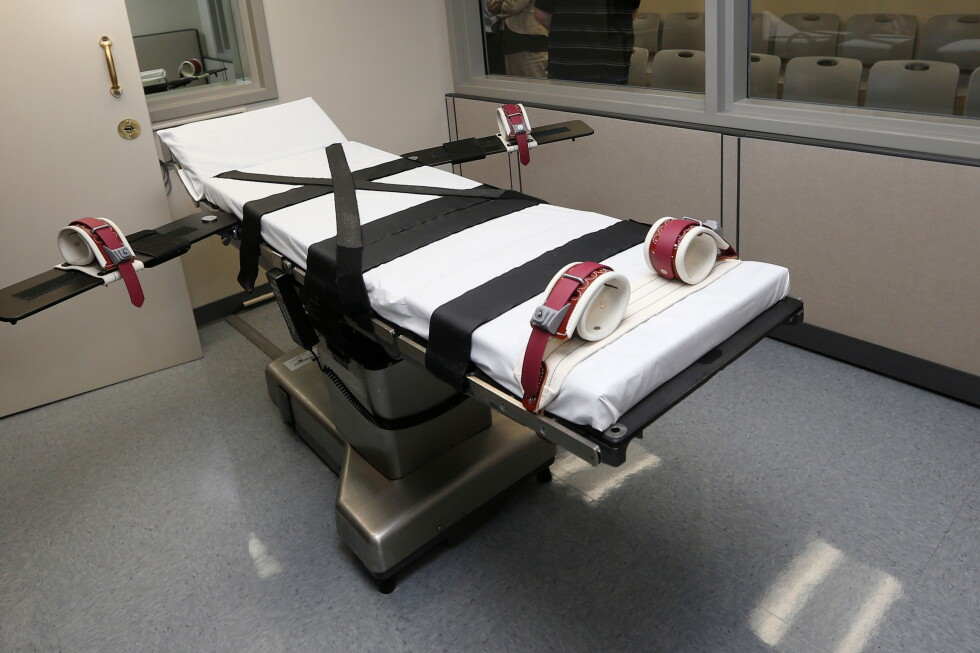
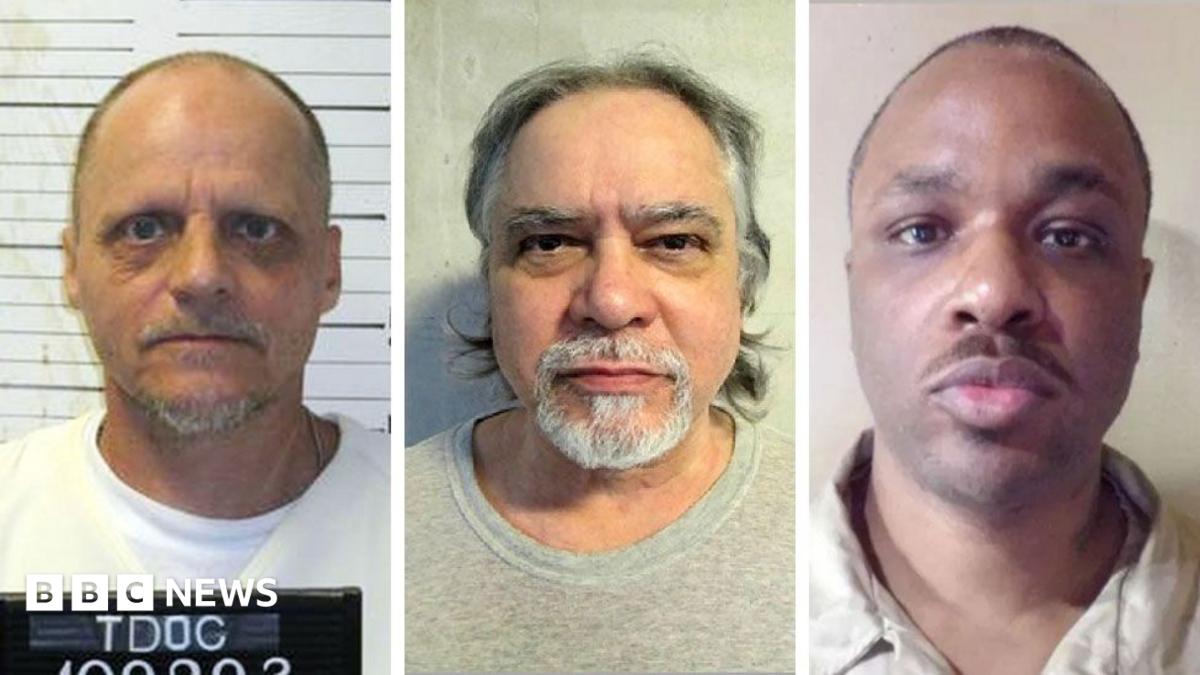
Three inmates in Tennessee, Alabama, and Oklahoma face execution on the same day in a rare convergence of capital punishment across the United States. The planned lethal injections occur amid a national decline in public support for the death penalty and significantly fewer jury-issued death sentences nationwide.
A rare convergence of capital punishment brings synchronized executions to three states as Tennessee, Alabama, and Oklahoma schedule lethal injections for the same day. Such triple executions are unusual in the modern American judicial system; the last time three prisoners were put to death on a single day occurred on Jan. 7, 2010, when Louisiana, Ohio and Texas carried out sentences.
Tennessee Execution Proceeds Despite Legal Challenges Over Previous Botched Attempt
Tennessee plans to execute Anthony Darrell Hines for the 1985 murder of Catherine Jean Jenkins, a 54-year-old motel maid stabbed to death in Kingston Springs. Hines, who was sentenced to death in 1986, won an appeal for a new sentencing hearing before receiving another death sentence in 1989. Now 66 years old, Hines has maintained his innocence for four years and is currently bedridden.
The scheduling arrives just three months after the attempted lethal injection of another man was called off because of severe difficulties inserting an intravenous line. During that May attempt, the execution team spent more than an hour trying to establish a backup line in the prisoner’s arm, hand, and foot before ultimately attempting a central line. Governor Bill Lee granted that inmate, Tony Carruthers, a one-year reprieve.
Hines appealed unsuccessfully to the courts and the governor, arguing that his thinness and muscular atrophy from two strokes heightened his risk of a botched procedure, and that the doctor overseeing the previous failure was unqualified. While the state declined to clarify whether the same physician would preside over Hines’ execution, the Tennessee Supreme Court ruled that Hines failed to prove the doctor was unqualified and characterized the prior difficulties as an isolated mishap.
Alabama Inmate Voluntarily Drops Appeals in 2021 Murder Case
In Alabama, Jeremy Williams is slated to become the southern state’s first execution of the year after dropping all his appeals and asking for his sentence to be carried out. Williams, 42, was convicted for the rape and murder of a 5-year-old Georgia girl in 2021.
Prosecutors stated that Williams offered the child’s mother $2,500 for the girl to perform a sex act, then raped and strangled Kamarie Holland, filming the attack and retaining her body for further abuse.
“To see on video what he did to this baby, what a grown man could do to a child, it’s shocking, it’s horrible, it’s disgusting, It’s just a level of evil.”
Russell County District Attorney Richard Chancey
The victim’s father, Corey Holland, remembered his daughter as an exuberant child who loved playing dress-up and anything girly. The girl’s mother is currently serving a 20-year prison sentence after pleading guilty to sex trafficking.
Oklahoma Prisoner Forgoes Clemency Before Lethal Injection
In Oklahoma, Carlos Cuesta-Rodriguez faces lethal injection for the 2003 murder of his girlfriend at their Oklahoma City home. Cuesta-Rodriguez, 70, did not ask the state’s Pardon and Parole Board for clemency or mercy, stating that he regrets the killing.
According to Oklahoma Attorney General Gentner Drummond, the victim, 43-year-old Olimpia Fisher, planned to leave Cuesta-Rodriguez when he shot her in one eye. He then waited approximately eight minutes as she screamed for help before firing the fatal shot into her other eye. Drummond told the parole board that he made her suffer because she dared to live beyond his control. The board subsequently voted 3-1 against recommending clemency.
Shifting Public Sentiment and Declining Jury Sentences
The synchronized executions coincide with a broader, measurable decline in public and judicial backing for capital punishment across the United States. Only 52% of Americans now view the death penalty as morally acceptable, which represents the lowest level of support recorded since the 1970s according to Gallup polling data.
This weakening support is directly visible in the number of death sentences issued by juries. While juries nationwide regularly handed down upwards of 300 death sentences annually during the 1990s, that figure fell to just 23 sentences in 2025.
“That tells us something very important: These are regular citizens that are sitting in judgment of people who are accused of committing the worst possible crimes, and then deciding what sentence fits those crimes, Those juries are increasingly saying that a death sentence is not the right answer.”
Maher
Maya Foa, CEO of the international legal organization Reprieve US, noted that the death penalty has become the opposite of a cheap easy political fix.
Related reading