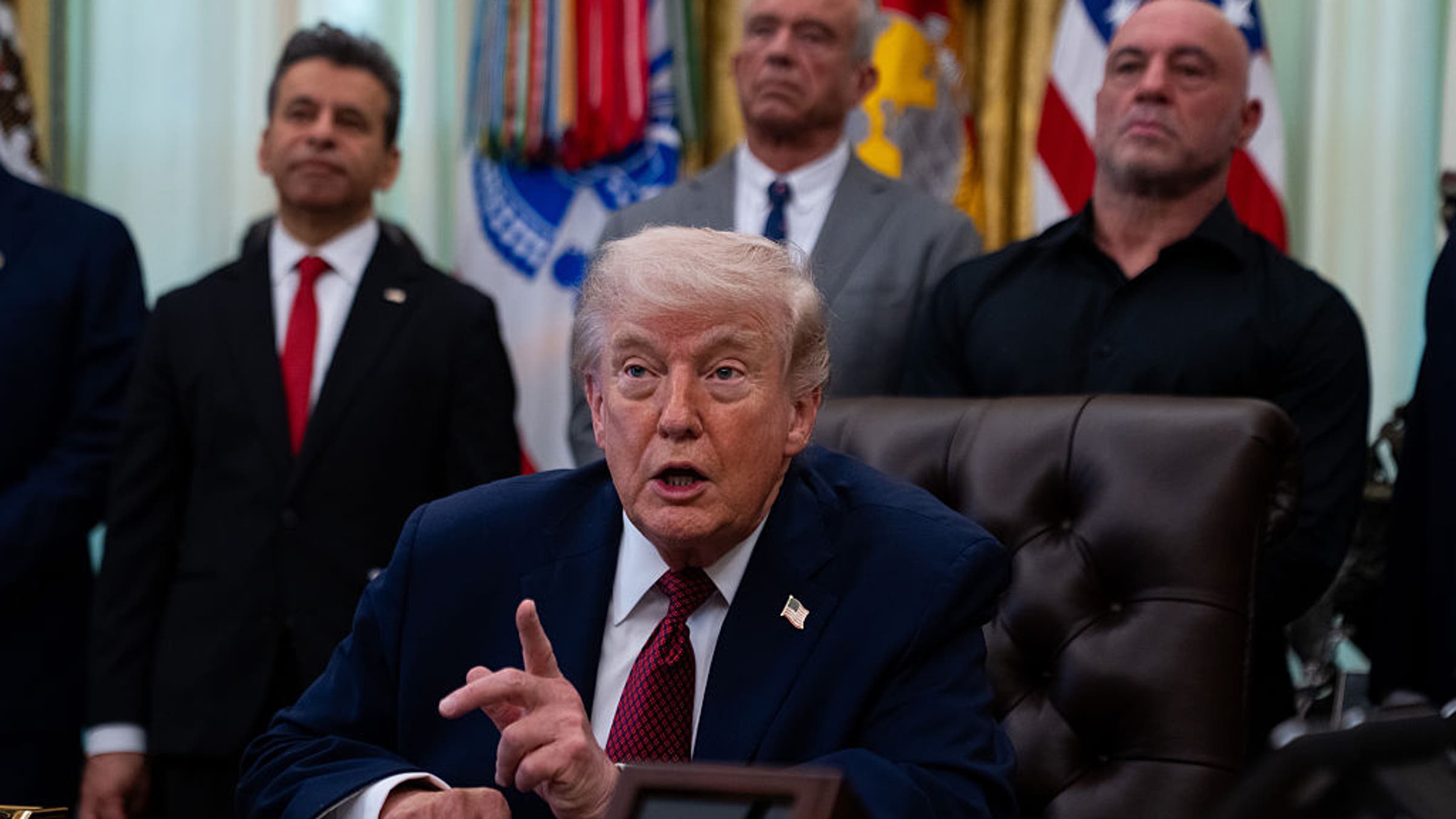
On April 18, 2026, President Donald Trump signed an executive order aimed at accelerating access to psychedelic drugs as potential treatments for serious mental illness. The order directs the Food and Drug Administration (FDA) to provide Commissioner’s National Priority Vouchers to psychedelic drugs with Breakthrough Therapy designations for treating serious mental illnesses, which would expedite FDA review. It as well requires the Department of Health and Human Services (HHS) to allocate $50 million through the Advanced Research Projects for Health (ARPA-H) program to match state government investments in psychedelic research for populations with serious mental illness. The White House stated the order seeks to reduce bureaucratic delays in evaluating promising therapies while maintaining the FDA’s gold standard review process.
The executive order further instructs the FDA and the Drug Enforcement Agency (DEA) to establish a pathway for eligible patients to access investigational psychedelic drugs, including ibogaine compounds, that are under FDA review and have met basic safety requirements under the Right to Attempt Act. It mandates collaboration between HHS, the FDA, the Department of Veterans Affairs, and the private sector to increase clinical trial participation and evidence generation for experimental psychedelic therapies. The administration cited rising suicide rates and the burden of treatment-resistant conditions as motivation for the order, noting that over 14 million American adults have a serious mental illness and about 8 million are on prescription medication for these conditions.
According to the White House fact sheet, the order builds on prior efforts during Trump’s first term, when suicide rates decreased by 5 percent from 2018 to 2020, but rebounded during the COVID-19 pandemic and under the Biden administration. The document highlights that veterans experience suicide at more than twice the rate of non-veteran adults, with over 6,000 veteran suicides per year for more than two decades. The order emphasizes the need for innovative methods to address mental health conditions that do not respond to standard psychiatric therapies, particularly major depressive disorder and substance abuse disorder.
The executive order does not change the legal status of psychedelics under federal law. Substances such as LSD, MDMA, and psilocybin remain Schedule I controlled substances, meaning they are federally banned with no currently accepted medical utilize and a high potential for abuse. However, the order signals a shift in administrative approach by prioritizing review of psychedelic drugs that have shown promise in clinical research for treatment-resistant depression and post-traumatic stress disorder (PTSD). Experts note that while the order does not alter the evidentiary standards the FDA requires for approval, it reflects increased political openness to studying scheduled substances as potential medical treatments.
Mason Marks, a senior fellow of the Project on Psychedelics Law and Regulation at Harvard Law School’s Petrie-Flom Center, stated that presidential attention to psychedelics in the Oval Office is unprecedented. He contrasted the current approach with the historical context of the 1970s, when President Richard Nixon banned psychedelics as part of the “war on drugs.” Marks acknowledged the symbolic value of the order but expressed concern that White House pressure could lead to rushed approvals lacking sufficient evidence, potentially undermining public trust in the regulatory process.
The order specifically references ibogaine, a psychedelic derived from the root of an African shrub, which Trump said was prompted by conversations with podcast host Joe Rogan, who attended the signing. Ibogaine has been studied for its potential to treat PTSD and traumatic brain injuries, though it carries risks of fatal cardiac arrhythmias. Research on ibogaine was halted in the U.S. In the 1990s due to safety concerns, though limited studies continue in countries like Mexico, where clinics administer the drug under medical supervision. Marks noted that advocacy for ibogaine has been driven by veteran-focused groups who see unmet needs in treating service-related trauma.
Under the National Priority Voucher Program, psychedelic drugs receiving Breakthrough Therapy designation could qualify for expedited FDA review, reducing the typical timeline from 6–12 months to 1–2 months for regulatory examination of supporting evidence. The voucher system is designed to incentivize development of treatments for high-priority public health conditions by offering priority review vouchers that can be used or sold to accelerate other FDA applications. The order requires the FDA Commissioner to determine which psychedelic drugs meet the criteria for these vouchers based on their potential to address serious mental illness.
The $50 million in matching funds from HHS through ARPA-H is intended to stimulate state-level investment in psychedelic research. Administration officials said the matching structure encourages states to commit their own resources, with federal funds doubling the impact of state grants. This approach aims to expand clinical trial infrastructure and diversify participant pools, particularly among underserved populations and veterans. The order requires HHS and the FDA to work with state governments to identify research priorities and coordinate data collection efforts.
Industry representatives welcomed the order as a signal of federal support for innovation in mental health treatment. Kabir Nath, CEO of Compass Pathways, said the company was pleased that the order’s foundation was the urgent need for modern treatment options for patients with limited alternatives. He noted that while regulatory pathways remain rigorous, the administration’s engagement could help reduce stigma and encourage investment in psychedelic-assisted therapy research. Compass Pathways has been developing a synthetic psilocybin formulation for treatment-resistant depression, though its application for accelerated approval was previously delayed by the FDA requests for additional data.
Despite the optimism, public health experts caution that executive orders cannot override FDA authority over drug approval or DEA authority over controlled substance scheduling. Any psychedelic seeking medical use must still undergo the full clinical trial process and demonstrate safety and efficacy in Phase III studies before the FDA can consider approval. The order does not compel the FDA to approve any substance, nor does it grant legal immunity for possession or use outside of federally authorized research settings.
As of April 22, 2026, the FDA has not announced which specific psychedelic drugs will receive National Priority Vouchers under the order, nor has HHS detailed the mechanism for distributing the $50 million in matching funds. The White House has not scheduled a public briefing on implementation progress, but stakeholders expect updates through standard federal channels such as the Federal Register and agency websites. Those seeking official information can monitor the FDA’s website for notices on Breakthrough Therapy designations and the HHS ARPA-H program page for research funding announcements.
What do you reckon about the federal government’s role in advancing psychedelic research? Share your perspective in the comments below, and consider sharing this article if you found it informative.
Worth a look