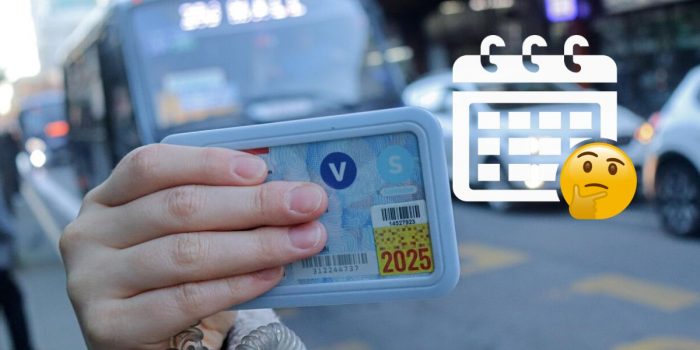
Students across Chile are facing a critical deadline to maintain their discounted transit fares for the current academic year. The process to revalidate the Tarjeta Nacional Estudiantil (TNE) for 2026 is currently underway, with a strict cutoff date that could significantly impact the daily commuting costs for thousands of learners.
According to the Chileatiende official portal, students must complete the revalidation of their TNE by May 31, 2026, to ensure they continue receiving the reduced fare benefit. Failure to meet this deadline means that starting June 1, 2026, the card will charge the full standard fare for public transportation.
The revalidation process, managed by the Junta Nacional de Auxilio Escolar y Becas (JUNAEB), is designed to verify that the cardholder remains an active student in basic, secondary, or higher education. Although the process can technically be completed throughout the year, doing so after the May deadline results in a temporary loss of the discount until the update is processed.
Understanding the TNE 2026 Revalidation Deadline
The TNE is more than just an ID; it is a financial tool that allows students to access reduced tariffs on public transport nationwide, 24 hours a day. Because this benefit is personal and non-transferable, the annual revalidation ensures that only eligible students are utilizing the subsidy.
The 2026 revalidation window officially opened on April 1, 2026, as confirmed by JUNAEB’s virtual assistance channels. This timeline gives students two full months to secure the “2026 seal” or digital update required to keep their fares low. For many students, particularly those in higher education or those commuting from rural regions to urban centers, the difference between a discounted fare and a full fare can represent a significant monthly expense.
In various regions, the progress of this rollout has varied. Local reports indicate that in the Maule region, approximately 40,000 students have already renewed their cards. Meanwhile, in the Los Ríos region, revalidation progress had reached 34% in recent tracking updates, highlighting the urgency for those who have not yet completed the trámite.
How to Complete the Revalidation Process
The method for revalidating the TNE depends on the student’s location and the specific requirements of their educational institution. Generally, the process involves the following steps:
- Verification of Enrollment: The student’s educational institution must first certify their active status with JUNAEB.
- Physical or Digital Update: Depending on the region, students may demand to visit a designated TNE module or employ an authorized digital portal to apply the 2026 validation.
- Checking Status: Students who are waiting for a replacement card or a new issuance can track their progress via the official estadotne.cl portal.
For those who have lost their card or had it damaged, the process is different from a simple revalidation. A “reposición” (replacement) must be requested through the official channels, which involves a different administrative path than the annual seal update.
The Financial Impact of Missing the May 31 Cutoff
The transition from a discounted fare to a full fare on June 1 is automatic. The transport systems integrated with the TNE network are programmed to recognize the validation status of the card. If the 2026 validation is not registered by the system by the end of May, the card’s “discount” flag is deactivated.
This creates a financial gap for students. While they can still revalidate their card in June or later in the year, they will be forced to pay the full price for every trip until the update is successfully processed and synced with the transport validators. Given the volume of daily trips required for a typical university or high school schedule, this “full fare” period can be a heavy burden on a student’s budget.
Key Takeaways for Students
- Deadline: May 31, 2026, is the final day to revalidate to avoid full fares.
- Penalty: Starting June 1, 2026, non-revalidated cards will charge the full standard rate.
- Eligibility: Applies to students in basic, secondary, and higher education.
- Start Date: The process began on April 1, 2026.
- Tracking: Use estadotne.cl to check the status of new or replacement cards.
Regional Variations and Institutional Support
While the deadline is national, the experience of revalidating can differ by region. In the Metropolitan Region, the density of TNE modules allows for quicker access, but these sites often experience high congestion as the May 31 deadline approaches. Students in regions like Maule and Los Ríos often rely more heavily on their educational institutions to facilitate the bulk validation process.
Educational centers, such as the Colegio Concepción Hualqui and other similar institutions, often issue internal advisories to ensure their student body is aware of the JUNAEB requirements. These institutions act as the primary link between the student and the government agency, as the revalidation cannot happen without the school’s confirmation of the student’s active enrollment.
Frequently Asked Questions
What happens if I revalidate on June 2?
You can still revalidate your card throughout the year, but you will be charged the full fare from June 1 until the moment your revalidation is processed and active in the system.
Do I need a new physical card?
No. Revalidation is an update to your existing card’s status. You only need a new card if you have requested a replacement (reposición) due to loss or damage.
Is the TNE valid for all transport?
The TNE provides reduced fares for the national public transport network, including the Metro and Red buses in Santiago, as well as collective transport in various regions, provided the operator accepts the TNE system.
Where can I find the nearest revalidation point?
Students should check the official JUNAEB website or the Chileatiende portal for a list of authorized modules and offices in their specific city or region.
As the May 31 deadline approaches, students are encouraged to complete the process immediately to avoid the inevitable queues and system delays that typically occur in the final week of the month. The next major checkpoint for students will be the start of the new fare cycle in June, where the system will automatically shift non-compliant cards to the full-price tier.
If you found this guide helpful, please share it with fellow students to ensure no one misses the deadline. Let us know in the comments if you have encountered any issues with the revalidation process in your region.